Plan a New Water Bottling Line Before You Buy Machines
WaterBottlingLine.com helps buyers prepare a complete water bottling line plan before talking price. Start with your bottle size, water source, target capacity, packaging route and factory condition; then use the planning guides to understand equipment scope, layout pressure, utility needs and cost factors before requesting a supplier proposal.
Cost, Layout and Equipment Scope
Capacity and Supplier Briefs
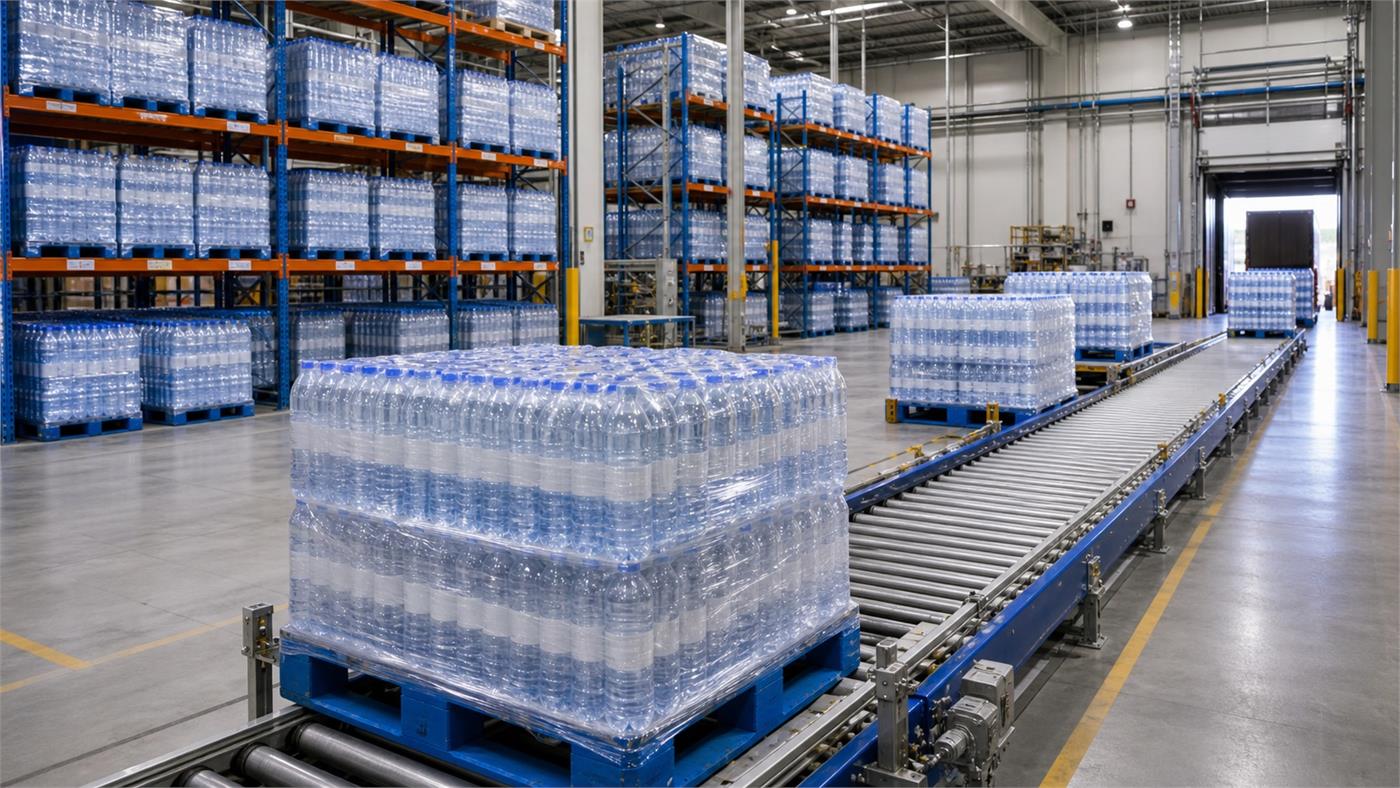
Plan the Whole Bottled Water Plant, Not Only the Filling Machine
Use one planning path to connect water treatment, bottle supply, filling, labeling, packing, utilities, installation and warehouse flow before asking a supplier for a complete line quotation.
Cost model
Understand what changes water bottling plant cost before comparing supplier prices: capacity, water treatment, bottle supply, automation, packing, installation and buyer-side utilities.
Factory layout
Check clean filling flow, drainage, compressed air, power, warehouse movement and future expansion space before equipment is fixed.
Equipment scope
Define what a complete water bottling line should include: treatment, blowing or bottle feeding, filling, capping, labeling, coding, packing, conveyors and spares.
Capacity choice
Compare small, 3000BPH, 5000BPH and 10000BPH planning paths based on market demand, labor, packing speed, utility load and upgrade plans.
Startup sequence
Move from water source, testing and product range to factory requirements, equipment scope and supplier brief before buying machines.
Production process
Follow the two preparation streams for treated water and PET bottles through filling, labeling, packing, quality checks and finished-goods handoff.
Turnkey project lifecycle
Connect requirement definition, supplier scope, engineering approvals, FAT, site readiness, installation, training, handover and lifecycle support in one project path.
Automation level
Choose where automatic bottle handling, filling, labeling, packing, accumulation, inspection and line controls create useful value without over-automating the first plant stage.
Plant planning request
Send bottle size, water source, target capacity, building condition and packaging route so Allot Tech can discuss a more useful complete line brief.
Choose a Water Bottling Line Configuration
Start with how bottles arrive and where the saleable pack leaves the line. These three routes cover different purchasing tasks for a new still-water PET line. Allot Tech helps turn the selected route into an equipment brief and supplier discussion; the quotation defines the final supply and service scope.
| Project route | Working configuration | When to consider it |
|---|---|---|
| Purchased empty bottles | Bottle receiving and feeding, rinsing-filling-capping, labeling, coding and the selected packer. Connect a suitable treated-water supply and the specified utilities. | A dependable local bottle source is available and the first stage should avoid a blowing cell. Include bottle storage, delivery frequency and handling in the comparison. |
| PET preforms to finished packs | Preform feed, stretch blowing and molds connect to filling and capping, then labeling, coding and packing. Add the specified blowing air, air treatment and cooling package. | Bottle manufacture belongs in the project scope. Compare the entire bottle-making route, maintenance and utility requirements with purchasing finished bottles. |
| New line in an existing plant | Retain verified water, bottle or packaging assets and specify new equipment around their documented interfaces, useful output and condition. | Existing equipment can support the launch formats. Confirm who connects controls, conveyors and utilities and who tests the integrated result. |
For each route, identify the launch bottle, cap, label and pack before comparing an automatic water bottling line. Automatic filling does not automatically include bottle loading, film replenishment, pallet movement or all inspection tasks.
Choose the smallest complete scope that supports the planned product and output. Reserve a future blower or faster packer only where the building, transfer interfaces and utilities can support that change.
Define the Working Plant Scope Before Comparing Quotations
A useful proposal connects the process sequence, complete equipment scope, utility requirements, installation responsibility and startup support. This site helps buyers prepare those inputs before a new bottled water plant is quoted.
Every planning path connects water treatment, bottle supply, filling, labeling, packing, utilities, installation and finished goods flow.
The site answers cost, layout, equipment scope, capacity and startup questions before a formal machine proposal is requested.
Allot Tech and Mr Kcal elements make the business communication path clearer while keeping WaterBottlingLine.com as the focused planning hub.
More Than a Filling Machine: Plan the Whole Plant
The buyer should see the production workflow as a complete factory system: treatment, bottles, filling, caps, labels, packing, quality control, utilities and warehouse movement.
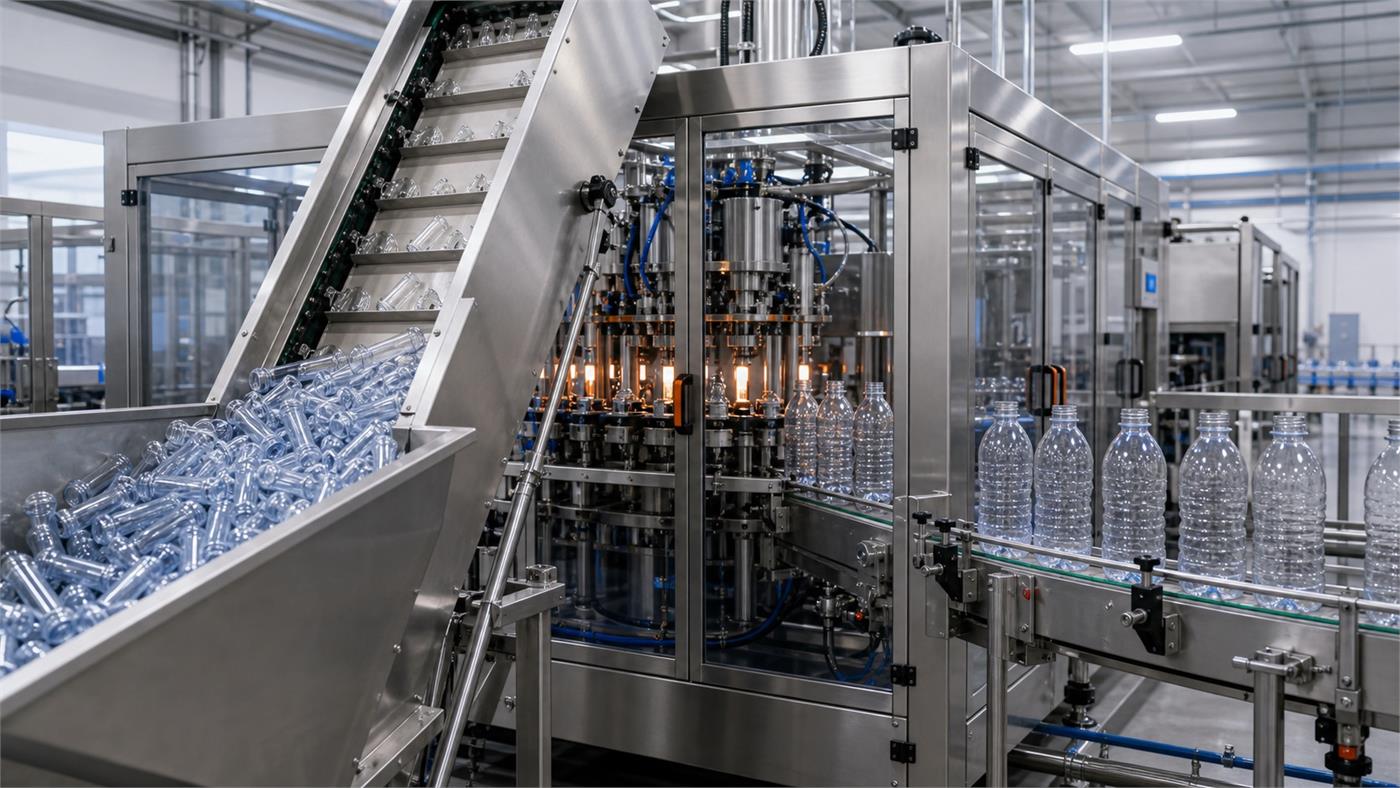
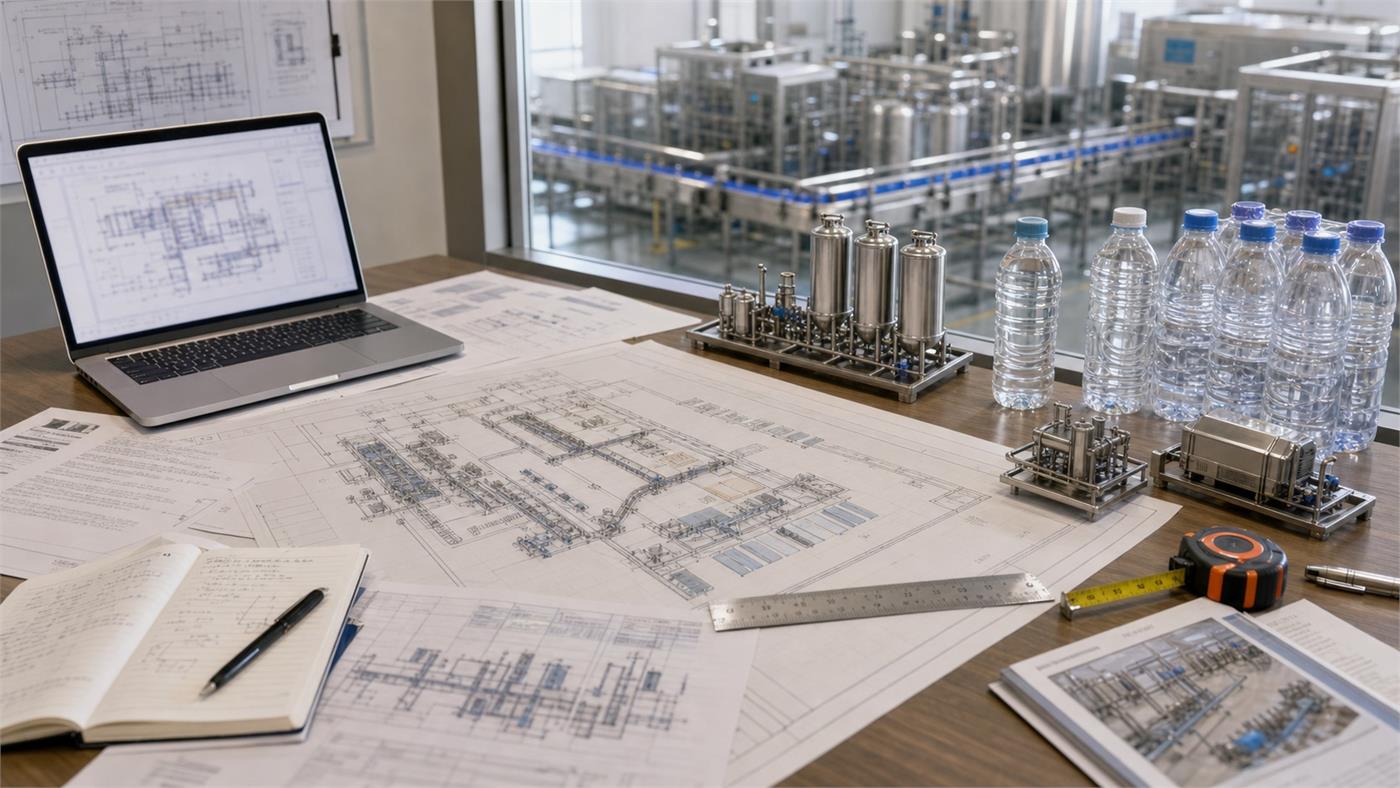
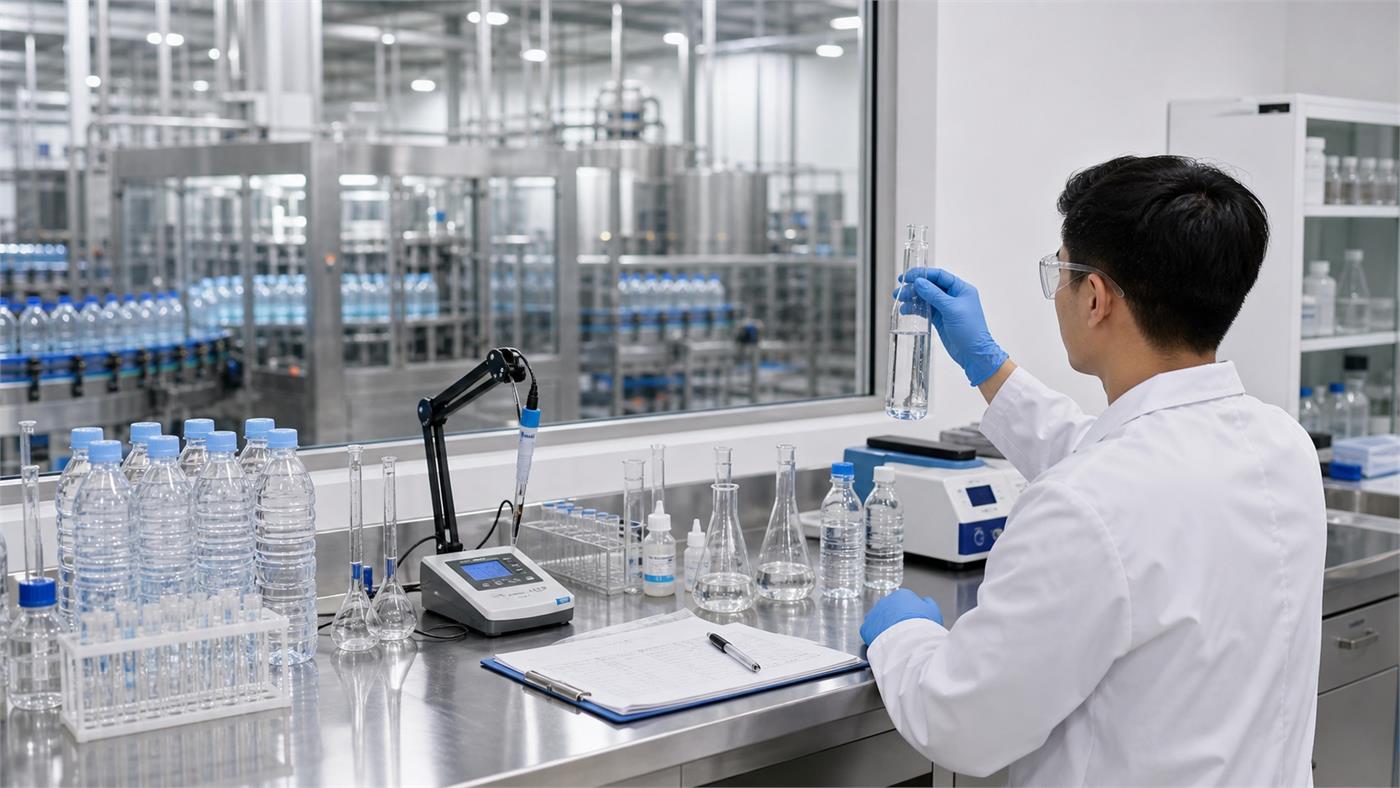
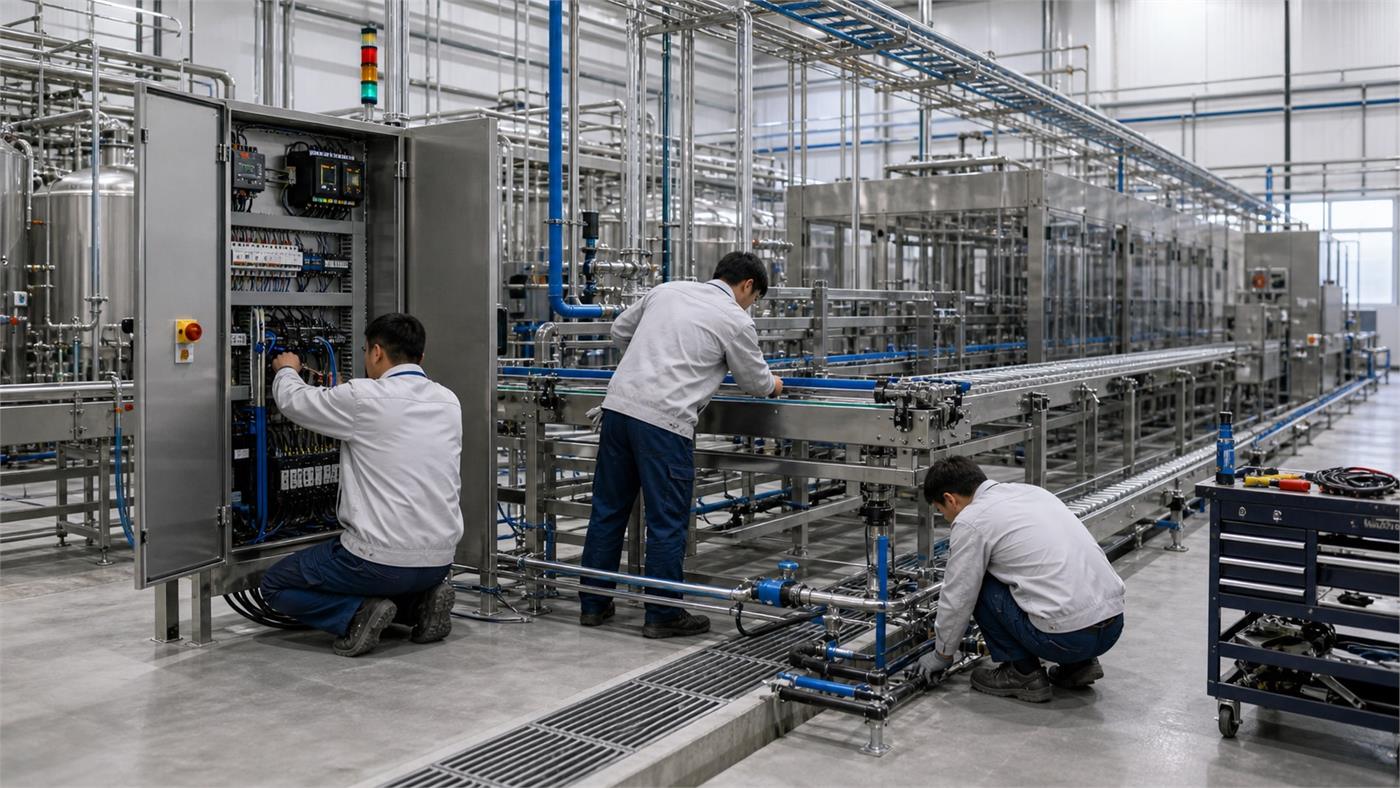
See the Main Systems Before You Ask for Price
A serious complete line quotation should connect water treatment, bottle supply, filling, labeling, packaging, conveyors and installation responsibilities. These visuals help buyers understand what must be scoped before a supplier proposal.
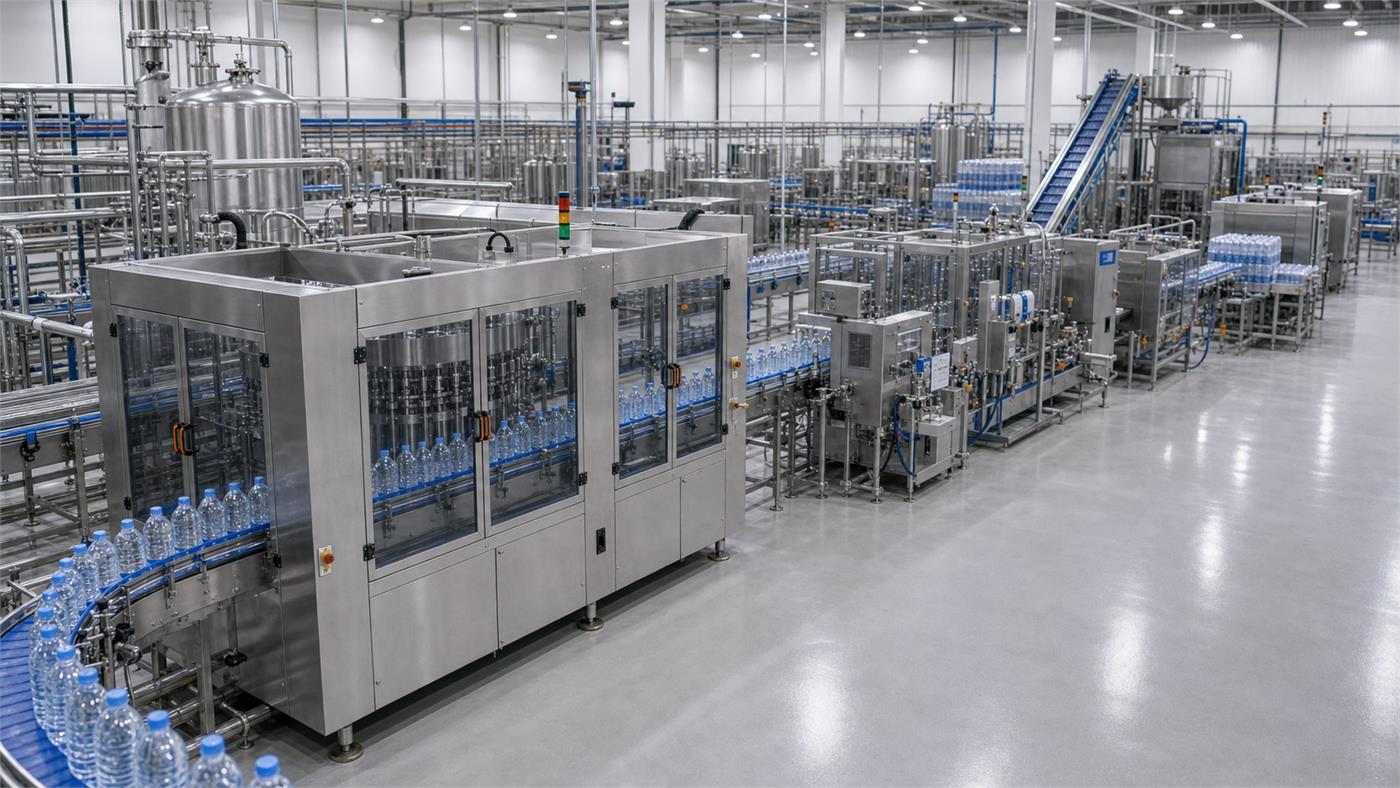
Complete Water Bottling Line
Use the full line view to plan filling, conveyors, labeling, packing, utility access and future expansion as one working system.
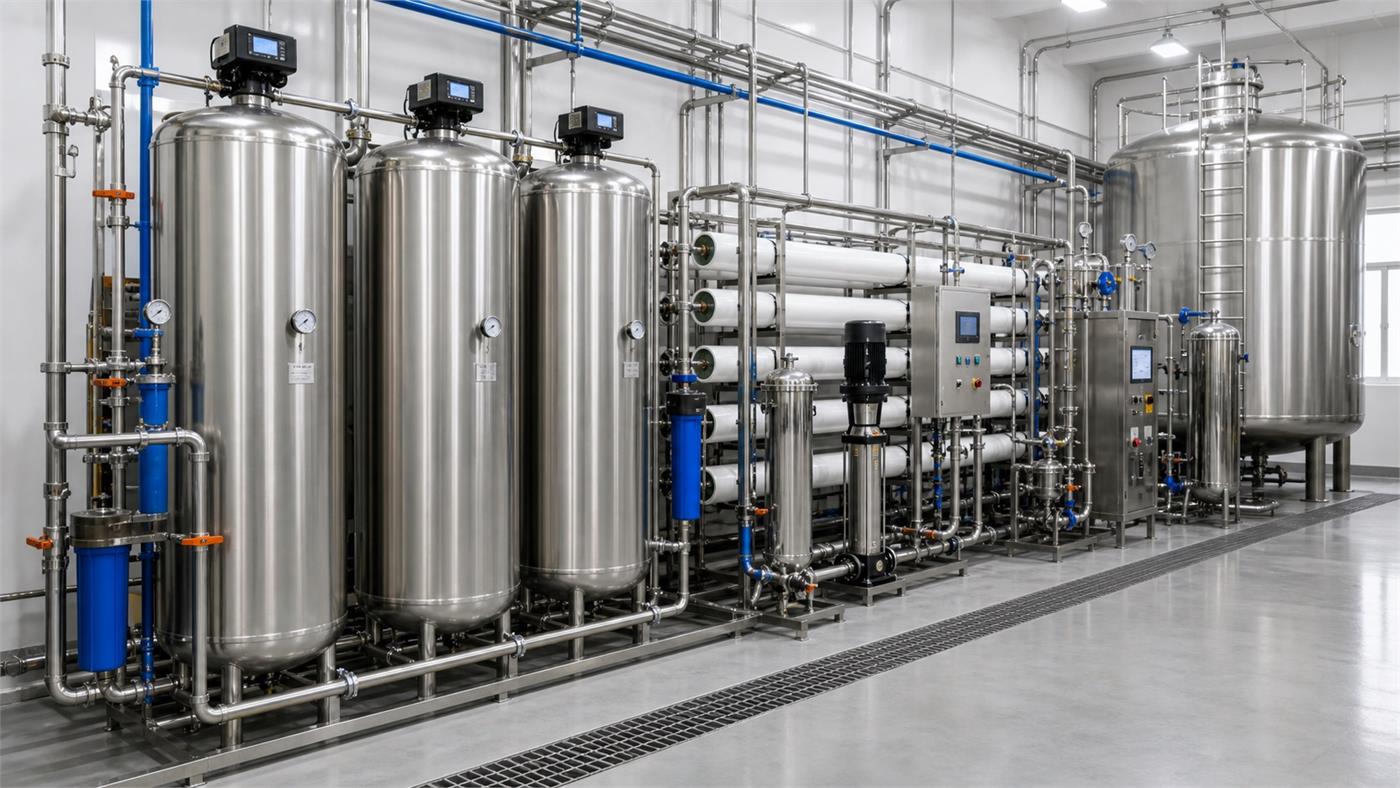
Water Treatment System
Raw water conditions decide filtration, RO, UV, ozone, tanks and testing points before the filling line is selected.
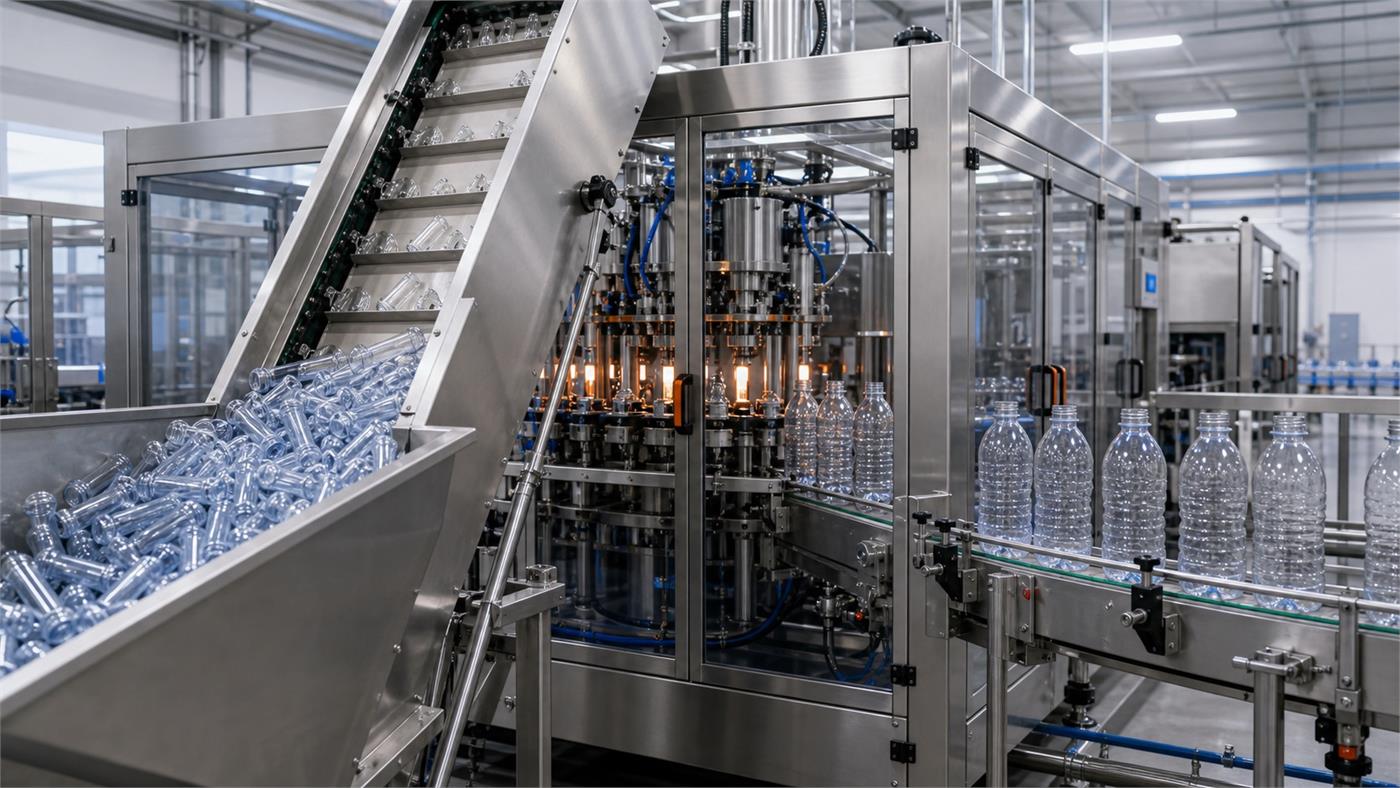
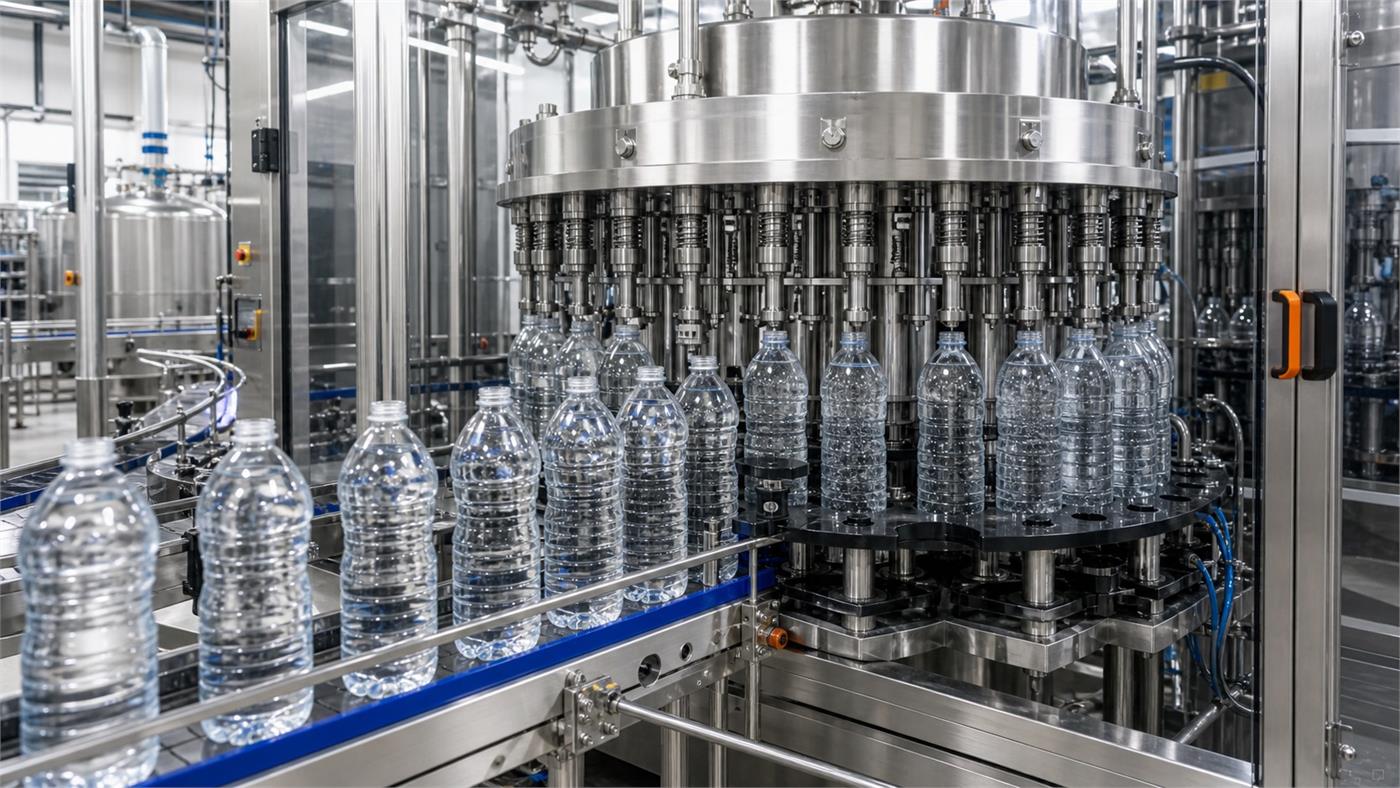
Bottle Supply and Feeding
Purchased bottles or in-house PET bottle blowing changes air demand, bottle handling, floor area and line balance.
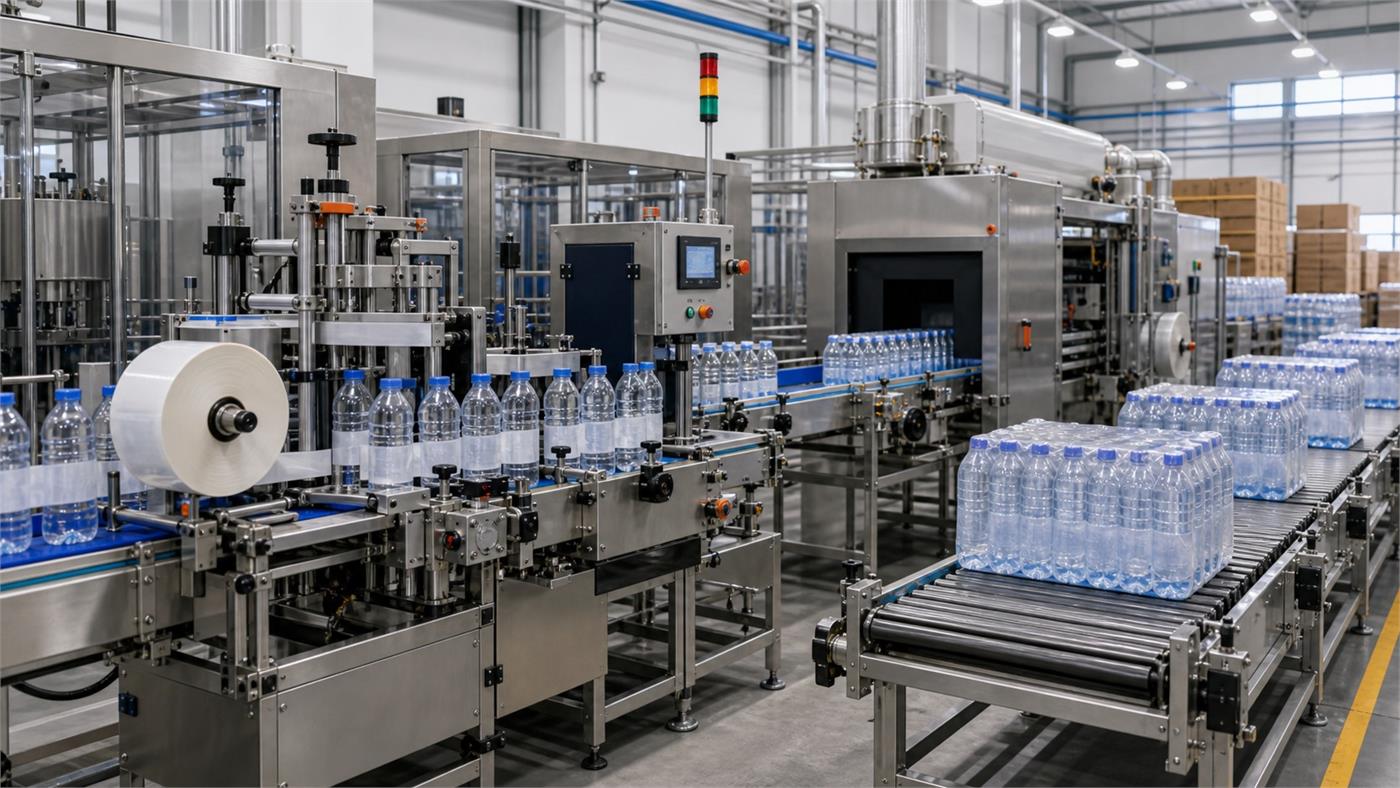
Labeling and Packaging
Labeling, coding, shrink wrapping, carton packing and pack conveyors should be planned before comparing line speed.
Follow the Water Bottling Line From Treatment to Warehouse
Use the photos as a practical checklist when preparing a complete line inquiry. If a quotation skips one of these areas, the project scope may not be complete.
Water treatment
Treat and store water before filling.
Bottle supply
Plan preforms, blowing or purchased bottles.
Rinsing and filling
Match filler speed to the full line.
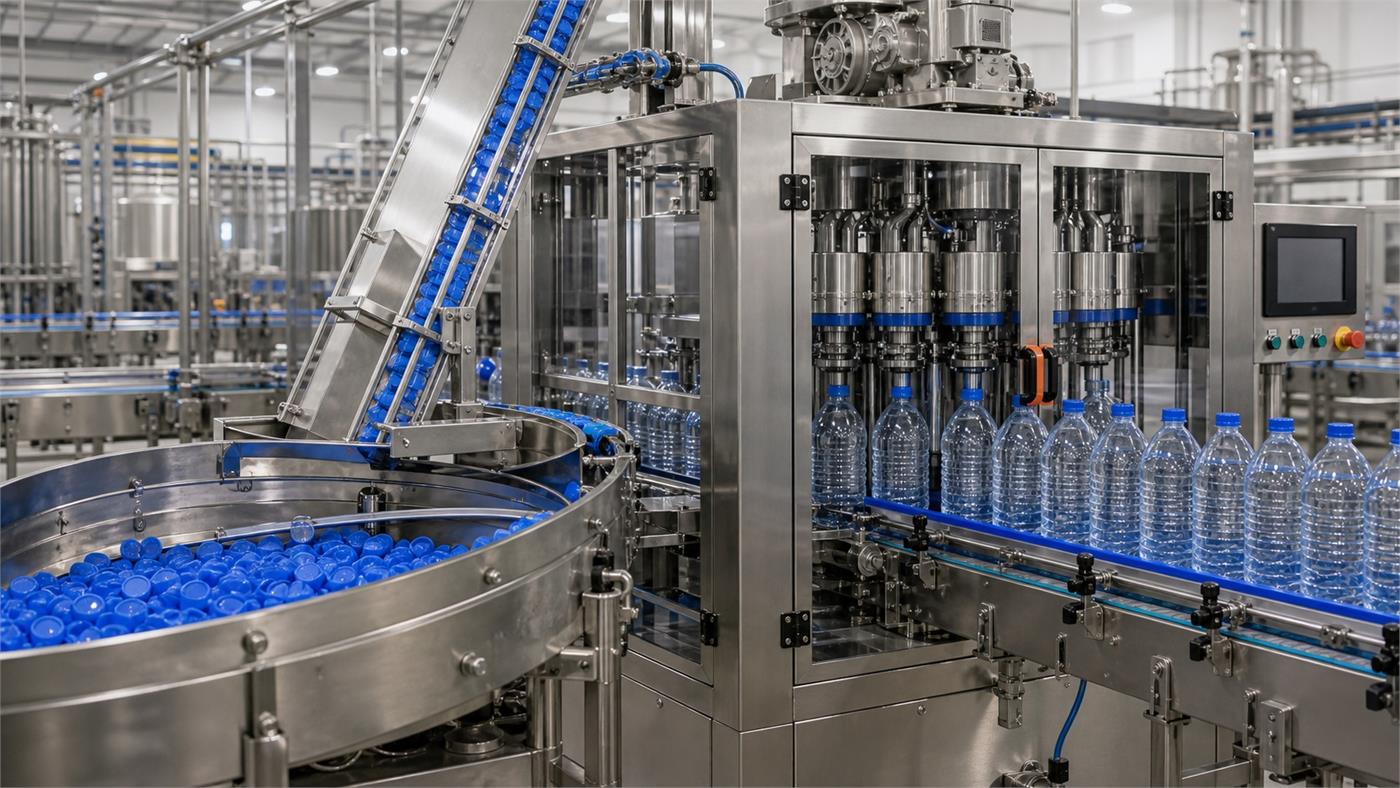
Cap handling
Confirm cap sorting and capping stability.
Labeling and packing
Prevent packing from limiting output.
Quality control
Test water and finished bottle samples.
Finished warehouse
Move packs into storage and dispatch.
Installation utilities
Prepare air, power, drainage and access.
Planning Support for Serious Bottled Water Projects
WaterBottlingLine.com is built for buyers who need to clarify the plant before asking suppliers for a machine proposal.
New bottled water plant investors
Use the guides to connect bottle size, source water, capacity, layout, utilities and budget before you request a complete line proposal.
Existing water brands expanding capacity
Check whether filling speed, packing speed, warehouse movement and utility capacity can support the next production stage.
Buyers comparing China supplier proposals
Use the equipment scope and quotation comparison pages to see whether two offers include the same responsibilities.
Distributors planning local production
Translate market demand into a practical plant brief before choosing 3000BPH, 5000BPH, 10000BPH or a higher capacity.
From Idea to Bottled Water Plant
This site treats a water bottling line as a business project first. The planning sequence helps you avoid buying isolated machines before the plant requirements are clear.
Define market and bottle size
Clarify retail packs, distributor packs, bottle volumes and expected daily selling rhythm.
Check water source and treatment needs
Start with raw water quality before choosing filters, RO, UV, ozone or storage tanks.
Choose target capacity
Calculate the required rate from accepted demand, bottle formats, production hours and explicit loss assumptions. Check the complete line before selecting a capacity.
Map equipment scope
Decide whether blowing, treatment, filling, labeling and packing should be purchased as one planned line.
Plan layout and utilities
Reserve clean filling space, packaging flow, warehouse access, drainage, power and compressed air.
Prepare budget and supplier brief
Share clear project details so machine proposals can be compared by complete scope.
Turn Factory Conditions Into a Supplier Brief
Overseas buyers often ask for price too early. A better inquiry describes bottle size, source water, target capacity, packing route, factory space, utility limits and upgrade plan so complete line suppliers can respond with a usable scope.
- Capacity and bottle format
- Water treatment route
- Factory layout and utilities
- Installation and startup support
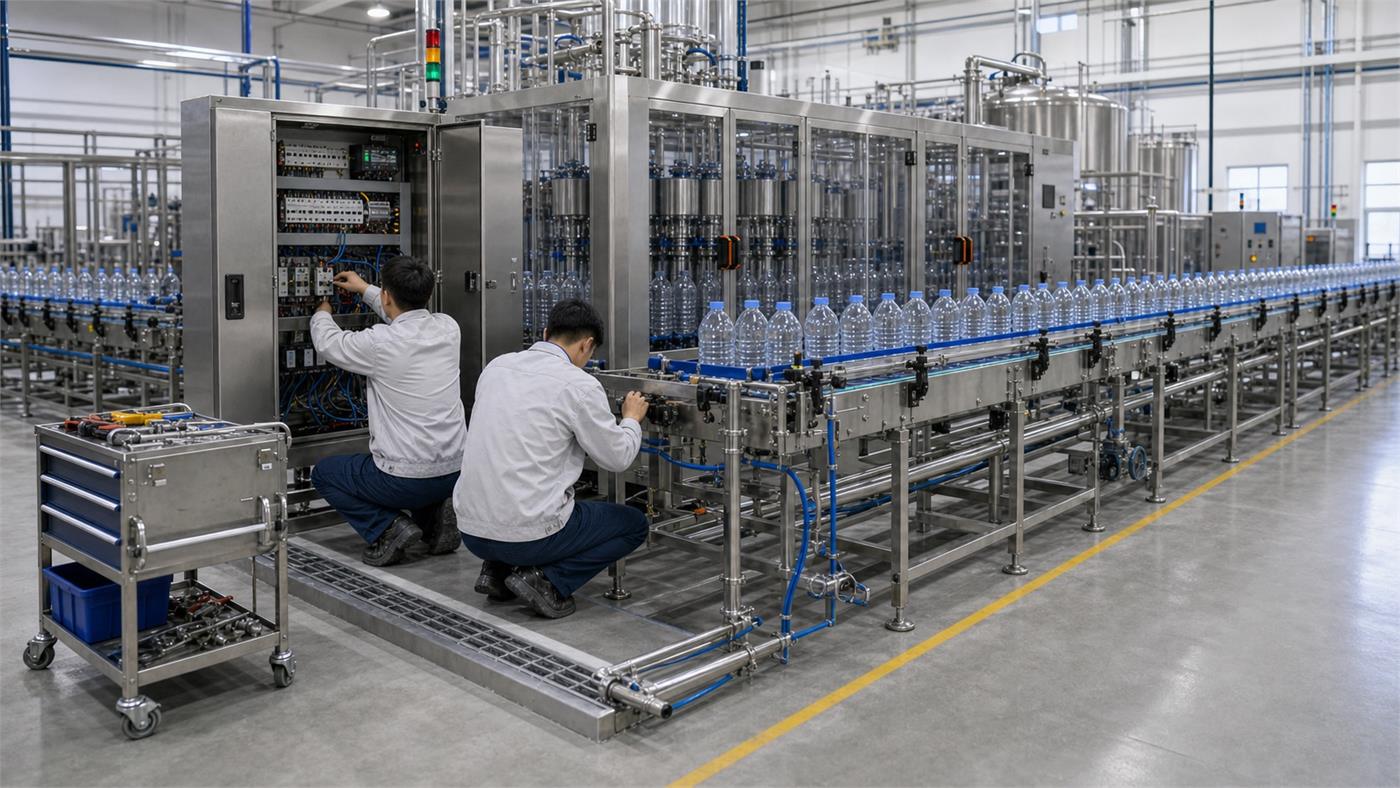
What Your Water Bottling Line May Include
Use the scope map as a planning checklist, not a fixed product package. Your quotation should reflect the real plant workflow and local constraints.
Water source and treatment
Raw water tank, filtration, RO where needed, UV, ozone, treated water storage and quality control planning.
Bottle making or bottle supply
Choose between in-house PET bottle blowing and purchased bottles based on budget, logistics and bottle design.
Filling and capping center
Plan the hygienic center around bottle rinsing, water filling, cap handling and stable bottle transfer.
Labeling and date coding
Match label type, code position and label material to your market and packaging style.
Shrink wrapping or carton packing
Select film packs, tray packs, cartons or palletizing based on distribution route.
Conveyors, utilities and spare parts
Include conveyors, air, power, drainage, installation tools, critical spares and operator training.
New Water Bottling Line vs Used Water Bottling Line
This website is built for buyers planning new water bottling lines and complete bottled water plant solutions from China. It is not a used equipment listing platform. The right choice depends on your business stage, budget, technical team and tolerance for retrofit risk.
| Planning choice | Best fit | What buyers should consider |
|---|---|---|
| New water bottling line | Long-term bottled water brands, new factories, buyers needing a custom layout, sanitary design, stable support and a clear upgrade path. | New complete water bottling lines can be planned around bottle size, PET bottle supply, water treatment, filling, labeling, packing, factory layout and future capacity growth. |
| Used water bottling line | Buyers with limited budget, strong technical maintenance ability and willingness to accept retrofit work, spare parts uncertainty and possible layout compromise. | A used line may reduce initial purchase cost, but buyers should check age, previous bottle format, control system, spare parts availability, sanitation condition, shipping, installation and hidden maintenance cost. |
| New complete line from China | Overseas buyers who want equipment scope, layout, cost factors and supplier requirements clarified before requesting a complete line quotation. | Automatic water bottling lines and PET water bottling lines from a China manufacturing supplier should still be planned carefully before quotation, especially for utilities, factory flow and packaging route. |
Choose the Water Bottling Line Route You Need
Start with the production boundary, then confirm capacity, formats and supplier responsibilities. These guides connect a specific buying decision to the complete line plan.
-
Compare line prices — Normalize machines, auxiliaries and startup scope before comparing equipment totals.
-
Start with purchased bottles — Plan receiving, bottle feeding, filling and retail packing.
-
Produce bottles in-house — Connect preforms, blowing, filling, packing and the final pallet endpoint.
-
Choose capacity from your bottle mix — Calculate the time needed for each format and check the limiting stage.
-
Plan the 500ml retail route — Check bottle stability and convert bottle output into complete packs.
-
Run multiple bottle sizes — Build a compatibility matrix and measure complete changeovers.
-
Compare integrated and separate machines — Review transfers, recovery, access and future scope.
-
Evaluate the complete-line supplier — Assign interfaces, integrated tests, documentation and support.
-
Prepare a water bottling line RFQ brief — Organize the package, output, site and open decisions before requesting comparable proposals.
Choose Water Bottling Line Capacity From the Production Plan
Start with required accepted bottles or complete packs, then calculate the time needed for each approved format. Reserve setup, cleaning and changeover time separately from operating-loss assumptions. Business stage alone cannot determine whether 3000, 5000 or 10000 BPH fits the project.
The guides below use clearly labeled examples to explain three different planning checks. Supplier-confirmed format rates and your actual operating schedule must replace the example inputs.
| Planning option | Question to resolve | Evidence to prepare |
|---|---|---|
| 3000 BPH | Can the available production window meet accepted daily demand? | Bottle supply, planned activities, operating losses and packing tasks |
| 5000 BPH | Does the mixed-format schedule fit the shift? | Per-format rates, SKU quantities, pack arrangement and changeovers |
| 10000 BPH | Can every section sustain and recover the required flow? | Bottle supply, product water, packing, usable buffers and warehouse handoff |
| Higher capacity | What demand and operating constraints justify the next stage? | Future SKU schedule, line balance, shared utilities and installation scope |
- 3000 BPH Water Bottling Line: Output, Equipment and Launch Scope
- 5000 BPH Water Bottling Line: Format Mix and Packing Capacity
- 10000 BPH Water Bottling Line: Line Balance and Plant Readiness
- Small Water Bottling Line: Choose the First-Stage Equipment Scope
- Water Bottling Line Capacity and Bottle Size Planner
What Affects Water Bottling Plant Cost?
No serious supplier can price a complete plant from one machine name. The cost model starts with capacity, water source, bottle format, automation and factory conditions.
Capacity and automation
Output target changes filler size, conveyor design, packing speed, operator count and power load.
Water treatment complexity
Raw water quality affects filtration, RO stages, UV, ozone, storage tanks and testing needs.
Bottle blowing vs purchased bottles
In-house bottle blowing adds equipment and space, but can reduce bottle logistics and improve control.
Filling and packaging scope
Labeling, coding, shrink wrapping, tray packing, carton packing and palletizing all change scope.
Factory layout and installation
Plant rooms, drainage, wiring, air lines and installation schedule can affect the real project cost.
Spare parts, training and after-sales
Budget for commissioning, operator training, critical spares and future maintenance.
Plan the Plant Before Ordering the Line
A good layout reduces hygiene risk, operator confusion, installation delays and expensive rebuilding after machines arrive.
Water treatment room
Keep raw water, treatment, dosing, storage and quality testing practical for operation and maintenance.
Filling clean area
Protect bottle rinsing, filling and capping from packaging dust and uncontrolled traffic.
Packaging zone
Leave enough room for labels, film, cartons, coding checks and rejected pack handling.
Finished goods warehouse
Plan pallet routes, loading access and inventory rotation before production starts.
Drainage and compressed air
Drainage slope, water discharge, air compressor location and pipe routes should be decided early.
Operator and maintenance access
Service clearance is not wasted space. It protects uptime and operator safety.
Common Mistakes When Buying a Water Bottling Line
Many bad purchases happen before the supplier is selected. The risk starts when buyers compare incomplete quotations or ignore plant conditions.
- Buying only by lowest machine price
- Forgetting water treatment scope
- Ignoring air compressor and utilities
- Not confirming bottle, cap and label samples
- Underestimating factory layout
- Choosing capacity only by machine speed
- Comparing quotations with missing equipment
- Ignoring spare parts and after-sales support
Download Practical Planning Files
These editable worksheets and checklists help buyers prepare project facts before asking suppliers for complete proposals. They contain no fixed price or fabricated engineering data.
Cost Planning Sheet
Compare capacity, treatment, bottle supply, filling, packing, installation and buyer-side costs.
Supplier Requirement Brief
Prepare the project facts a complete line supplier needs before quotation.
Layout Input Workbook
Record room sizes, access, utilities, drains, warehouse movement and expansion space.
Supplier Quotation Comparison
Compare treatment, blowing, conveyors, packing, spares, installation and exclusions.
Plant Planning Checklist
Collect bottle, capacity, water, packaging, utilities, layout and project-stage inputs.
FAT Inspection Checklist
Record contract scope, safety checks, wet-run observations, documents and open items before shipment.
Follow the Water Bottling Plant Planning Sequence
Move step by step from early business research to capacity, cost, equipment scope, layout and a complete new water bottling line supplier brief.
Water bottling plant planning
Start with the full plant scope: water source, bottle format, target capacity, layout, utilities, installation and supplier responsibilities.
Water bottling plant cost model
Review the cost factors that affect a new bottled water plant before comparing complete line quotations.
Water bottling line equipment list
Define the equipment scope from water treatment and bottle supply to filling, labeling, packing, conveyors and startup spares.
Water bottling machine
Choose the PET rinsing, filling and capping center by bottle, cap, product, capacity, interfaces and FAT basis.
PET water bottling line
Plan the complete PET bottle-to-pallet workflow, line architecture, bottle family, utilities, line balance and supplier boundary.
Bottled water production line process
Follow the production sequence and approval handoffs from source-water treatment and bottle preparation to packed finished goods.
Turnkey water bottling line
Connect plant requirements, supplier scope, engineering, FAT, site readiness, installation, training, handover and lifecycle support.
Automatic water bottling line
Choose a practical automation level for bottle supply, filling, labeling, packing, inspection, accumulation, controls, changeover and staffing.
Mineral water bottling plant
Plan source-water evidence, product definition, treatment limits, hygienic transfer, bottle formats, quality controls and supplier scope for natural mineral or spring water.
5 gallon water bottling line
Plan reusable 18.9L and 20L bottle return, inspection, decapping, internal and external washing, filling, capping, clean-zone flow and local delivery logistics.
RO water bottling plant
Decide whether reverse osmosis belongs in the process, then define raw-water evidence, pretreatment, membranes, storage, sanitation, reject-water handling and filling interfaces.
Glass bottle water filling line
Plan new or returnable glass bottle handling, inspection, rinsing or washing, pressure-free or pressure filling, closure, labeling, packing and glass-safe factory flow.
Sparkling water bottling line
Plan product preparation, carbonation, pressure-rated containers and closures, isobaric filling, temperature control, packing and acceptance tests for sparkling water.
Water bottling line layout
Plan clean filling flow, packaging movement, utility routes, drainage, warehouse access and future expansion space.
Maintenance and spare-parts planning
Prepare preventive maintenance, startup spares, parts identification, training and supplier support before production begins.
Small water bottling line
Choose a practical startup line without creating a dead-end factory layout or missing essential plant systems.
3000BPH water bottling line
Use 3000BPH as a controlled startup capacity for first factories, local demand testing and disciplined investment.
5000BPH water bottling line
Plan a 5000BPH local brand plant with stronger line balance, packing flow and utility margins.
10000BPH water bottling line
Prepare a regional production plant where end-of-line packing, warehouse movement and utilities matter more.
How to start a bottled water business
Connect market planning, water testing, permits, plant layout, equipment scope and supplier comparison before buying machines.
FAQ
What should I plan before buying a water bottling line?
Plan the market, bottle size, source water, treatment needs, target capacity, factory layout, utilities, packaging style and budget range before requesting a machine proposal.
Should I buy a new or used water bottling line?
A new water bottling line is usually better for long-term brand building, custom layout, stable support, hygiene planning and capacity upgrades. A used line may fit buyers with limited budget, technical retrofit ability and tolerance for uncertain maintenance cost.
What is included in a complete new water bottling line?
A complete new line may include water treatment, PET bottle blowing or bottle feeding, rinsing filling capping, cap handling, labeling, date coding, shrink wrapping or carton packing, conveyors, utilities and spare parts.
How much does a new water bottling plant cost?
The cost depends on capacity, water source, bottle format, automation level, layout, packaging style, installation support and whether the buyer needs a complete line supplier from China manufacturing.
Can a Chinese supplier provide a complete water bottling line?
Yes. A China manufacturing supplier can help plan complete water bottling lines, but buyers should first define capacity, bottle size, water treatment, layout, equipment scope and supplier responsibilities.
What capacity should I choose: 3000BPH, 5000BPH or 10000BPH?
Choose capacity from required accepted output, approved bottle formats and available production time. Include format changes, operating losses and the capacity of bottle supply, packing and discharge. The same business stage can require different BPH ratings.
Why does this site focus on planning before machine details?
Most buying mistakes happen before detailed machine comparison. A clear plant brief makes quotations easier to evaluate.
Can I buy treatment, filling, labeling and packing together?
Yes. Planning these systems together helps avoid missing conveyors, utility loads, packing bottlenecks and installation conflicts.
How do I choose between 3000BPH, 5000BPH and 10000BPH?
Choose capacity from required accepted output, approved bottle formats and available production time. Include format changes, operating losses and the capacity of bottle supply, packing and discharge. The same business stage can require different BPH ratings.
Can you give an exact water bottling plant cost online?
A reliable cost needs capacity, water quality, bottle format, automation level, factory layout, installation scope and packaging requirements.
What should I send before asking for a proposal?
Send bottle size, cap and label style, water source, target capacity, packaging route, factory size, utility conditions, project country and launch timing.
What You Receive After Sending a Planning Request
The response is built around project clarification rather than a generic machine price.
Equipment scope suggestion
A practical scope direction based on capacity, bottle size, water source and packaging route.
Capacity discussion
Notes on whether the target output fits your buyer stage, labor plan and upgrade path.
Layout and utility questions
Questions about floor area, clean filling zone, drainage, power and compressed air.
Cost factor review
A review of the budget drivers that should be confirmed before quotation comparison.
Packaging requirement clarification
Checks for label type, code position, film pack, carton pack and distribution route.
Quotation comparison notes
Pointers on missing equipment, unclear terms and supplier responsibility gaps.
Get a Water Bottling Plant Planning Brief
Share what you know now. The goal is to prepare a useful plant brief before a machine quotation is built.