Purified water process planning
RO Water Bottling Plant for Purified Water Production
Plan the reverse osmosis process and the complete bottle-to-pack line from raw-water evidence, pretreatment and membranes to hygienic storage, filling, packing, utilities and supplier responsibilities.
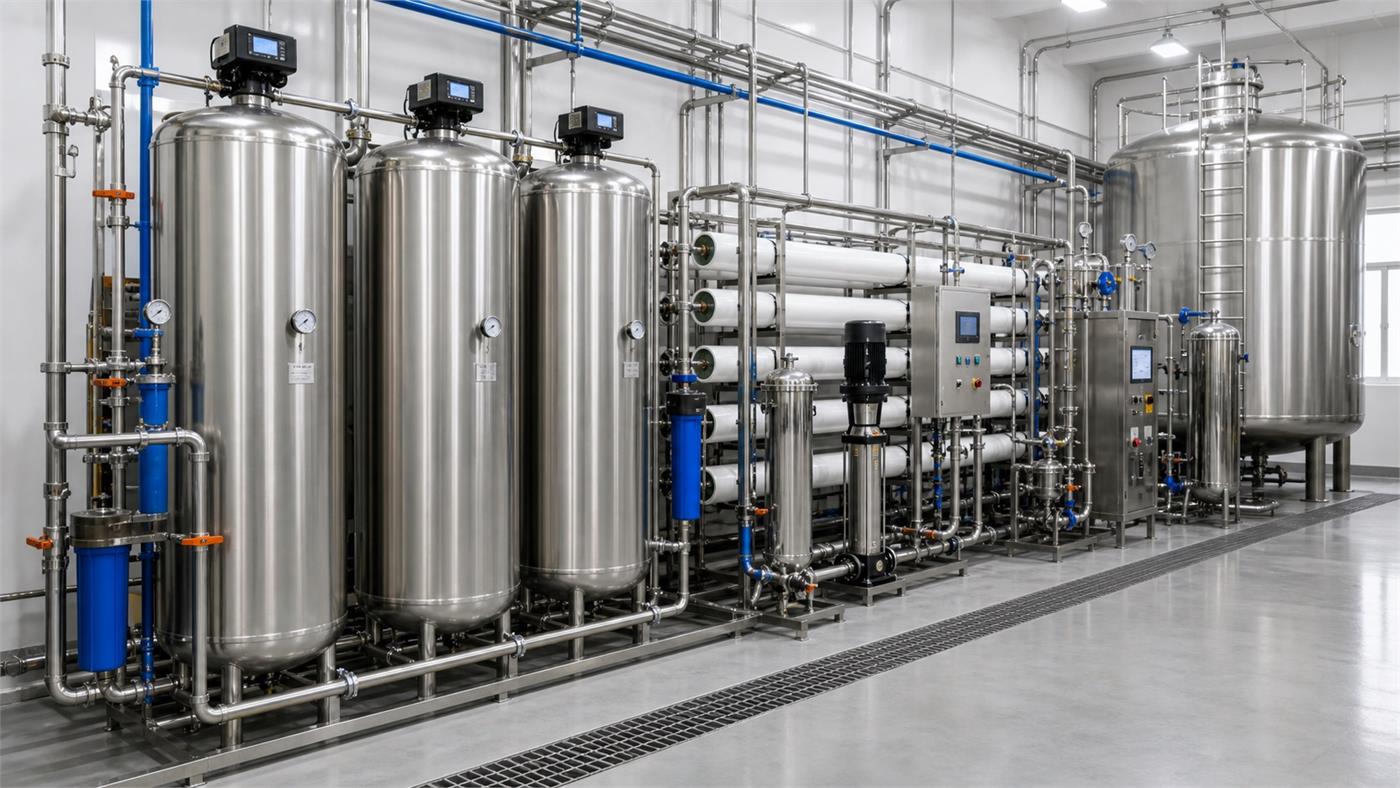
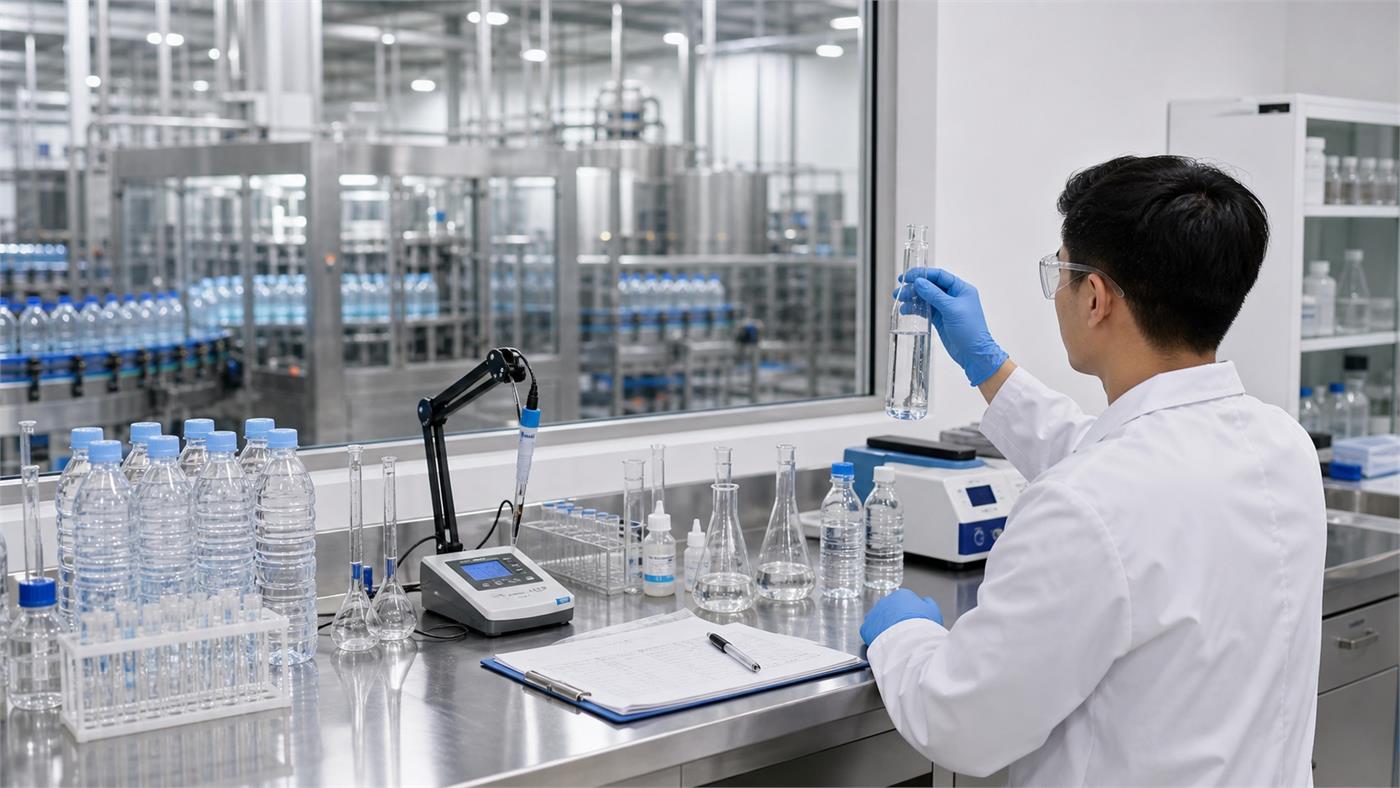
Reverse Osmosis Is a Process Decision, Not a Default Machine
An RO water bottling plant should begin with a qualified source-water analysis and the intended product specification. Those inputs determine whether RO is appropriate, which pretreatment protects the membranes and how product water reaches filling without losing process control.
- Qualified raw-water analysis
- Defined purified-water product target
- Net treatment capacity and storage basis
- Sanitation, monitoring and reject-water boundary
When Does a Bottled Water Plant Need RO?
Reverse osmosis can be a useful purification stage, but it should not be added simply because it appears on a standard supplier list. The decision changes product identity, water balance, utilities, operating skills and lifecycle cost.
Purified water objective
RO may be considered when the product plan requires controlled reduction of dissolved constituents and the source analysis supports the selected process.
Source-water evidence
Well, municipal and other sources can have very different variability and pretreatment needs. Current laboratory evidence is more useful than source name alone.
Mineral or spring water boundary
Natural mineral or spring water may have product-definition and permitted-treatment constraints. Do not assume RO belongs in that process without qualified local review.
Destination-market rules
Product category, treatment, monitoring, labeling and release requirements vary. The buyer remains responsible for local regulatory confirmation.
Operational capability
Membrane systems need trained operation, monitoring, cleaning, consumables and maintenance. The plant plan should include these responsibilities before purchase.
Water and wastewater balance
The project must account for feed water, product water, cleaning demand and concentrate or reject water instead of quoting only the filler speed.
RO Water Bottling Plant Process Flow
Use this sequence to compare proposals. Each stage needs an agreed input, output, instrument boundary, sanitation method and owner.
| Stage | Planning decision | Evidence to request |
|---|---|---|
| 1. Raw-water reception | Define source, incoming storage, pumping, seasonal variation and protected sampling point. | Laboratory report, source description, tank basis and incoming-water responsibility. |
| 2. Pretreatment | Select filtration, conditioning or dosing from the analysis and membrane design. | Process flow, media or chemical basis, pressure and monitoring points. |
| 3. Cartridge protection | Confirm final protection before membranes, housing arrangement and replacement access. | Element specification, differential-pressure monitoring and consumables list. |
| 4. Reverse osmosis | Define membrane train, net product-water basis, controls and approved operating window. | Membrane records, instrument list, flow and pressure evidence, alarms and control narrative. |
| 5. Product-water conditioning | Identify any approved post-treatment required to meet the intended product. | Product specification, process basis, dosing or conditioning boundary and verification method. |
| 6. Hygienic storage and transfer | Plan tanks, vents, circulation, pumps and product piping as part of the sanitation system. | Piping and instrument diagram, tank details, cleaning method and sample points. |
| 7. Filling and closing | Connect approved product water to the selected bottle, cap and filling center. | Bottle and cap approval, filler application, product connection and acceptance plan. |
| 8. Labeling and packing | Match product identity, code, label and pack to the destination market and distribution route. | Artwork responsibility, pack sample, coding position and inspection plan. |
| 9. Quality release | Define source, process and finished-product checks with qualified local input. | Sampling plan, laboratory responsibility, records and release authority. |
| 10. Concentrate and cleaning streams | Identify reject water, backwash, cleaning and drainage routes. | Water balance, connection schedule, local disposal or approved reuse responsibility. |
Information an RO System Supplier Needs
A useful proposal is based on evidence and an operating plan. Send these inputs before asking suppliers to select membranes, pumps, tanks or treatment capacity.
Raw-water laboratory report
Use a qualified laboratory and include the report date, source and any known seasonal or operational variation.
Product-water objective
Define the intended market product and the parameters that qualified specialists will use for acceptance.
Production schedule
State bottle sizes, balanced-line demand, hours per shift, shifts, cleaning windows and planned expansion.
Factory environment
Share room dimensions, ambient conditions, floor and drainage information, utility locations and maintenance access.
Incoming utilities
Confirm electrical supply, feed-water pressure and availability, compressed air where used, drainage and cleaning-water conditions.
Operating team
Describe available treatment experience, maintenance support, laboratory access and the desired automation and record level.
Consumables route
Ask for filters, membranes, media, chemicals and instruments to be identified by specification and expected supply route.
Responsibility boundary
Separate supplier equipment, local tanks or piping, installation labor, utility connections, compliance work and commissioning support.
What to Compare in RO Water Plant Proposals
Compare the same water analysis and net production basis. A lower feed-flow figure or missing tank and sanitation scope is not an equivalent offer.
| Decision | Ask the supplier | Why it matters |
|---|---|---|
| Design basis | Which water report, temperature and product specification were used? | The treatment train cannot be evaluated without its stated inputs. |
| Net capacity | What usable product-water flow is expected at the approved conditions? | Feed flow and membrane nameplate do not equal water available to the filler. |
| Pretreatment protection | How does each stage protect downstream membranes and product quality? | Weak pretreatment can increase fouling, cleaning and replacement risk. |
| Instrumentation | Which pressures, flows, conductivities, levels, alarms and records are included? | Operators need evidence to recognize drift and protect the system. |
| Sanitation | How are tanks, piping, membrane system and product transfer cleaned or sanitized? | A treatment train and a hygienic bottling process must work as one system. |
| Water balance | What product, concentrate, backwash and cleaning streams are expected? | Site drainage and water economics depend on the complete balance. |
| Documents and FAT | Which drawings, manuals, records and tests are supplied? | Acceptance should follow agreed evidence rather than brochure language. |
| Lifecycle support | Which consumables, spares, training and service routes are defined? | Operation continues long after shipment and initial commissioning. |
FAQ
Does every bottled water plant need reverse osmosis?
No. RO should be selected from source-water test results, the intended product definition and destination-market requirements. It may be appropriate for purified water, but it can be unnecessary or unsuitable for some spring or natural mineral water products.
What information is needed before designing an RO water bottling plant?
Provide a qualified raw-water analysis, source type and seasonal context, desired product specification, bottle and pack range, target production schedule, recovery or reject-water constraints, factory conditions and applicable local requirements.
What equipment can be included before the RO membranes?
The pretreatment train may include raw-water storage, pumping, media filtration, cartridge filtration, dosing, softening or other project-specific stages. The actual sequence must follow the water analysis and membrane-system design rather than a generic equipment list.
What happens after reverse osmosis in a bottling plant?
The approved process may include product-water conditioning, hygienic storage, circulation or transfer, UV or ozone where justified, final filtration, filling and documented quality checks. Every tank and interface should be included in the sanitation plan.
How should RO capacity be matched to the filling line?
Match net treated-water production and usable storage to filler demand, rinsing or cleaning consumption, planned production hours, sanitation windows and expected operating losses. Compare on an agreed operating basis, not nominal feed-water flow alone.
What is RO reject water and how should it be planned?
RO separates a product-water stream from a concentrate or reject stream. The project must identify expected quantity and quality, drainage or approved reuse route, local environmental requirements and the buyer-supplier responsibility for handling it.
Can an RO plant and bottling line come from one complete-line supplier?
A supplier can coordinate treatment, tanks, product transfer, filling and packaging interfaces, but qualified water specialists and local professionals still need to confirm the process, compliance and site responsibilities. The proposal should name every boundary.
What should be checked during FAT for an RO water treatment system?
Agree feed-water assumptions, instrumentation, alarms, flow and pressure evidence, membrane and component records, sanitation sequence, controls, documents and open items. Final product-water acceptance may also require site conditions and qualified laboratory testing.
How should membrane cleaning and replacement be planned?
Request the supplier’s cleaning method, chemical compatibility, monitoring basis, preservation procedure, replacement identification, safe handling requirements and local supply route. Actual intervals depend on feed water and operation and should not be promised universally.
What should an RO water bottling plant quotation include?
Request the water-quality basis, process flow, equipment and instrument list, net capacity basis, tanks and piping, sanitation scope, utility schedule, concentrate boundary, layout, documents, spares, testing, installation support and buyer-supplier responsibility matrix.
Request an RO Water Plant Scope Review
Share what you know now. The goal is to prepare a useful plant brief before a machine quotation is built.