Project execution guide
Water Bottling Line Installation and Commissioning
Prepare the factory, responsibility matrix, unloading, positioning, utility connections, FAT, SAT, product trials, training and acceptance before equipment shipment.
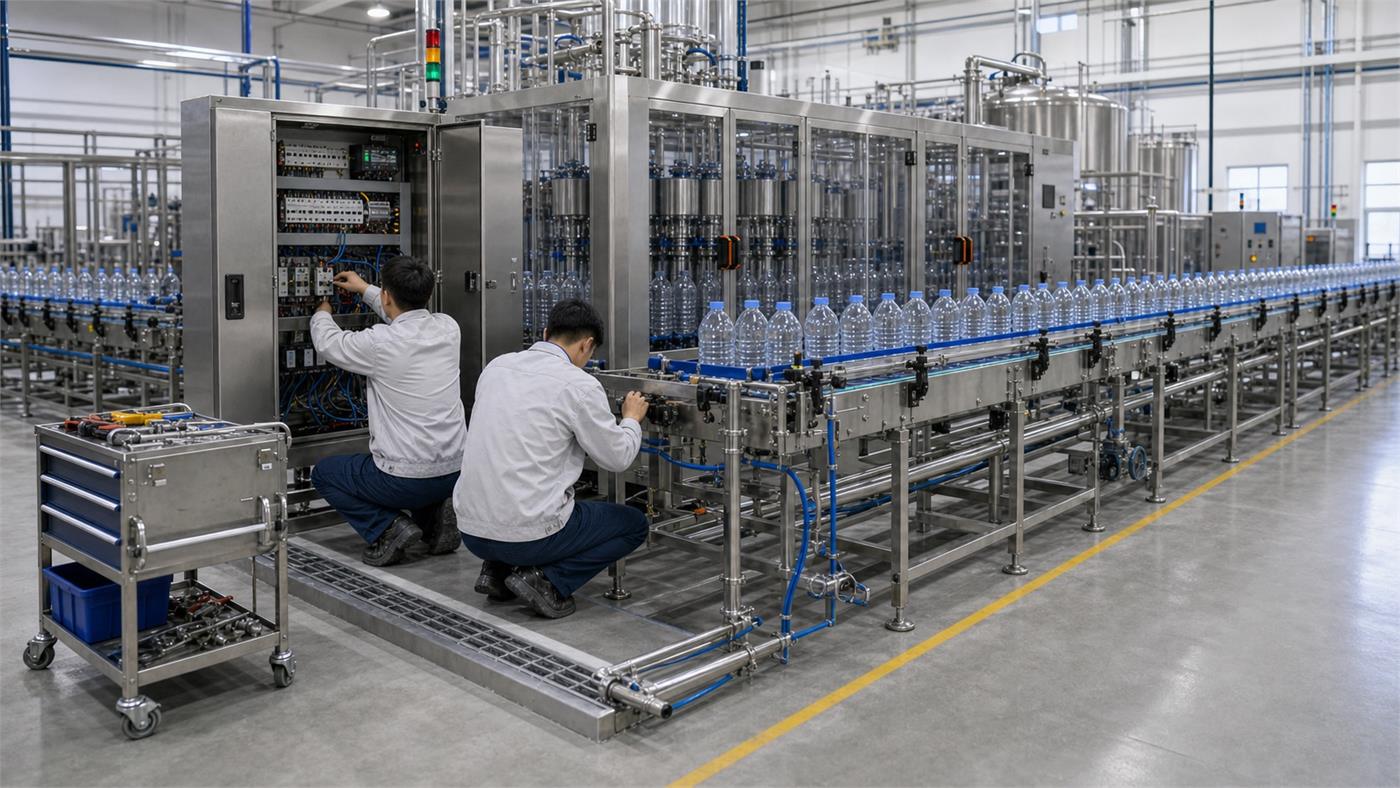
Commissioning Begins Before the Machines Arrive
A successful startup depends on approved drawings, finished utilities, available samples, safe site access, local labor and written acceptance criteria. These items belong in the project schedule before shipment.
- Factory readiness review before dispatch
- Written unloading and installation boundary
- FAT and SAT with agreed test basis
- Operator training and open-item closeout
A Practical Installation and Commissioning Sequence
The exact schedule depends on project scope and site readiness, but the responsibility and approval gates should be visible before purchase.
1. Technical approval
Freeze bottle, cap, label, pack, equipment scope, layout direction, utilities and interface documents.
2. FAT preparation
Agree test samples, test duration, measurement basis, safety checks, documents and treatment of open items.
3. Site readiness
Complete floors, access, drains, power, air, water, ventilation, lifting plan, storage and local permissions.
4. Delivery and positioning
Inspect shipping condition, unload safely, move equipment through the approved route and position it to the layout.
5. Installation and connection
Level, align and connect machines, conveyors, electrical systems, utilities, product piping and safety interfaces.
6. Dry and wet testing
Check rotation, controls, interlocks and interfaces before water tests, cleaning and product trials.
7. SAT and training
Run the agreed bottle and pack under documented conditions while training operators and maintenance staff.
8. Acceptance and closeout
Record results, documents, spare parts, remaining work, responsibility, due dates and support contacts.
Define the Buyer-Supplier Boundary Before Shipment
A written responsibility matrix prevents critical work from being discovered only after machines reach the factory.
| Work package | Typical supplier information or support | Buyer-side items to confirm |
|---|---|---|
| Civil and access | Machine loads, layout, connection points and access dimensions. | Building, floor, foundations if required, doors, lifting route and safe work area. |
| Unloading and positioning | Packing list, weights, lifting points and positioning guidance. | Crane or forklift, rigging, local labor, insurance and site supervision boundary. |
| Utilities and connection | Approved utility schedule, interface points and machine-side requirements. | Incoming supply, local panels, cables, pipes, valves, drains, supports and permits. |
| Test materials | Required bottle, preform, cap, label, film, carton, water and cleaning specifications. | Correct quantities delivered to the factory before trials. |
| Commissioning labor | Engineer scope, estimated working basis, tools and technical supervision. | Operators, electricians, mechanics, translators, travel support and working-hour rules. |
| Acceptance | Test method, agreed product, output basis, quality checks and documents. | Authorized witnesses, local compliance review and signed open-item process. |
FAQ
What training should be included?
Operator startup, cleaning, routine maintenance, changeover, troubleshooting and spare parts handling should be discussed before purchase.
How long does water bottling line installation take?
It depends on line scope, factory readiness, local labor, utility completion, shipment condition, product samples and acceptance requirements. Ask for a project schedule with assumptions instead of relying on a universal duration.
How many operators does a water bottling line need?
Operator needs depend on automation, bottle and packing materials, quality checks, material loading, warehouse movement, shift pattern and maintenance support. Ask suppliers to state the labor assumption for each line section.
What should be tested during FAT?
The factory acceptance test should follow the contracted scope and agreed samples. Review safety, machine operation, interfaces, output test basis, documents, spares and unresolved items before shipment.
What happens after the machines arrive?
The buyer prepares unloading, positioning, utilities, local labor and materials according to the agreed boundary. Installation, dry testing, water testing, product trials, training and acceptance should follow a written sequence.
What is the difference between FAT and SAT?
FAT is the agreed factory-side review before shipment; SAT is the site-side review after installation and utility connection. Each test needs a written scope, materials, measurement method, acceptance criteria and open-item process.
Who is responsible for unloading and machine positioning?
Responsibility varies by contract. Confirm shipping boundary, unloading equipment, lifting plan, access route, local labor, positioning marks, alignment work, supervision and insurance before dispatch.
What must be ready before commissioning starts?
The factory should have approved foundations or floors, safe access, completed utilities, drains, suitable product and packaging samples, operators, cleaning materials and local permissions required for testing.
How should line acceptance be defined?
Acceptance should reference the contracted bottle and pack, balanced-line test conditions, run duration, quality checks, acceptable stops or rejects, safety, documents, training and a dated list for unresolved work.
Plan installation and commissioning as a controlled project sequence
Successful startup depends on prepared access, foundations, utilities, labor, materials and responsibilities. Installation days alone do not define the work required to reach accepted production.
Allot Tech Project Desk · Mr KcalBuyer-education content prepared for project clarification. Final equipment scope, engineering values, prices and guarantees must be confirmed in a supplier's written proposal.Updated:
Request an Installation Scope Review
Share what you know now. The goal is to prepare a useful plant brief before a machine quotation is built.