Process cooling
Industrial Water Chiller for a Bottling Line
Connect cooling capacity to the actual blow molder, compressor, process equipment and site conditions instead of selecting a chiller from line speed alone.
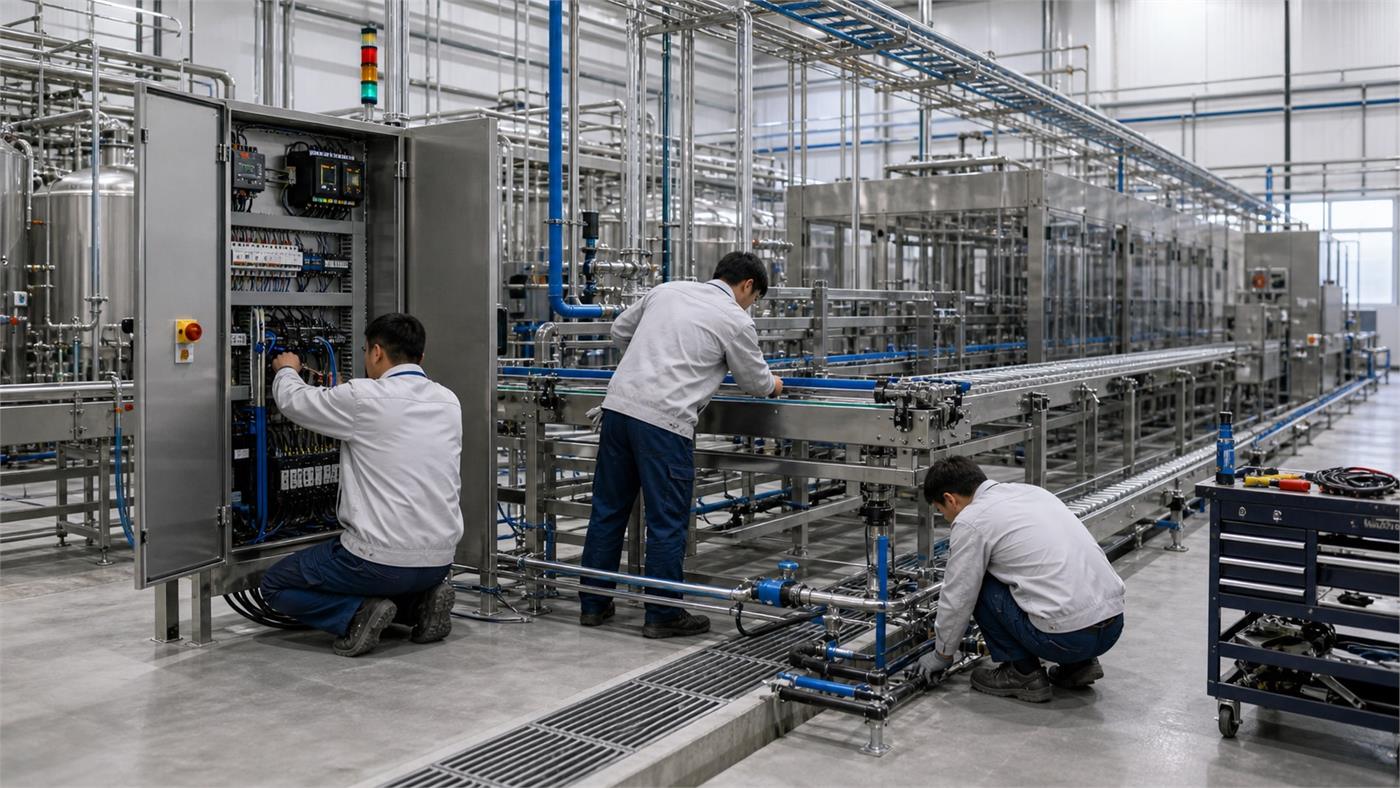
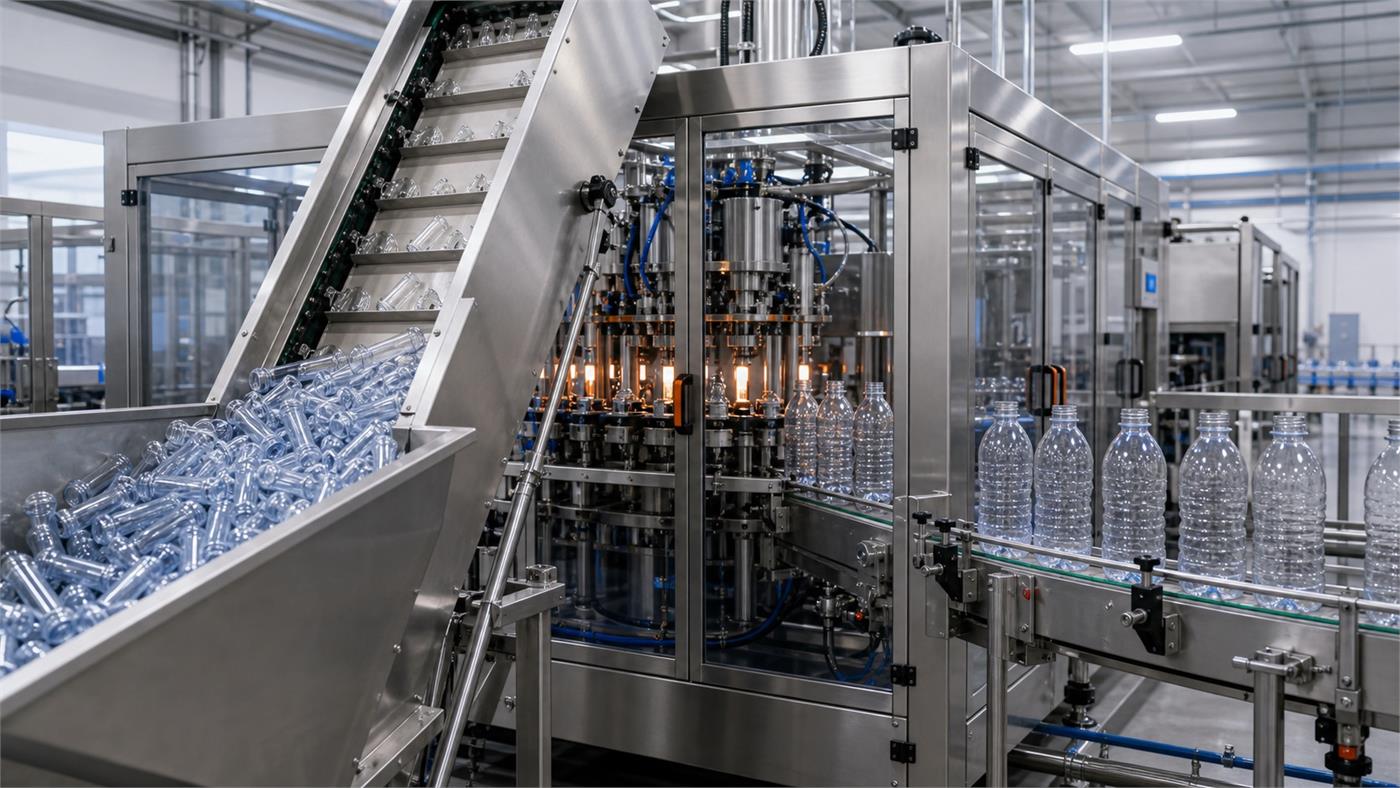
Cooling Is Shared by Several Plant Systems
Bottle blowing, compressed air and other supplied equipment may have different cooling conditions, cleanliness needs and operating schedules. The project needs a coordinated load list and hydraulic design.
- Connected-equipment heat loads
- Supply and return conditions
- Water quality, pumps and piping
- Ambient design, access and redundancy
Create a Cooling Load Schedule
Each equipment supplier should state its approved cooling conditions. The plant engineer then coordinates simultaneous demand, distribution and heat rejection.
Connected loads
List every machine or package connected to process cooling.
Water conditions
Define flow, supply and return temperatures, pressure and water-quality responsibility.
Hydraulic system
Plan pumps, buffer, headers, controls, insulation and pressure-drop boundary.
Heat rejection and reliability
Review ambient conditions, ventilation, condenser access and duty strategy.
Bottling-Line Chiller RFQ
Ask the supplier to show the load calculation and operating assumptions.
| Decision | What to define | Evidence to request |
|---|---|---|
| Load schedule | Combine approved loads and operating simultaneity. | Equipment data sheets and calculation. |
| Cooling conditions | Define flow, temperature, pressure and water quality. | Guaranteed operating point and allowed range. |
| Hydraulics | Define pumps, tank, controls and distribution boundary. | Flow diagram and pump data. |
| Ambient design | State outdoor or room conditions and heat rejection. | Performance correction and installation requirements. |
| Reliability | Define duty, standby, alarms and service access. | Control philosophy and maintenance plan. |
Cooling Information to Collect
Do not let different machine suppliers assume that another party provides the chiller.
Equipment data
Collect heat rejection, flow, temperature and pressure requirements from each supplier.
Operating schedule
State which loads run together and the cleaning, startup and standby modes.
Factory conditions
Share ambient range, indoor or outdoor location, water source and available space.
Piping plan
Map distance, elevation, insulation, valves, drains and future connections.
FAQ
Why does a water bottling plant need a chiller?
Selected bottle-blowing, compressed-air or process equipment may require controlled cooling; the exact users depend on the supplied line.
Can chiller capacity be calculated from BPH?
Not reliably. Use equipment heat loads, cooling conditions, simultaneous operation and site ambient data.
Should each machine have a separate chiller?
That is a project decision. Compare dedicated and shared systems by required conditions, contamination risk, control, redundancy and maintenance.
What information should chiller suppliers guarantee?
Ask for performance at stated load, ambient, supply and return conditions, plus pumps, controls and utility requirements.
Where should the chiller be installed?
Plan heat rejection, ventilation, weather protection where relevant, access, drainage, piping distance and safe maintenance space.
Request a Cooling Scope Review
Share what you know now. The goal is to prepare a useful plant brief before a machine quotation is built.