Supplier comparison guide
Water Bottling Line Quotation Comparison
Compare complete water bottling line quotations on the same technical and commercial basis. Check equipment scope, capacity assumptions, utilities, installation, testing, spares and responsibility boundaries before selecting a supplier.
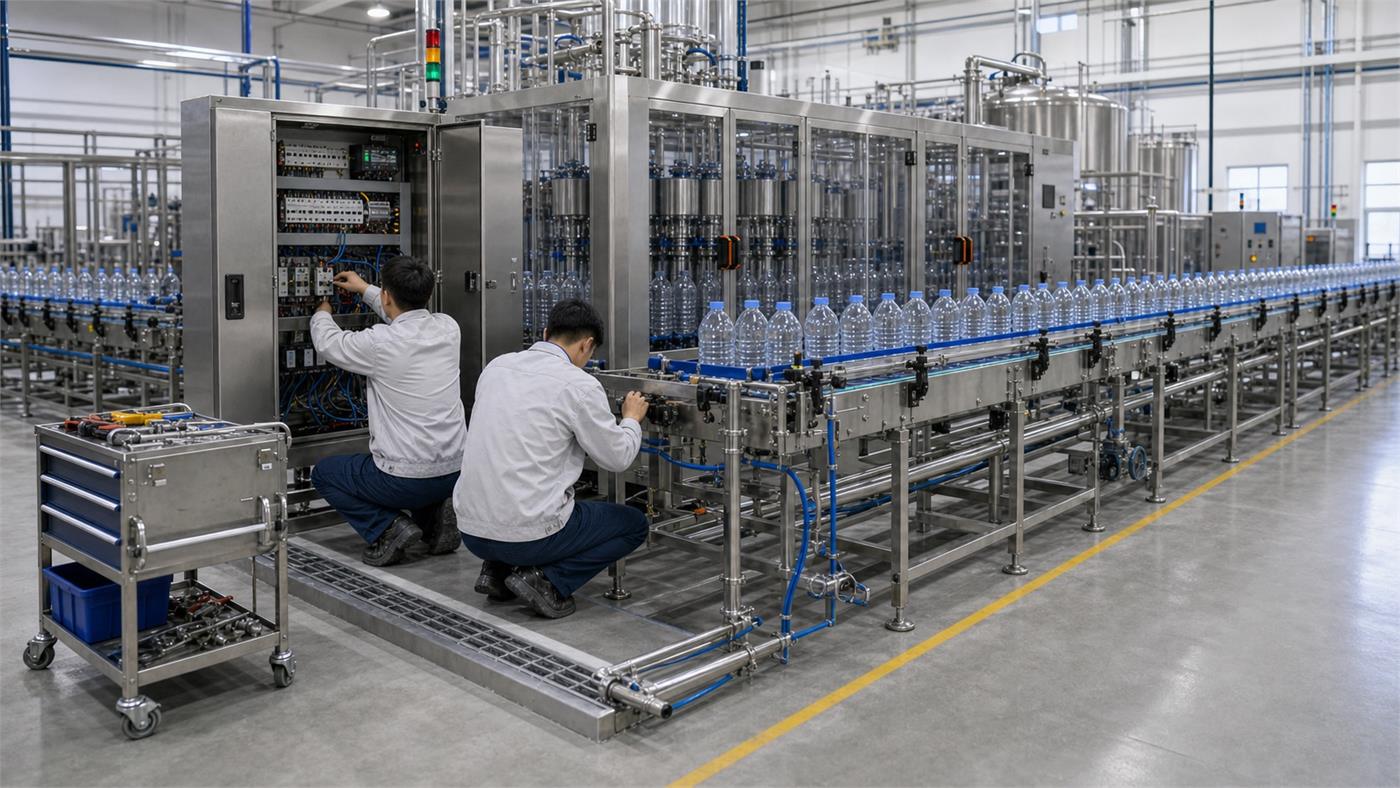
Make Every Quotation Describe the Same Plant
A quotation is useful only when its capacity basis, equipment modules, buyer-side work and service scope are clear. Normalize those assumptions before comparing totals.
- Match bottle and speed assumptions
- Mark included, optional and excluded modules
- Separate supplier work from buyer-side work
- Record open questions before commercial approval
Start With a Common RFQ Baseline
Send the same project brief to each supplier. This reduces guesswork and makes technical differences visible before price becomes the deciding factor.
Product and bottle basis
State water type, bottle volumes, bottle drawing or sample, neck finish, cap and label format.
Capacity basis
Confirm whether BPH applies to one bottle size, normal production conditions and the proposed shift schedule.
Water treatment input
Share the water source and test data when available so treatment is not quoted from an unsupported assumption.
Bottle supply route
State whether bottles are purchased or blown in-house and identify molds, preforms, compressor, dryer and chiller scope.
Packaging route
Define label type, coding position, bottles per pack, film, tray or carton requirements and expected labor.
Factory information
Provide room dimensions, ceiling height, access doors, drainage, power and compressed-air conditions.
Local responsibility
Ask suppliers to identify civil work, local wiring, piping, lifting, travel, accommodation and local labor.
Documentation needs
List manuals, drawings, utility data, recommended spares, FAT records and training expectations.
Complete Line Scope Comparison Matrix
Use one row for every module and ask each supplier to mark included, optional, excluded or buyer-side. A blank cell is an open commercial risk, not an assumption.
| Scope area | What the quotation should state | Comparison question | Risk if unclear |
|---|---|---|---|
| Water treatment | Tanks, filtration, RO when required, UV, ozone, pumps, instruments and sanitary piping boundary. | Are source-water assumptions and rated flow the same? | Treatment may not support filling demand or local water conditions. |
| PET bottle supply | Purchased-bottle handling or blowing machine, molds, preform feed, compressor, dryer, chiller and transfer. | Are all bottle sizes and utility packages included? | The quoted line may be unable to produce or feed the planned bottles. |
| Rinsing filling capping | Bottle range, cap type, rated condition, contact materials, change parts and cleaning approach. | Is speed based on the same bottle and normal operating condition? | Nameplate speed may not represent the buyer product. |
| Labeling and coding | Label technology, bottle range, code location, inspection point and consumable assumptions. | Does the proposal match the actual label and code sample? | Labels or codes may be unstable after installation. |
| Packing | Film, tray or carton format, pack count, tunnel or sealer and discharge arrangement. | Can packing sustain the same production basis as filling? | The end of line can limit real daily output. |
| Conveyors and accumulation | Bottle and pack conveyors, transfer route, buffer sections, sensors and rejection points. | Is line balance shown, not only individual machine speed? | Frequent stops can reduce usable output. |
| Controls and integration | Control architecture, operator interfaces, interlocks and responsibility between modules. | Who integrates machines from different packages? | Interface problems can remain unresolved on site. |
| Startup spares and tools | Itemized wear parts, seals, belts, sensors, tools and consumables for commissioning. | Is the list itemized and connected to the offered models? | Small missing parts can delay startup. |
| Documents and testing | Layout, utility list, manuals, FAT plan, test materials and open-item record. | What evidence is delivered before shipment? | The buyer cannot verify scope or prepare the factory. |
| Installation and training | Engineer tasks, duration basis, buyer labor, travel terms, commissioning and operator training. | Which work and cost remain buyer-side? | Installation cost and schedule can change after shipment. |
Supplier-Side and Buyer-Side Work
Commercial comparison becomes clearer when every site task has an owner. Confirm the final boundary in the contract and approved technical documents.
| Work package | Supplier should clarify | Buyer should confirm |
|---|---|---|
| Factory readiness | Machine foundation or floor requirements, access and environmental conditions. | Building dimensions, floor condition, doors, lifting route and completion date. |
| Electrical work | Machine connected load, cabinet boundary and cable requirements. | Incoming power, transformer, local distribution, cable route and local compliance. |
| Compressed air and cooling | Required pressure, quality, flow and connection points. | Compressor-room readiness, piping, ventilation and water quality where relevant. |
| Water and drainage | Inlet quality, process-water demand, discharge points and cleaning needs. | Source availability, drains, wastewater handling and local permits. |
| Unloading and positioning | Packing dimensions, weights, lifting points and supervision scope. | Forklift, crane, rigging crew, route and site safety plan. |
| Installation and commissioning | Engineer scope, expected duration, acceptance steps and training output. | Local technicians, translators if needed, utilities, product materials and production staff. |
| Acceptance and open items | FAT and site acceptance method, records and corrective-action process. | Named decision team, approved samples and written acceptance criteria. |
Questions to Resolve Before a Purchase Decision
These questions help the buyer turn a supplier proposal into an auditable project scope without pretending that one standard contract fits every country or factory.
Quotation validity and revision
Confirm the revision number, issue date, validity period and which technical documents form part of the offer.
Payment milestones
Tie commercial milestones to clearly defined deliverables and review them with appropriate local professional advice.
Delivery boundary
Clarify packing, shipping term, insurance responsibility, destination charges and unloading boundary.
Change control
Require written confirmation when bottle, cap, label, layout or utility changes affect scope.
Warranty boundary
Read the actual warranty terms, exclusions, response route and buyer maintenance obligations.
After-sales communication
Confirm the technical contact path, remote support method, spare-parts ordering process and time-zone expectations.
Local compliance
Ask what documents are available, then verify local regulatory needs independently before purchase.
Final open-item list
Keep unresolved technical and commercial questions in one dated list before approval.
Resolve Differences With a Decision Log
The comparison matrix identifies differences; a decision log resolves them. Give each unresolved requirement an ID, quote the relevant proposal revision or drawing reference, record the requested answer and assign an owner.
A missing answer, a technical alternative and a buyer-side cost are different issues. Do not hide all three in one contingency allowance. Close product compatibility and the accepted-output boundary first, then calculate a comparable commercial subtotal using confirmed scope.
When a supplier changes its answer, retain the earlier reference and identify which other rows change. For example, choosing purchased bottles instead of in-house blowing affects equipment, utilities, bottle receiving and the inlet test boundary. One deleted blower line item is not a complete revision.
| Supplier response | Next buyer action | Comparison treatment |
|---|---|---|
| Confirmed with a document reference | Check it matches the common RFQ revision | Use the confirmed scope and stated conditions. |
| Not stated | Request a written inclusion or exclusion response | Keep open; do not assume included or assign zero cost. |
| Buyer supplied | Define the connection and obtain the buyer work allowance | Keep responsibility and costs visible. |
| Proposed alternative | Review the package, interface and output consequences | Compare separately until the changed basis is approved. |
FAQ
How do I compare two water bottling line quotations?
Normalize the same bottle sizes, capacity basis, water treatment assumptions, packaging route, utilities and installation boundary first. Then compare every included, optional and excluded item line by line.
What should a complete water bottling line quotation include?
It should identify treatment, bottle supply, filling and capping, labeling and coding, packing, conveyors, controls, utilities, startup spares, documentation, testing and installation support as included, optional or buyer-side.
Why can two quotations with the same BPH be very different?
The stated speed may use different bottle sizes, operating assumptions and downstream scope. Treatment, blowing, packing, conveyors, controls, materials and service boundaries can also differ.
Should I choose the lowest water bottling line price?
Price should be reviewed only after the proposals have comparable scope. A lower figure can be valid, but missing modules, utilities, spares or service responsibilities must be identified before a decision.
What information should I send suppliers before requesting a quotation?
Send the target market, bottle sizes, cap and label details, water source, capacity and shift target, pack format, factory dimensions, available utilities, country and expected project schedule.
How long does it take to manufacture and deliver a water bottling line?
The schedule depends on customization, approved samples and drawings, component availability, factory testing, shipping route, customs and site readiness. Request a dated project schedule with buyer and supplier milestones instead of relying on a generic lead-time promise.
Who is responsible for shipping and customs clearance?
Responsibility depends on the agreed Incoterm and contract. The quotation should identify export packing, inland transport, port handling, sea freight, insurance, import clearance, duties, unloading and final delivery as included, excluded or buyer-side.
What after-sales support should a complete line supplier describe?
Ask for named support channels, response procedure, remote troubleshooting, on-site service terms, training scope, warranty boundary, spare-parts ordering route and the documents needed to identify each machine and component.
Normalize quotations before comparing price or promised output
Two quotations are comparable only when format, output basis, equipment boundary, utilities, services and acceptance evidence are aligned. A lower total can simply reflect a narrower scope.
Allot Tech Project Desk · Mr KcalBuyer-education content prepared for project clarification. Final equipment scope, engineering values, prices and guarantees must be confirmed in a supplier's written proposal.Updated:
Request a Quotation Scope Review
Share what you know now. The goal is to prepare a useful plant brief before a machine quotation is built.