PET bottle supply planning
PET Bottle Blowing for Water Bottling Line
Decide whether the new water bottling line should use purchased PET bottles or in-house bottle blowing. Preforms, molds, high pressure air, chiller, bottle transfer and layout all affect the complete plant scope.
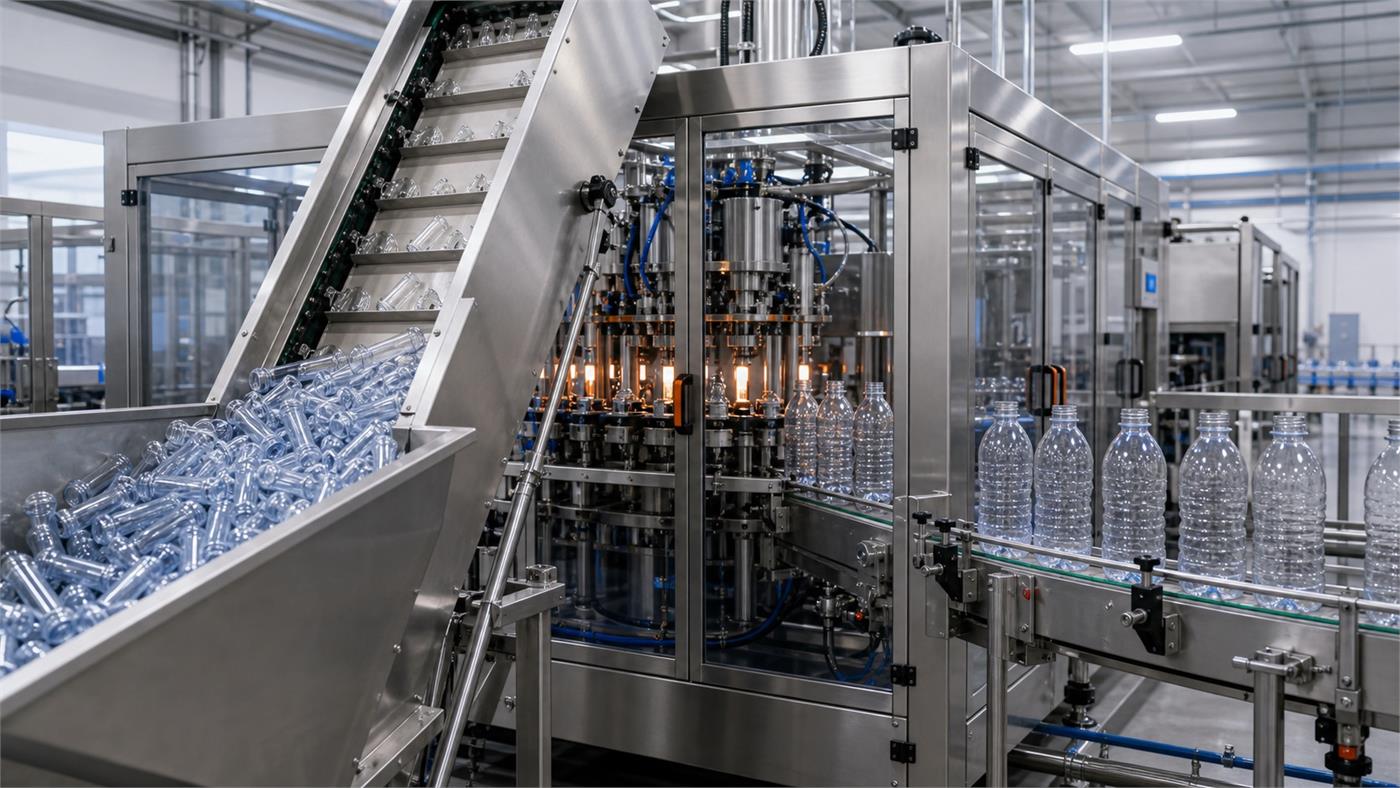
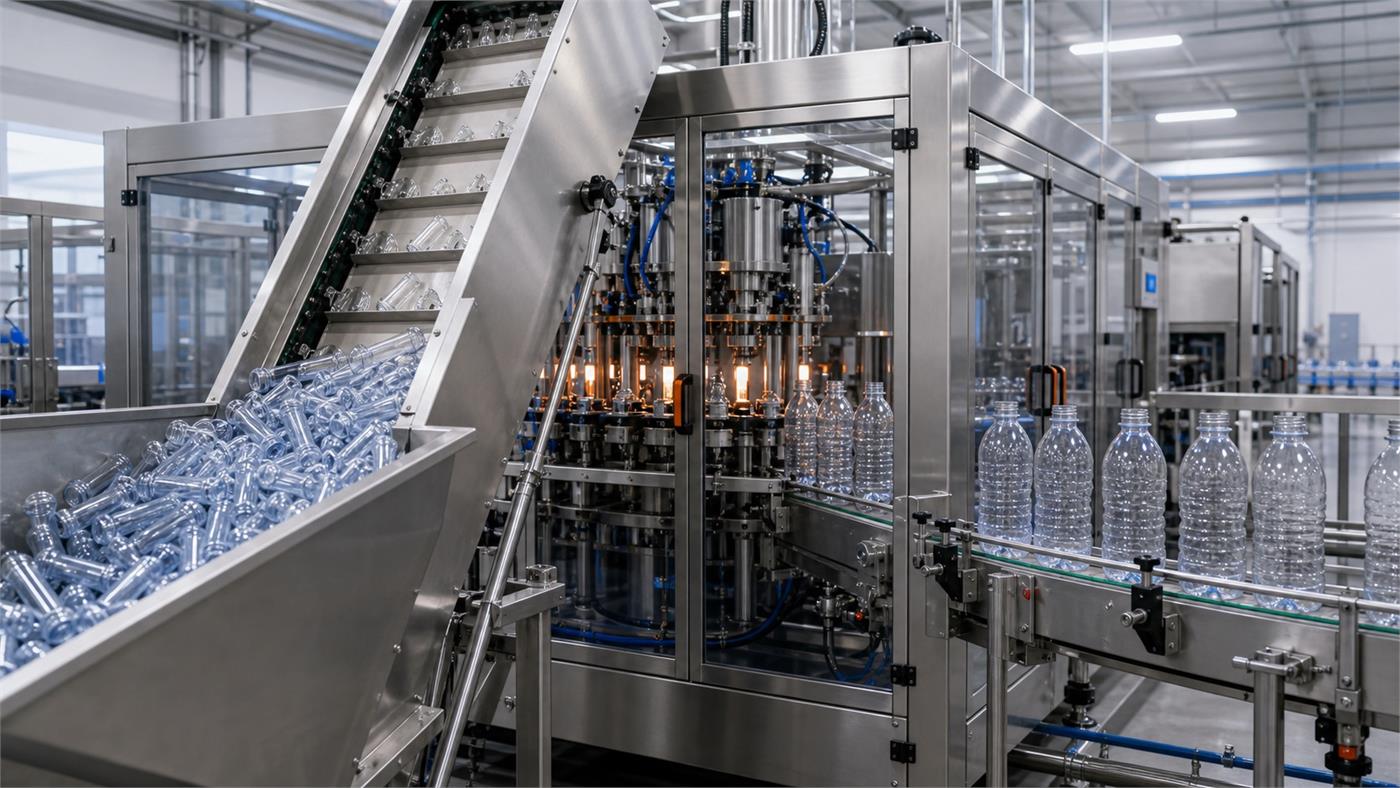
Bottle Blowing Changes More Than the Machine List
In-house PET bottle blowing can improve bottle control and reduce empty bottle logistics, but it adds molds, preforms, compressed air, cooling, space and maintenance responsibilities.
- Preform and bottle design
- Mold and bottle sample confirmation
- High pressure air and chiller
- Bottle transfer route to filling
Purchased Bottles vs In-House PET Bottle Blowing
The right choice depends on market volume, bottle design control, logistics, factory space and utility readiness.
Purchased bottles
Simpler startup route when local bottle supply is reliable and the first volume is modest.
In-house blowing
Useful when bottle logistics are expensive, bottle design must be controlled or volume supports the extra system.
Mold planning
Bottle size, neck finish, weight, shape and label area should be confirmed before mold purchase.
Air system
Bottle blowing needs high pressure air and often low pressure air support, which changes utility cost and compressor room planning.
Cooling support
Chiller capacity and water quality affect blowing stability and maintenance.
Bottle transfer
Air conveyor or bottle handling route should connect blowing and filling without contamination or floor congestion.
Space and operators
Blowing adds preform storage, mold change, compressor access and operator tasks.
Quotation boundary
Confirm whether molds, compressor, dryer, chiller, conveyors and installation are included or buyer-side.
Bottle Blowing Scope Items to Confirm
A complete line supplier proposal should name bottle blowing assumptions before the buyer compares prices.
| Item | Planning question | Risk if unclear |
|---|---|---|
| Bottle drawing | Has the bottle shape, volume, neck and weight been confirmed? | Wrong molds or unstable bottle handling. |
| Preform supply | Who supplies preforms and what neck/weight is expected? | Poor bottle quality or cost surprises. |
| Molds | Are molds included for each bottle size? | Hidden cost and delayed startup. |
| Compressor and dryer | Are high pressure air systems included? | The blowing system cannot run as quoted. |
| Chiller | Is cooling capacity included or buyer-side? | Bottle quality and machine stability problems. |
| Air conveyor | How are bottles transferred to filling? | Layout congestion or hygiene risk. |
FAQ
Should I buy a bottle blowing system at startup?
It depends on bottle supply, transport cost, design control, factory space, compressor capacity and budget. Some startups reserve space for later blowing.
What should I confirm before choosing bottle blowing?
Confirm bottle samples, preform source, mold cost, high pressure air, chiller needs, operator skill and future bottle size plans.
Can one blowing machine make several bottle sizes?
Often yes, with a confirmed preform and neck system plus separate molds and changeover procedures. Each bottle drawing, weight and shape should be checked before molds are ordered.
What utilities does PET bottle blowing require?
Bottle blowing commonly needs high-pressure clean dry air, power, cooling and suitable ventilation. Exact demand must come from the selected blower, bottle and production basis.
Is an air conveyor included between blowing and filling?
It should be listed explicitly. The transfer route, elevation, filters, supports and controls affect hygiene, layout and line balance.
What Must Be Defined Before Adding PET Bottle Blowing?
In-house blowing can reduce empty-bottle transport and connect bottle production directly to filling, but it adds preform specifications, molds, high-pressure air, cooling, bottle transfer, maintenance and quality control. The decision must be evaluated as a complete bottle-supply system.
Equipment references for this planning stage
These authentic brochure images help buyers identify the machine categories that may sit inside a complete water bottling line. They are not customer-case evidence and do not fix the final model, output, process, utility load or supplier boundary.
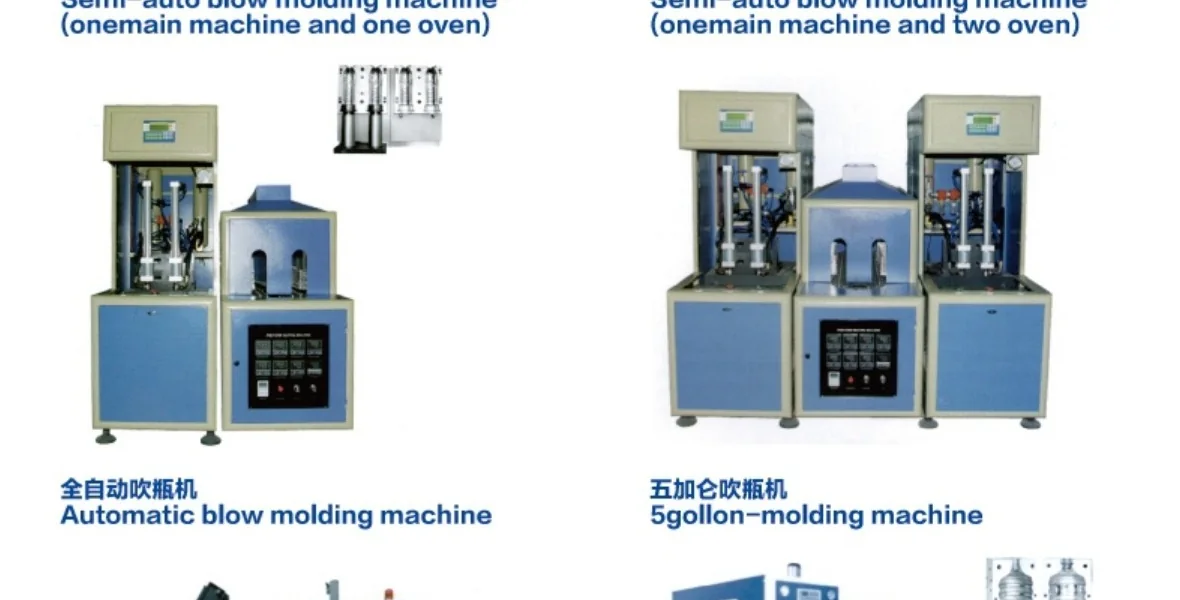
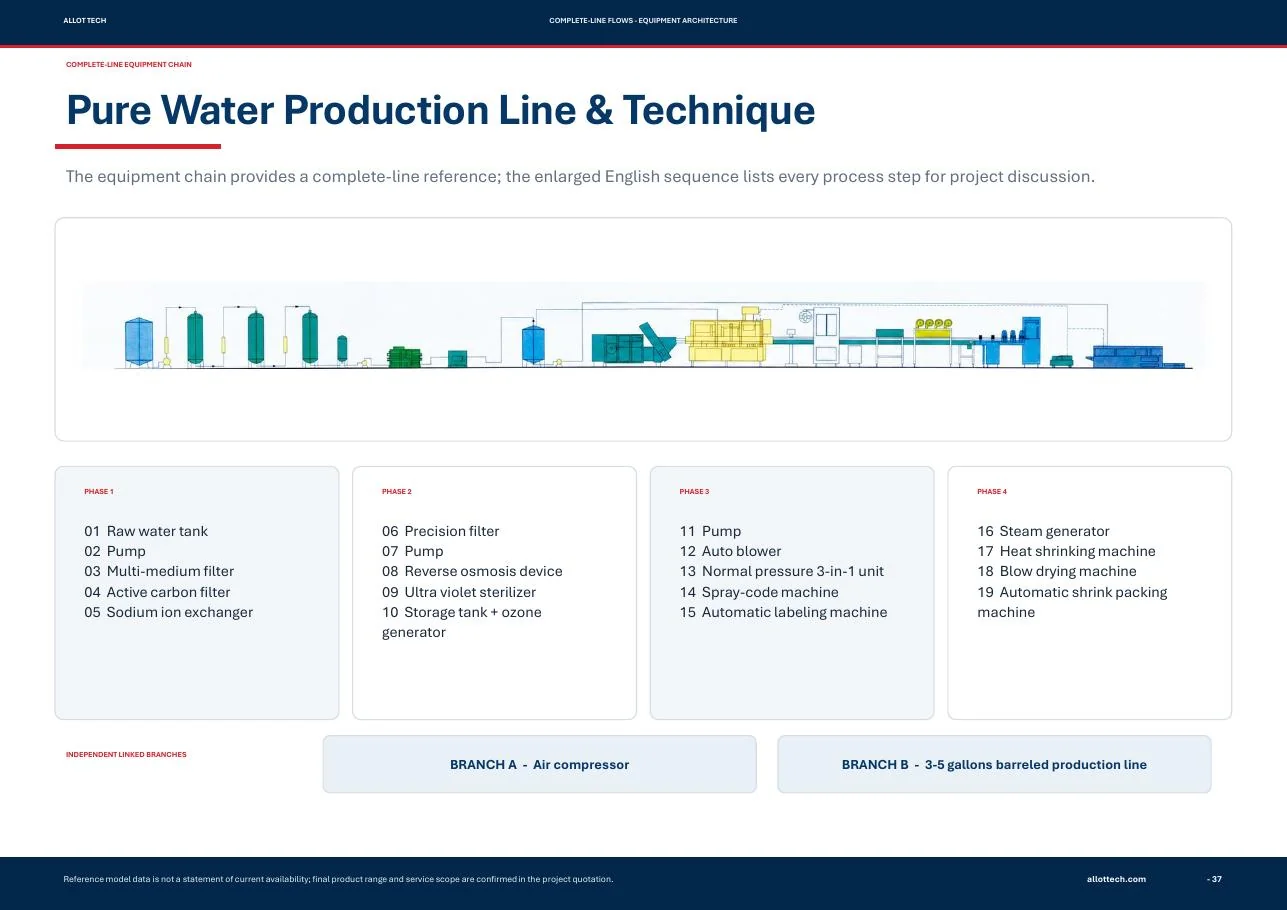
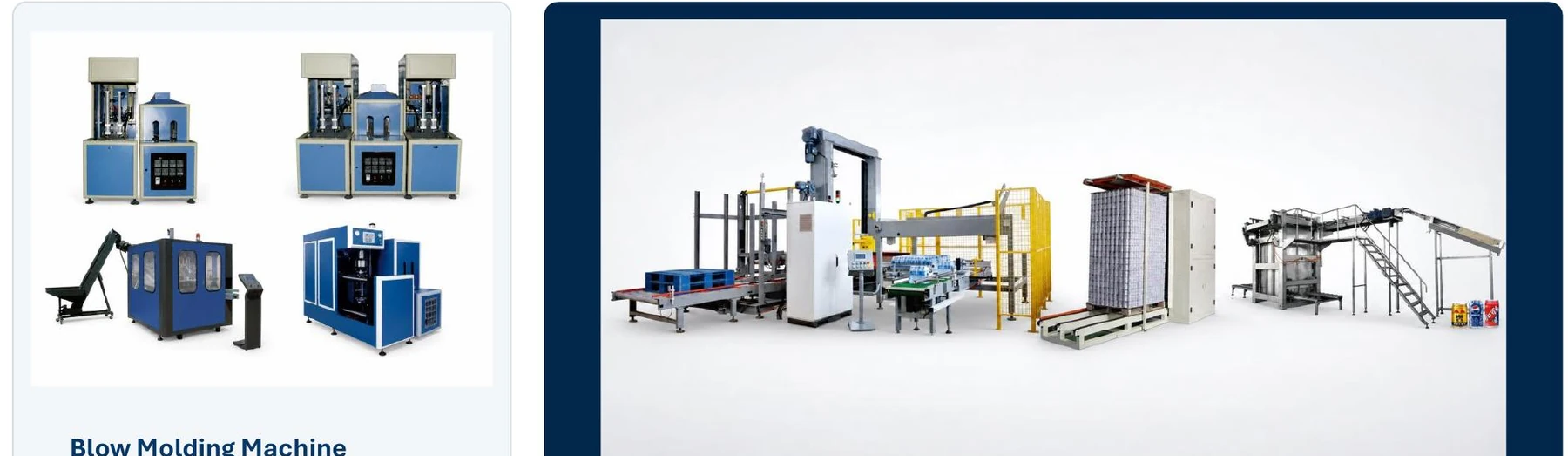
Quotation check: ask the supplier to mark each proposed item as included, optional, buyer supplied or excluded, then connect every item to the preliminary layout and utility schedule.
Questions to answer before requesting price
- Which bottle drawing, preform and neck finish are approved?
- Can the site supply stable high-pressure air and cooling in local conditions?
- How will the blower and filler exchange speed and fault signals?
- Does expected demand justify the additional equipment and maintenance capability?
Buyer-decision content prepared for project clarification. Updated: .
Request PET Bottle Supply Planning
Share what you know now. The goal is to prepare a useful plant brief before a machine quotation is built.