Large-format reusable bottle planning
5 Gallon Water Bottling Line for Reusable 18.9L and 20L Bottles
Plan a complete large-format water line around the return-to-refill loop: receiving, inspection, decapping, exterior and internal washing, clean transfer, filling, capping, finished-bottle handling and delivery inventory.
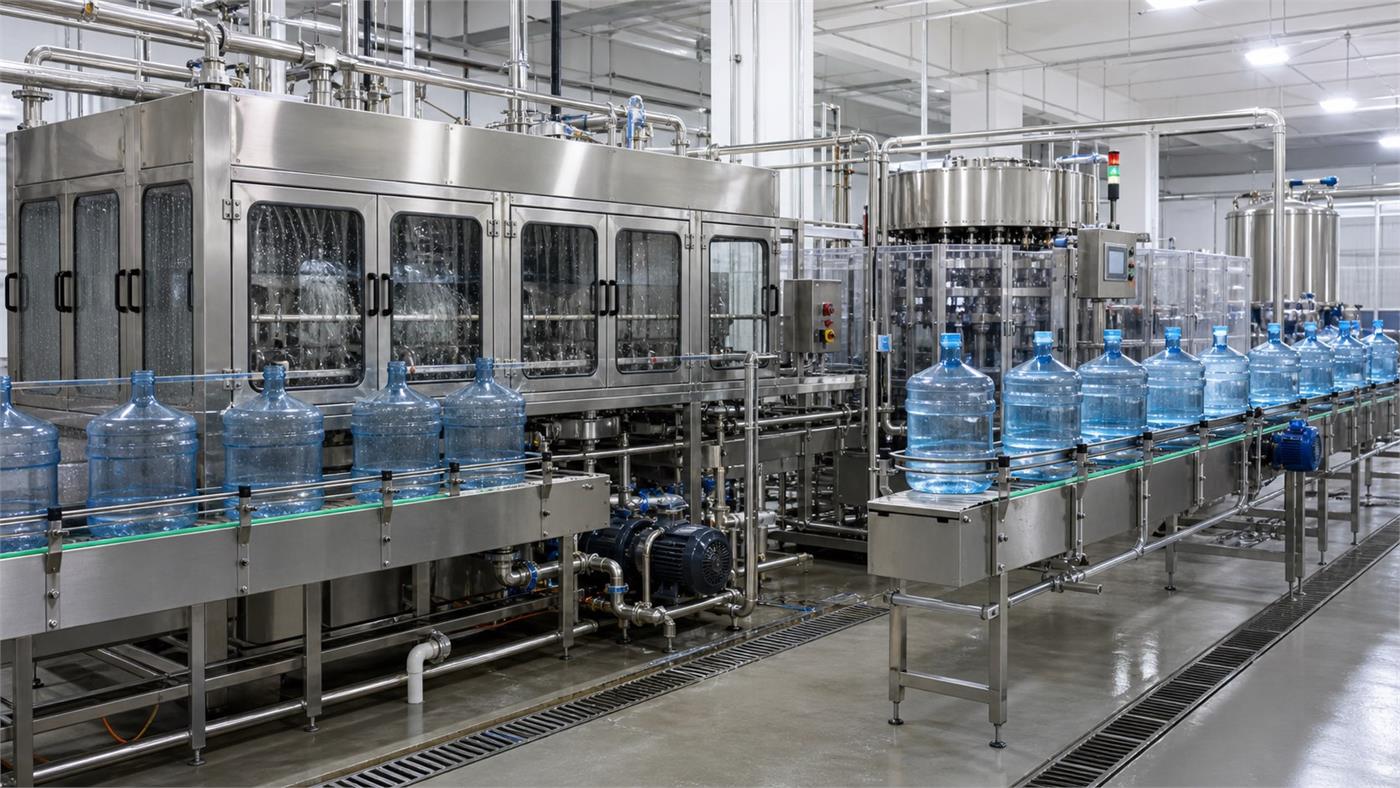
The Project Starts With Returned-Bottle Control
Unlike a small single-use PET bottle, a reusable 5 gallon or 20 liter container can return with an unknown handling history. The plant must decide which bottles are accepted, how dirty returns are isolated and how a cleaned container reaches filling without crossing the return path.
- 18.9L and 20L bottle approval
- Return inspection and documented rejection
- Internal and external washing sequence
- Protected filling, capping and finished-bottle flow
What a Complete 5 Gallon Water Bottling Line Must Define
A useful supplier proposal begins with the container and distribution loop, not with a generic filler model. These decisions determine equipment scope, layout, labor, sanitation and finished-product logistics.
Market and delivery route
Define home and office delivery, distributor pickup, retail exchange or another route. The return pattern, delivery frequency and finished-bottle inventory affect the complete plant plan.
Approved bottle family
State whether the launch container is 5 U.S. gallons, 18.9 liters, 20 liters or another format. Approve actual drawings or samples because volume names do not confirm neck, cap, dimensions, weight or machine handling.
Reusable or single-use basis
Write one approved container strategy into the request. Reusable bottles need a controlled return loop; single-use large bottles need a dependable container supply and different handling assumptions.
Return receiving and inspection
Create a receiving point where bottles can be counted, visually checked, segregated and rejected before they enter the washer. The accepted-bottle standard should be documented and trained.
Decapping and closure control
Confirm how old closures, sleeves and foreign materials are removed, collected and kept away from the clean side. New cap storage and feeding should follow a separate protected route.
Exterior and internal washing
The supplier should describe each cleaning, rinsing, sanitizing and draining step, the intended bottle condition and the monitoring responsibility. Do not select the sequence only from a stage count in a brochure.
Filling and capping
Approve product-water connection, bottle handling, fill process, closure application, guarding, drainage, controls and clean-area responsibility using the actual container and cap.
Finished-bottle handling
Plan final inspection, tamper evidence where used, coding, bagging or protective cover, racks or pallets, warehouse staging, truck loading and return-container inventory as part of the production system.
5 Gallon and 20L Bottle Workflow
The workflow should keep returned-bottle handling visible and separate from protected filling. Every handoff needs an owner, an accepted input and a controlled output.
| Process stage | Planning decision | Supplier or buyer evidence |
|---|---|---|
| 1. Empty-bottle return | Define unloading, count, ownership, route identification and temporary dirty storage. | Distribution-loop description, expected return condition and floor plan. |
| 2. Receiving inspection | Set acceptance, rejection, quarantine and record rules before washing. | Approved bottle samples, defect criteria and operator procedure. |
| 3. Closure removal | Remove old caps, sleeves and foreign material without carrying debris toward the clean side. | Decapper scope, waste route, manual tasks and guard requirements. |
| 4. Exterior cleaning | Control dirt on handles, necks, shoulders, bases and outside walls before clean transfer. | Machine sequence, brush or spray scope, access and cleaning responsibility. |
| 5. Internal wash and rinse | Define washing, rinsing and sanitizing stages from bottle condition and an approved process. | Process description, chemical and water interfaces, monitoring points and drainage route. |
| 6. Final rinse and drain | Protect the bottle after its final approved rinse and control residual liquid before filling. | Clean-transfer drawing, inspection point and operating procedure. |
| 7. Water filling and capping | Connect approved product water, clean bottles and new caps under controlled conditions. | Bottle and cap approvals, filler scope, product connection and acceptance plan. |
| 8. Final inspection and identification | Check the sealed container, tamper evidence and required code before release. | Inspection criteria, reject route, coding position and result record. |
| 9. Protective pack and storage | Choose bagging, cover, rack, pallet or another market-appropriate handling method. | Finished-unit sample, warehouse method and material responsibility. |
| 10. Delivery and bottle inventory | Balance full-bottle dispatch with empty-bottle recovery, loss, rejection and replacement. | Route schedule, bottle-pool assumptions and inventory ownership. |
Keep the Dirty Return Route Away From the Clean Bottle Route
The layout should make contamination control understandable to operators, visitors, maintenance staff and delivery teams. Draw people, bottles, caps, chemicals, waste and finished goods instead of showing machines alone.
Return unloading zone
Receive used bottles without driving delivery traffic through clean production or finished-goods staging. Provide room for counting, initial segregation and safe handling.
Rejected-bottle quarantine
Create a clearly controlled place for damaged, contaminated, unidentified or otherwise unsuitable bottles so they cannot return to the accepted stream by mistake.
Dirty-to-clean washer direction
Orient inspection, decapping and washing so bottles move one way toward the protected clean side. Avoid crossing with dirty returns, removed caps, waste or chemical replenishment.
Wash and chemical area
Plan safe chemical storage, preparation or dosing interfaces, ventilation, drainage, eyewash or other locally required safety provisions with qualified local review.
Clean bottle and filling area
Protect the route from final rinse or approved clean transfer through filling and capping. Control doors, operators, maintenance access, new-cap supply and drainage.
Closure storage and feeding
Keep new caps and tamper-evident materials protected from returned bottles, wash splash, floor traffic and waste movement. Show the replenishment route on the layout.
Finished-product staging
Move sealed bottles to inspection, protective packing and dispatch without sending them back through the return area. Reserve practical space for full-bottle racks or pallets.
Wastewater and rejected materials
Identify wastewater, removed closures, rejected bottles, packaging waste and cleaning-material routes. The buyer must confirm local environmental, safety and disposal requirements.
Do Not Treat Every Large Water Bottle as the Same Format
Bottle naming varies by market. The supplier should approve the physical bottle and closure system, and the buyer should keep reusable and single-use operating assumptions separate.
| Container route | Planning implications | Approval needed |
|---|---|---|
| Reusable 5 U.S. gallon or 18.9L bottle | Requires return inventory, inspection, decapping, washing, rejection, replacement and delivery-loop control. | Bottle drawing and sample, neck and cap, return condition, ownership and accepted life-cycle policy. |
| Reusable 20L bottle | Can look similar to 18.9L but may differ in height, diameter, neck, handle, base and weight. | Separate drawing or sample, cap, machine handling, rack and delivery fit. |
| New single-service large bottle | Removes the returned-bottle wash loop but adds container manufacturing or supply, protected empty storage and a different waste or recovery discussion. | Bottle source, cleanliness basis, feeding route, closure and local packaging responsibilities. |
| Mixed reusable bottle population | Different brands, ages, shapes or necks can create inspection, washing, filling and capping risk. | Written accepted range, rejection rules, samples for every approved format and change-part list. |
| Several cap or tamper-evident formats | May change cap feeding, application, sleeve or seal equipment, inspection and material storage. | Cap drawings and samples, neck compatibility, application method and finished-container sample. |
| Future bottle format | Can change washer pockets, guides, filler handling, capper, conveyors, racks and truck fit. | Supplier statement of current approval, required future parts and layout or control provisions. |
Capacity Is a Bottle-Pool and Delivery Decision
Large-bottle output should be planned around the complete operating day. Washing, filling, handling and delivery can each become the real limit even when a filler has a higher stated BPH.
Demand by route
Estimate full-bottle demand by delivery route and service frequency instead of selecting capacity from a competitor machine page.
Return and replacement rate
Track how many empties return, how many fail inspection and how many new bottles are needed to keep the bottle pool stable.
Washer and filler balance
Ask for a balanced-line basis using the approved returned-bottle condition, bottle and cap. A filler rate does not prove the washer or operator flow can support it.
Treatment and buffer supply
Confirm that source water, treatment, product storage and filler delivery can support production, sanitation and planned shifts without relying on generic web values.
Operator and manual handling
Large filled bottles are heavy. Review loading, inspection, rejection, cap replenishment, rack movement and ergonomic risks with qualified local safety planning.
Finished-bottle inventory
Full-bottle storage, racks, pallets, aisle widths, dispatch staging and loading schedule affect the building and working-capital plan.
Seasonal and route peaks
Use conservative route evidence and peak-season scenarios to decide shifts, bottle inventory and expansion space rather than buying unused automation too early.
Growth trigger
Reserve utility, floor, washer, filler and dispatch options for expansion, then define a business trigger for the next stage instead of claiming automatic future compatibility.
Information to Send Before Requesting a 5 Gallon Line Quotation
A written common brief helps several suppliers respond to the same project basis. Unknown values should remain open questions until the buyer or qualified supplier verifies them.
| Brief section | Buyer input | Supplier response |
|---|---|---|
| Product and market | Water product, destination market, delivery model, launch schedule and local review status. | Application assumptions, open compliance questions and information still required. |
| Bottle population | 5 gallon, 18.9L, 20L or other bottles; reusable or single-use; drawings, samples, age mix and expected return condition. | Approved range, washer and handling basis, reject assumptions, change parts and sample-test plan. |
| Closure system | Neck finish, cap drawing and sample, tamper evidence, sleeve, code and finished-container example. | Cap feeding, application, inspection, consumables and changeover scope. |
| Cleaning basis | Return contamination risks, buyer sanitation expectations, available water and local process-review requirements. | Stage-by-stage sequence, interfaces, monitoring, drainage, access and validation responsibilities. |
| Output and schedule | Required bottles per hour by approved format, shifts, sanitation time, route peaks and growth plan. | Balanced-line test basis, constraints, operator assumptions, buffer and expansion provisions. |
| Factory and flow | Building plan, dirty return entrance, clean area, doors, columns, drains, utilities, racks, warehouse and truck route. | Preliminary layout, zone boundaries, access, utility connections and buyer-side work. |
| Treatment interface | Source description, available water report, intended product and existing or proposed treatment and storage. | Product-water connection, tank or buffer assumptions, sanitation boundary and missing data. |
| Acceptance and support | Required documents, FAT, SAT, installation, training, spares, warranty review and local service expectations. | Dated deliverables, test protocol, service boundary, commercial exclusions and open-item closure route. |
FAQ
What is different about a 5 gallon water bottling line?
A reusable large-bottle project must control the returned-container loop before filling. Receiving, inspection, rejection, decapping, exterior cleaning, internal washing and sanitizing, clean transfer, filling, capping and finished-bottle handling all belong in the line plan.
Are 5 gallon and 20 liter water bottles the same?
Not always. Five U.S. gallons is approximately 18.9 liters, while a 20 liter bottle is a separate nominal format. Approve the actual bottle drawing or sample, neck finish, cap, height, diameter, weight and handling condition instead of treating the names as interchangeable.
Should the line use reusable or single-use large bottles?
The decision depends on the sales and distribution model. Reusable bottles add return inventory, inspection, cleaning, rejection and traceability responsibilities. Single-use large bottles use a different container-supply and handling route. The quotation should state one approved basis.
What equipment is included in a complete 5 gallon water bottling line?
A project may include return receiving, inspection and rejection, decapping, exterior cleaning, internal washing and rinsing, sanitizing, draining, filling, capping, closure or sleeve application, coding, final inspection, conveyors and finished-bottle handling. Water treatment, tanks, utilities, racks, pallets and local installation must be listed separately as included or buyer-side.
How should returned 5 gallon bottles be inspected?
Use documented acceptance and rejection criteria before washing. The plant should control damaged, cloudy, contaminated, odorous, incorrectly branded or otherwise unsuitable bottles according to the approved container program and applicable local requirements.
How many washing stages does a reusable bottle line need?
There is no reliable universal stage count. The sequence depends on returned-bottle condition, bottle history, cleaning chemistry, equipment design, process validation and local requirements. Ask the supplier to document each stage, monitoring point, rinse route and operating responsibility.
Should dirty returned bottles and clean filling areas be separated?
Yes, where practical. Returned containers, removed closures, rejected bottles and wash-area traffic should not cross the protected clean-bottle and filling path. The layout should show staff, bottle, chemical, waste and finished-product routes.
How should I choose 5 gallon water line capacity?
Start with route demand, the number and condition of returned bottles, washing and filling balance, planned shifts, operator tasks, treatment and storage capacity, finished-bottle inventory, rack or pallet handling and delivery frequency. A filler BPH figure alone is not enough.
What cap information is needed for a 5 gallon filling line?
Provide cap drawings and samples, neck-finish details, closure application method, tamper-evident feature or sleeve, cap feeding route and any market-specific coding or sealing requirement. Do not approve the capper from bottle volume alone.
Does a 5 gallon plant use the same water treatment as a small PET bottle line?
Treatment should follow the source water, intended product and local requirements rather than the container size. A plant may share an approved product-water supply, but large-bottle filling still needs its own buffer, piping, sanitation, connection and operating review.
Why Does a 5 Gallon Water Bottling Line Need a Different Project Basis?
Reusable 18.9L and 20L bottles create a returnable-container system rather than a scaled-up small-PET line. Bottle condition, washing validation, cap removal, manual handling, route logistics and cooler-market requirements must be defined before the machine sequence is selected.
Equipment references for this planning stage
These authentic brochure images help buyers identify the machine categories that may sit inside a complete water bottling line. They are not customer-case evidence and do not fix the final model, output, process, utility load or supplier boundary.
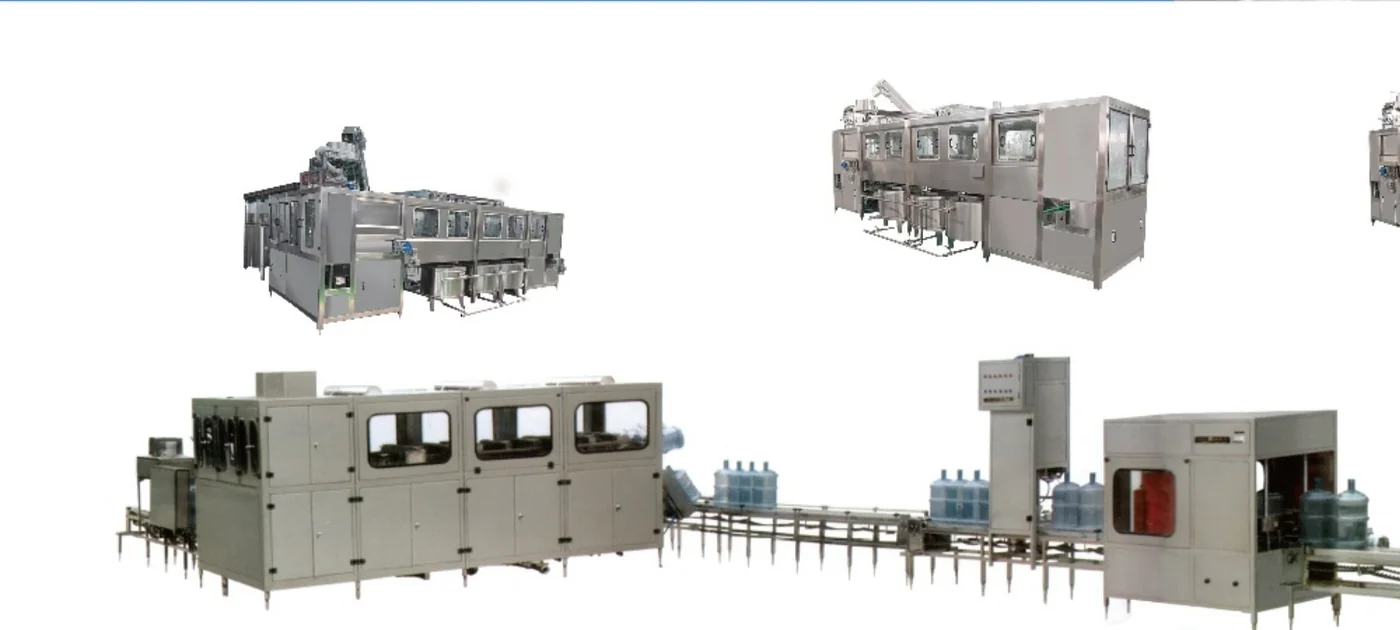
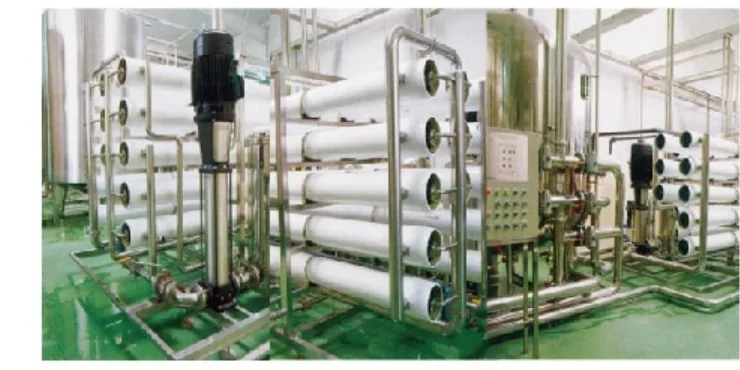
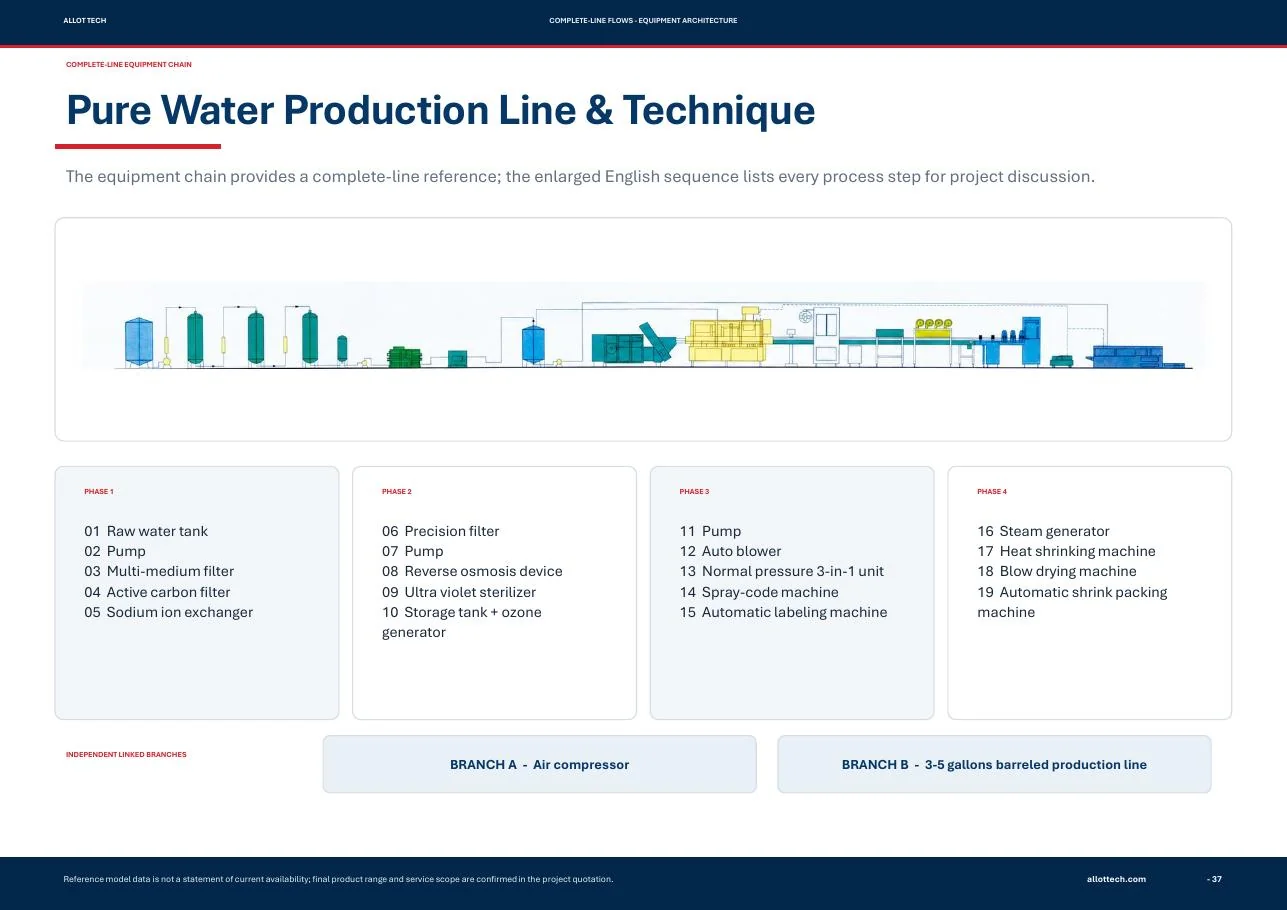
Quotation check: ask the supplier to mark each proposed item as included, optional, buyer supplied or excluded, then connect every item to the preliminary layout and utility schedule.
Questions to answer before requesting price
- Are bottles reusable PC, PET or another approved container system?
- How will damaged, contaminated or unknown-return bottles be rejected?
- How many containers are required across washing, production, storage and customer routes?
- Which cleaning and product-water requirements must local authorities approve?
Buyer-decision content prepared for project clarification. Updated: .
Request a 5 Gallon and 20L Line Scope Review
Share what you know now. The goal is to prepare a useful plant brief before a machine quotation is built.