procurement planning
Water Bottling Line Performance Specification: Make Output Testable
A performance requirement needs a measured result and the conditions under which it is measured. Define the product, package, production boundary, time basis and acceptance evidence before treating a BPH figure as a complete-line commitment.
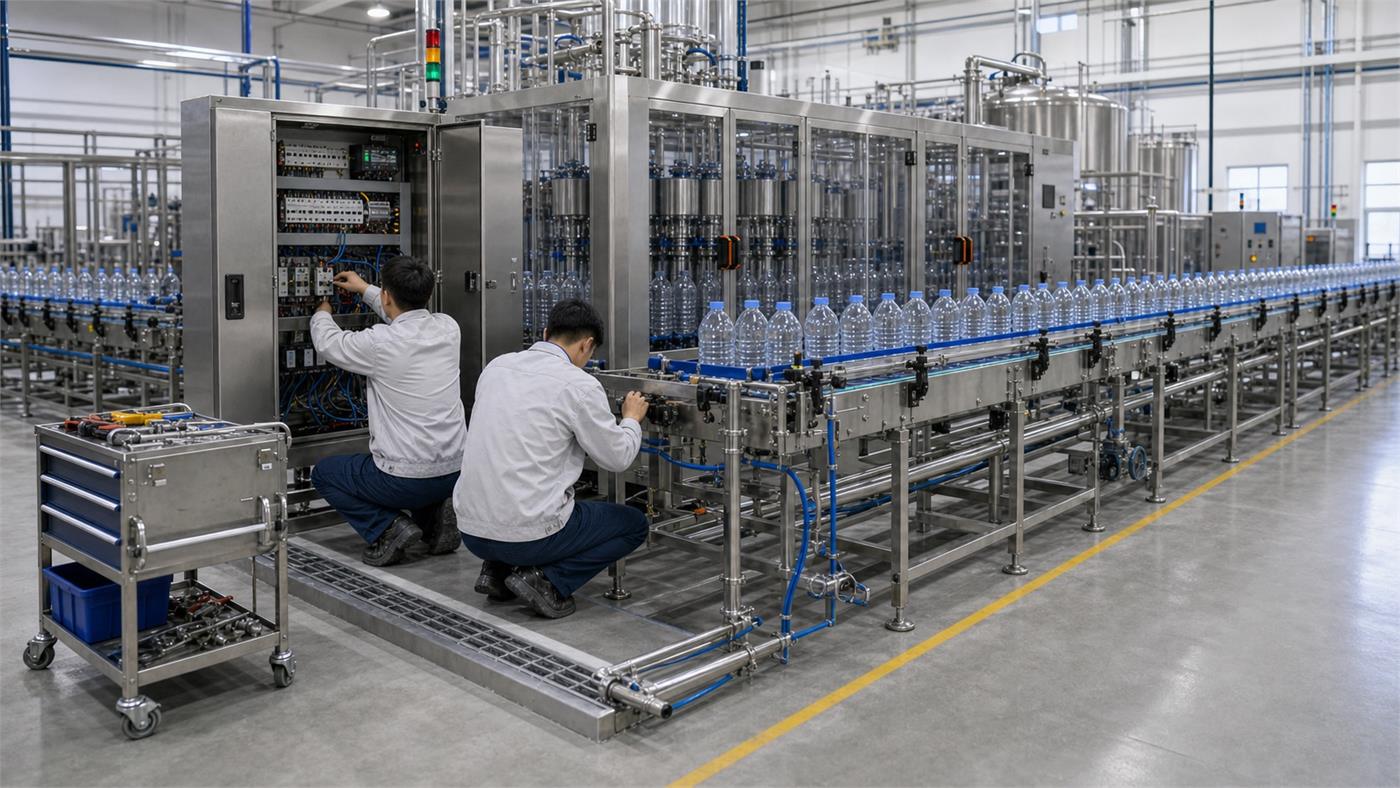
Choose the Measurement Boundary
For a retail-pack project, decide whether good output is counted as accepted bottles, complete packs or another agreed unit at a named discharge point. State what makes a unit acceptable and how incomplete or rejected units are recorded. A filler counter and a finished-pack counter measure different boundaries.
Use a Requirement Record With Six Fields
Format: approved bottle, cap, label, pack material and drawing revisions. Output: target value, unit and measurement location. Time: test duration and exactly when the clock starts and stops.
Conditions: product supply, utilities, staffing, materials and operating mode. Loss treatment: rejects, setup product, planned stops and attributable interruptions. Evidence: counter records, quality checks, event log and the person recording the result.
Keep targets as project-agreed values. A sample protocol with a blank threshold is more useful than a universal tolerance invented without the bottle, process or buyer requirement.
Worked Output Record
Illustrative test arithmetic: 8,000 complete accepted 12-bottle packs are counted during a two-hour observation. Good output at the pack boundary is 8,000 × 12 ÷ 2 = 48,000 bottles/hour.
If the clock includes ten minutes of stops, that result includes those stops. Dividing by only the running time answers a different question. Record both times when useful, but do not substitute one for the other after the acceptance basis is agreed.
Use start and end counts, track any work in progress at the boundaries and record rejected packs separately. A cumulative machine counter requires reconciliation before it can be treated as accepted finished output.
Test More Than a Smooth Run
Include the agreed material replenishment, blocked and starved conditions, normal restart and relevant format change. Request supplier-led procedures for these cases; acceptance testing should follow the equipment operating and safety instructions.
Record the trigger, machine response, recovery actions, affected product and restoration of normal output. This shows whether the integrated controls and operator workflow behave as specified.
Check the quality evidence agreed for the product and package, such as fill, closure, labeling, coding and finished pack condition. The responsible quality and engineering teams set methods and limits for the actual project.
Keep FAT, SAT and Ramp-Up Evidence Connected
Factory acceptance testing demonstrates the agreed scope available at the supplier site. Site acceptance testing checks the installed system and actual interfaces. Ramp-up records show how production develops under the operating team and site conditions.
List what each stage verifies and what remains open. When a machine or actual production material is absent from FAT, record the deferred check and its closure method instead of implying the whole operating plant has already been accepted.
Frequently Asked Questions
Is rated filler BPH a complete-line guarantee?
No. A complete-line requirement must identify the accepted output unit, discharge point, format, duration, utility and material conditions, and treatment of stops and rejects.
Should stops be removed from an output calculation?
Only if that is the agreed measurement definition. Report elapsed and running time distinctly and preserve the event log so the result can be interpreted consistently.
What if actual packaging materials are unavailable for FAT?
Record the substitute and what it can demonstrate. Define the remaining tests using actual materials and the evidence needed to close them at the appropriate acceptance stage.
Write performance requirements that can be tested and accepted
A performance specification should define the product, format, good output, run conditions, quality checks and allowable interventions. Nameplate speed alone cannot serve as acceptance evidence.
Allot Tech Project Desk · Mr KcalBuyer-education content prepared for project clarification. Final equipment scope, engineering values, prices and guarantees must be confirmed in a supplier's written proposal.Updated:
Discuss Your Water Bottling Line Requirements
Share what you know now. The goal is to prepare a useful plant brief before a machine quotation is built.