procurement planning question
Water Bottling Line FAT Performance Protocol: Define What the Run Proves
A performance run is comparable only when its materials, equipment boundary, time window, output counter and quality rules are fixed. Write those definitions before the factory test starts, then keep the raw observations beside the result.
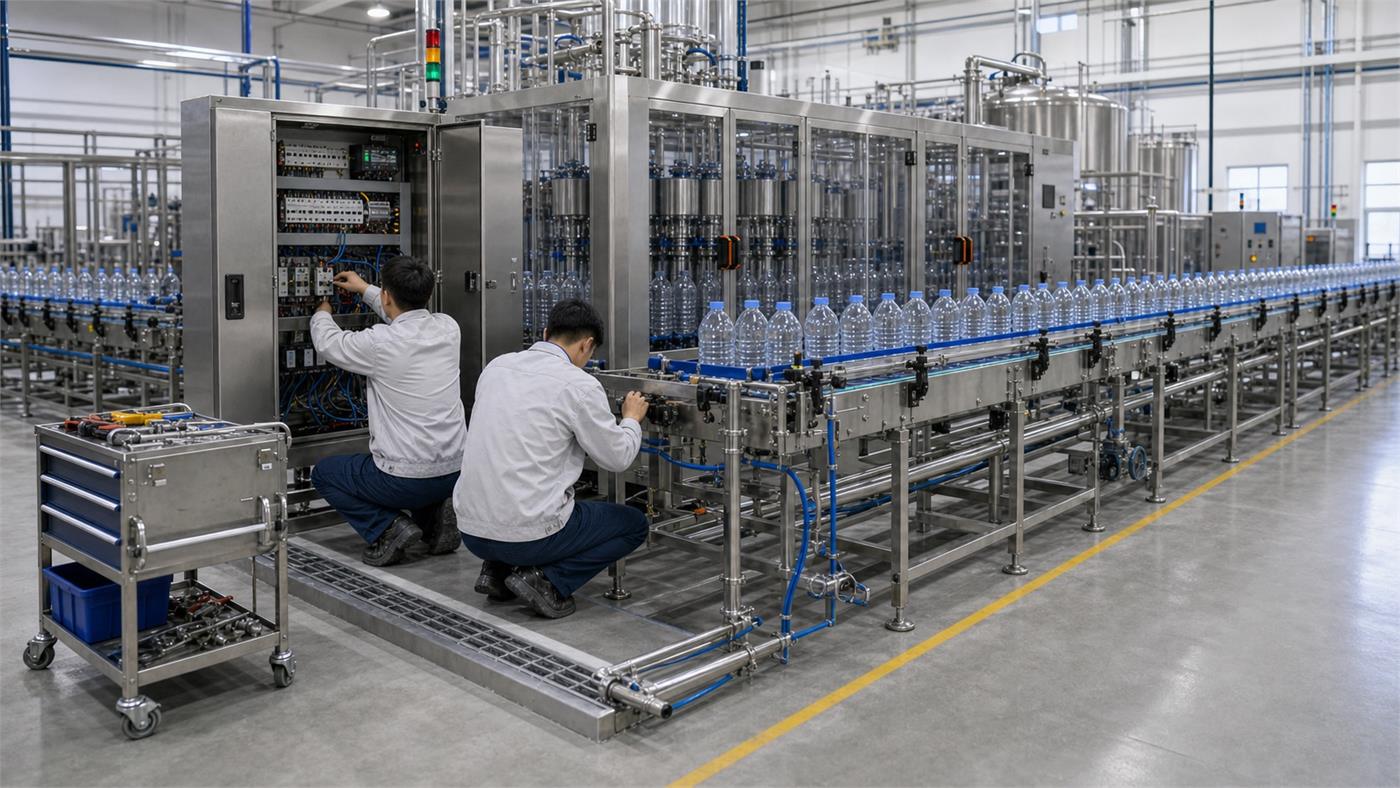
Choose the Measurement Boundary First
A filler counter and a finished-pack counter measure different points. Identify which counter decides the result and how rejects, work in progress and partially filled packs are treated. Link the run to the equipment and format actually present at the supplier factory.
Complete the Test Header Before Starting
Record the protocol revision, machine identifiers, control or recipe revision, bottle and cap references, label and pack materials, test-water basis and utility conditions. Identify any equipment represented by a temporary transfer or other substitute.
Record witness roles, instrument or counter identifiers, the start condition and the agreed duration. State whether the test covers a single machine, connected modules or the complete quoted route. A partial factory setup cannot demonstrate interfaces that are absent.
Separate the conditions to begin a valid run from the criteria to pass it. If the required materials or utilities are unavailable, record the limitation and the test that remains open.
Keep Raw Counts Beside the Calculated Rate
For an illustrative test window, assume 7,200 bottles reach the agreed final counting point in 90 elapsed minutes, of which 120 are rejected by the agreed quality rule. Accepted output is 7,080 bottles, and accepted output per elapsed hour is 7,080 divided by 1.5, or 4,720 BPH.
If that window contains 10 minutes of stops, an additional rate calculated over the remaining 80 minutes is 5,310 BPH. It describes a different time basis. Neither result is a pass or fail until compared with the criteria agreed for that basis.
Record start and end counter readings, resets, rejected quantities, incomplete packs and any carryover across the boundary. Do not add a reject count again if the chosen counter already excludes those bottles.
| Illustrative observation | Record or calculation | What it means |
|---|---|---|
| Elapsed window | 90 minutes = 1.5 hours | The full observation window, including the recorded stops. |
| Gross count and rejects | 7,200 − 120 = 7,080 accepted bottles | Assumes the gross counter includes the 120 rejects. |
| Accepted output per elapsed hour | 7,080 ÷ 1.5 = 4,720 BPH | Comparable only with a criterion using that elapsed basis. |
| Rate excluding the 10 recorded stop minutes | 7,080 ÷ (80/60) = 5,310 BPH | A separate, narrower time basis; not an automatic acceptance result. |
Define Stops and Quality Evidence
Use an event log with start time, end time, observed state, affected machine, reported cause and corrective action. Distinguish measured facts from an unconfirmed cause. Keep unclassified stops visible rather than assigning them to a favorable category.
The product and packaging team should define which checks establish acceptable output, how samples are identified and what happens to nonconforming material. Record fill, closure, label, code and pack observations against the agreed methods without inventing universal limits.
Agree any exclusion before testing and report both the recorded elapsed window and the adjusted basis. Changing the denominator after seeing the result makes the comparison difficult to audit.
Close the Run With a Traceable Disposition
Link each result to its requirement ID and state met, not met or not demonstrated. Record the evidence file, the unresolved condition and the person responsible for the next action.
Keep an unsuccessful run in the record when a retest is performed. Identify the change between runs and which parts of the protocol must be repeated. A successful corrected run does not erase the original cause or the remaining site test.
Use the overall FAT checklist for document and functional checks; use SAT to address the installed site conditions. The performance protocol should make the limits of its own evidence easy to see.
Buyer Questions
Is the fastest displayed BPH the FAT result?
Only if the agreed criterion uses that measurement and time basis. Keep the accepted quantity, elapsed window, stops and quality disposition visible instead of relying on a momentary display.
Can stops be excluded from the result?
Use only the exclusion rules agreed for the test. Report the raw elapsed window and the adjusted basis so the result can be reconstructed.
How much test material is needed?
Build the quantity from each planned run, setup and stabilization, quality sampling, changeovers and the agreed retest allowance. Confirm the actual quantity and approved materials with the test team.
Make the factory acceptance test prove the agreed line performance
A FAT should test the defined format, materials, run conditions and evidence package. A machine demonstration is not the same as an agreed acceptance test.
Allot Tech Project Desk · Mr KcalBuyer-education content prepared for project clarification. Final equipment scope, engineering values, prices and guarantees must be confirmed in a supplier's written proposal.Updated:
Request a Water Bottling Line FAT Performance Protocol Scope Review
Share what you know now. The goal is to prepare a useful plant brief before a machine quotation is built.