Empty bottle transfer
PET Bottle Air Conveyor System for Water Bottling Lines
Plan the empty PET bottle route between blowing or bottle supply and the filling machine without treating conveyor length as the only design input.
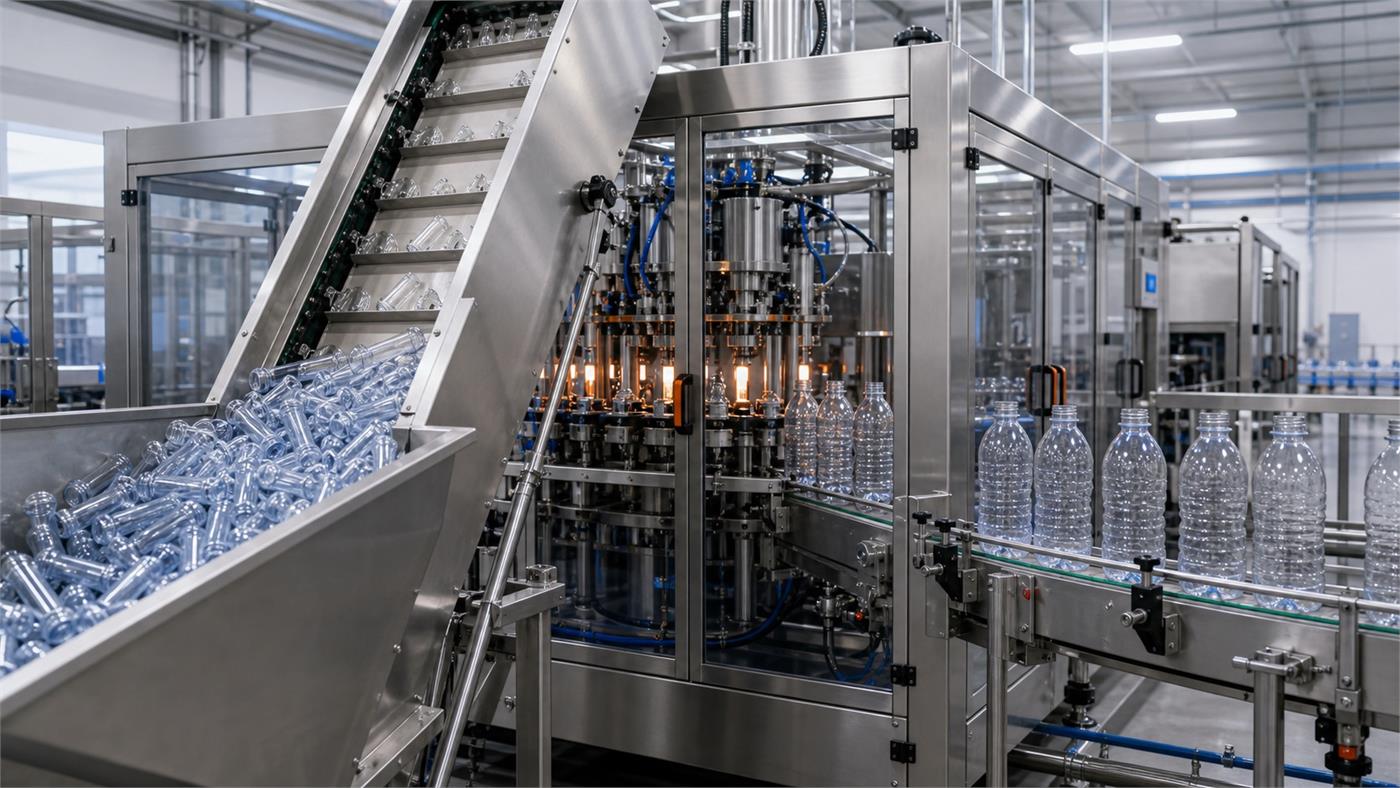
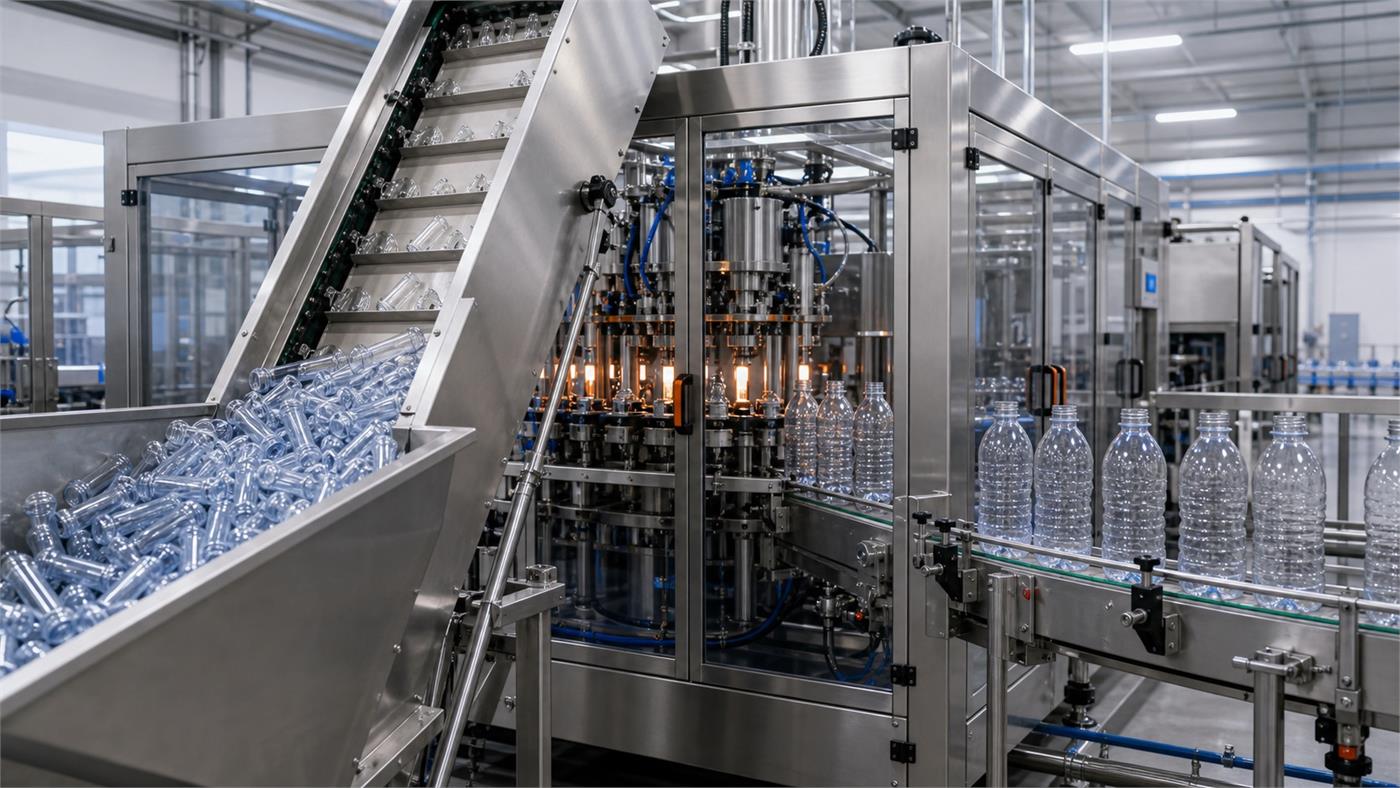
The Air Conveyor Protects Line Balance and Bottle Stability
Lightweight empty PET bottles need a transfer route designed around neck finish, bottle geometry, air quality, route changes, access and the operating logic of the blower and filler.
- Bottle and neck-finish range
- Blower-to-filler route and elevation
- Air and filtration responsibility
- Accumulation, access and control logic
Plan the Route as an Engineered System
Straight ducts are only one part of the scope. Curves, elevation changes, guides, blower zones, supports and controls determine whether bottles reach filling consistently.
Bottle geometry
Confirm neck support, bottle height, diameter, stiffness and every planned format.
Route and elevation
Map straight sections, curves, rises, drops, crossings and structural support.
Air management
Define blower zones, filtration, pressure control and the contamination boundary.
Line controls
Coordinate full-line signals, bottle release, fault response and safe restart.
PET Air Conveyor Supplier Scope
Ask suppliers to show how the conveyor connects actual machines and actual bottles.
| Decision | What to define | Evidence to request |
|---|---|---|
| Bottle range | Define approved drawings, samples and changeover needs. | Bottle matrix and guide-adjustment method. |
| Layout route | Confirm length, curves, slope, elevations and access. | Dimensioned route and support drawing. |
| Air system | Define blowers, filters, ducts, zoning and power. | Equipment list, filter basis and utility load. |
| Machine interfaces | Confirm blower discharge, filler infeed and control signals. | Interface drawing and signal list. |
| Acceptance | Test bottle transfer, faults, restart and changeover. | FAT or site test procedure with approved bottles. |
Information Needed Before Layout
The conveyor supplier needs the same container evidence used by the blower and filler teams.
Bottle set
Provide drawings, samples and the lightest or most difficult planned bottle.
Machine positions
Share discharge and infeed elevations, directions and reserved service access.
Building constraints
Mark columns, doors, walkways, ceiling limits and cleaning access.
Control philosophy
State how the blower, conveyor and filler should stop, buffer and restart.
FAQ
What is a PET bottle air conveyor?
It uses controlled air flow and neck guidance to transfer lightweight empty PET bottles, commonly between bottle blowing and filling.
Can one air conveyor handle several bottle sizes?
It may, but the supplier must review neck finish, geometry, guide adjustment, route and changeover requirements for each bottle.
Does air-conveyor length determine the price?
Length matters, but curves, elevation, supports, blower zones, filters, controls and machine interfaces also change scope.
Should the air be filtered?
The air-quality and filtration boundary should be documented according to the bottle route, plant hygiene plan and supplier design.
How is an air conveyor accepted?
Test actual bottle transfer, line signals, fault recovery, changeover and access using the approved project conditions.
Request a PET Air Conveyor Scope Review
Share what you know now. The goal is to prepare a useful plant brief before a machine quotation is built.