Buyer questions
Water Bottling Line FAQ: Cost, Space, Equipment and Capacity
Get practical answers about water bottling line cost, factory space, equipment scope, bottle sizes, BPH capacity, product compatibility, utilities, delivery, installation, maintenance and supplier quotations.
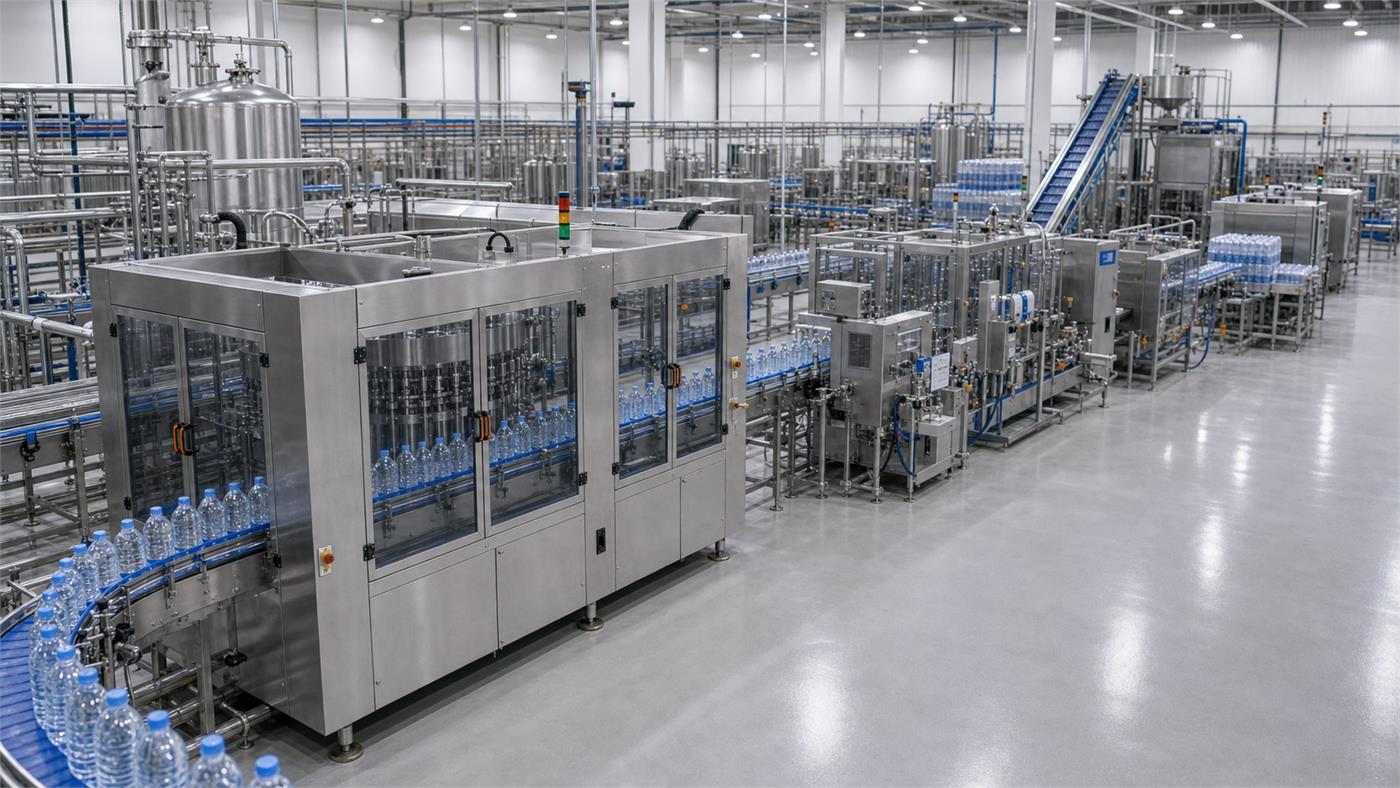
Water Bottling Line FAQ by Planning Topic
These questions help buyers prepare cost, equipment, layout, capacity, treatment, bottle compatibility, delivery, installation and quotation details before contacting suppliers.
1077 questions in 199 planning topics
New line planning 7 questions
Should I buy a new or used water bottling line?
A new line fits long-term brands, custom layouts, stable support, sanitary planning and capacity upgrades. A used line can fit budget-limited buyers who can handle retrofit work and uncertain maintenance cost.
What is included in a complete new water bottling line?
A complete new line may include treatment, bottle blowing or feeding, rinsing filling capping, cap handling, labeling, coding, packing, conveyors, utilities and spare parts.
How much does a new water bottling plant cost?
New plant cost depends on capacity, water source, bottle format, automation level, layout, packaging style, installation and complete line supplier scope.
Can a Chinese supplier provide a complete water bottling line?
Yes. A China manufacturing supplier can provide complete line planning and equipment scope, but buyers should define capacity, bottle size, water source, layout and packaging requirements first.
What capacity should I choose: 3000BPH, 5000BPH or 10000BPH?
Choose capacity from required accepted output, approved bottle formats and available production time. Include format changes, operating losses and the capacity of bottle supply, packing and discharge. The same business stage can require different BPH ratings.
What is the difference between a water bottling machine and a complete bottling line?
A water bottling machine usually means the rinsing, filling and capping center. A complete line connects treatment, bottle supply, filling, labeling, coding, packing, conveyors, utilities and startup support.
Should I choose a semi-automatic or automatic water bottling line?
Choose by expected demand, labor availability, packaging route, maintenance ability and growth plan. Semi-automatic equipment can reduce first-stage complexity, while automatic lines need stronger utilities, line balance and technical support.
Cost 6 questions
Why is there no single fixed water bottling plant cost?
Cost depends on capacity, water source, bottle format, automation level, factory layout, packaging route, installation support and spare parts scope.
What usually changes the budget most?
Capacity, water treatment complexity, bottle blowing choice, packaging automation, factory utilities and installation scope usually have the largest effect.
Should I use rough price ranges for planning?
Rough ranges can help early budgeting, but they should be treated as non-binding planning references rather than official quotations.
Is factory construction included in a water bottling line quotation?
Usually not unless it is written into the offer. Civil work, floors, drains, rooms, incoming power, local piping, permits, unloading and local labor should be separated from machine supply.
Does bottle blowing increase plant cost?
In-house PET blowing adds the blowing machine, molds, preform handling, high-pressure air, air drying, cooling, floor space and maintenance. Purchased bottles can reduce equipment scope but may increase logistics and storage pressure.
What operating costs should I plan after equipment purchase?
Plan packaging materials, preforms or bottles, caps, labels, film or cartons, labor, power, water treatment consumables, maintenance parts, testing, warehousing and distribution. Use local quotations rather than generic online assumptions.
Equipment scope 7 questions
What equipment is included in a complete water bottling line?
A complete scope may include water treatment, bottle blowing or bottle feeding, rinsing filling capping, cap feeding, labeling, coding, packing, conveyors, utilities and spare parts.
Are conveyors included in every quotation?
Not always. Bottle conveyors, pack conveyors and accumulation sections should be clearly listed because they affect line balance and installation.
Which equipment is optional?
Bottle blowing, palletizing, advanced inspection and some end-of-line automation can be optional depending on budget, bottle supply and distribution plan.
What is a 3-in-1 water filling machine?
A 3-in-1 monoblock combines bottle rinsing, water filling and cap application in one connected machine. It does not automatically include water treatment, bottle blowing, labeling, coding, packing or long conveyors.
Can one water bottling line fill different bottle sizes?
Many PET lines can handle a confirmed bottle range with suitable guide adjustments and change parts. Suppliers should review bottle drawings or physical samples because shape, neck, height and stability affect handling.
Can the same line produce purified water and mineral water?
The filling and packing sections may be compatible when the bottle and product conditions are similar, but source-water treatment, process controls, cleaning and local product rules can differ. Confirm the product definition before final design.
What spare parts should be included with a new line?
Request an itemized startup list for seals, belts, sensors, valves, wear parts, filling and capping change parts, labeling consumables and essential tools matched to the offered machine models.
Filling machine selection 8 questions
What does a water bottling machine include?
For PET bottled water, the main machine commonly combines bottle rinsing, water filling and cap application. The quotation should state the exact rinser, filler, capper, guards, controls, cap handling and transfer scope.
Does a 3-in-1 water bottling machine include water treatment?
No. A 3-in-1 machine normally describes rinsing, filling and capping in one center. Raw-water treatment, treated-water storage and sanitary product piping remain separate plant systems unless the quotation lists them.
Does the filling machine include PET bottle blowing?
Not automatically. Bottle blowing can be a separate machine connected by air conveyor, part of an integrated blow-fill-cap system, or excluded when the buyer purchases empty bottles.
How should an automatic water bottling machine be sized?
Confirm product, bottle volumes, neck finish, cap, target BPH, shift plan and downstream packing first. Capacity should be stated for an agreed bottle and test condition, not treated as one universal speed.
Can one water filling machine run several PET bottle sizes?
A confirmed bottle range may be possible with settings, guides and change parts. The supplier should review bottle drawings or samples because neck, height, diameter, shape and stability affect transfer and changeover.
Can the same water bottling machine fill still and sparkling water?
Do not assume it can. Still and carbonated water can require different filling processes, pressure control and product-handling arrangements. The intended products must be approved before machine selection.
What should be checked during a water bottling machine FAT?
Use the agreed bottle, cap, water and test basis to review safe operation, rinsing, filling, capping, controls, interfaces, rejects, changeover items, documents, spares and unresolved work before shipment.
Which systems are outside the water bottling machine?
A complete PET bottling line may still need treatment, bottle blowing or feeding, cap supply, conveyors, labeling, coding, packing, inspection, utilities, spare parts, installation and operator training.
PET bottling line planning 10 questions
What is a PET water bottling line?
A PET water bottling line connects bottle supply, rinsing, filling, capping, labeling, coding, packing and conveying for water packed in PET bottles. A complete plant may also include water treatment, utilities, inspection, warehouse handling and startup support.
What equipment should a complete PET bottling line include?
Confirm preform feeding and blowing or empty-bottle feeding, air conveyor, rinsing filling capping, cap handling, labeling, coding, bottle and pack conveyors, packing, inspection, controls, startup spares and documentation. Treatment and utilities should be listed as included or buyer-side.
Should PET blowing and filling use separate machines or an integrated block?
Both architectures can be appropriate. Separate machines can offer flexible layout and independent service access, while an integrated blow-fill-cap block reduces empty-bottle transfer. Compare bottle range, output, hygiene, utilities, maintenance skills, footprint and upgrade plans.
Can one PET water bottling line handle several bottle sizes?
A supplier can review a defined bottle family, but volume alone is not enough. Neck finish, height, diameter, shape, weight, base stability, label panel, cap and pack format affect blowing, transfer, filling, labeling and packing.
Should a startup PET line buy empty bottles or blow bottles in-house?
Purchased bottles can simplify the first stage when local supply is reliable. In-house blowing adds preform control and reduces empty-bottle logistics, but it also requires molds, high-pressure air, cooling, space, operators and maintenance.
How should PET line capacity be balanced?
Use one approved bottle and production basis, then check treatment, bottle supply, filling, labeling, packing, accumulation and warehouse movement against the same target. The slowest recurring section can limit real line output.
What utilities does a PET water bottling line require?
Depending on scope, the plant can require incoming water, treated water, power, low-pressure air, high-pressure air for blowing, cooling, drainage and ventilation. Final values must come from the approved equipment and operating basis.
What samples should be approved before a PET line quotation?
Provide bottle or preform drawings and samples, neck finish, cap, label artwork and material, date-code position, film or carton details and the finished pack pattern. Mark future formats separately from launch formats.
Can the same PET bottling line run still and sparkling water?
Do not assume full compatibility. Filling method, pressure handling, bottle design, product preparation, cleaning and controls can differ. Ask the supplier to identify shared modules, product-specific modules and the approved test basis.
What should be verified during FAT for a PET bottling line?
Agree the bottle, cap, label, pack materials, run conditions, measurements and responsibility boundaries before testing. Review safety, interfaces, line balance, rejects, changeovers, documents, spares and an open-item list before shipment.
Production process 10 questions
What is the bottled water production line process?
It is the connected workflow that prepares source water and packaging materials, brings treated water and approved bottles together at filling, then caps, labels, codes, packs, checks and moves finished goods into storage.
Where does the water bottling process start and finish?
The production process starts with source-water information, testing and intake control. It finishes only after sealed bottles are identified, packed, checked, recorded and transferred to the approved finished-goods area.
Does water treatment happen before bottle filling?
Yes. The treatment route and treated-water storage should be approved before water reaches the filler. The exact filtration, membrane or disinfection stages depend on source-water data, product definition and local requirements.
How do bottle making and water treatment connect in the workflow?
They are parallel preparation streams. Treated water reaches the filling center through the approved product-water route, while purchased bottles or newly blown PET bottles reach the same center through the approved bottle-handling route.
What happens inside a 3-in-1 water filling machine?
A typical 3-in-1 center combines bottle rinsing, water filling and cap application. It does not replace the upstream treatment and bottle-supply stages or the downstream labeling, coding and packing stages.
When are labels and date codes applied?
Labeling and coding usually follow filling and capping after the bottle is stable and suitable for the selected label and code process. The exact position, drying need, inspection point and material must be approved for the line.
Which quality checks belong in the bottling process?
Define checks for source and treated water, bottle and cap condition, fill and closure results, label and code presence, finished-pack condition and process records. Test methods and acceptance limits require qualified project and local review.
How does the process change when a plant buys empty bottles?
Purchased bottles remove the preform-heating and bottle-blowing stages, but add incoming-bottle approval, protected storage and a bottle-feeding or unscrambling route. Filling, capping, labeling and packing still require coordinated interfaces.
Where should accumulation be planned in a water bottling line?
Accumulation is considered between sections where short stops can affect the whole line, especially around bottle transfer, labeling and packing. The required location and capacity depend on bottle stability, layout and equipment-specific controls.
What evidence should confirm the complete production process before acceptance?
Use approved water, bottle, cap, label and pack inputs; a line-flow and interface list; utility and sanitation records; agreed operating tests; quality checks; training records; documents; and a dated open-item list.
Turnkey project lifecycle 10 questions
What is a turnkey water bottling line?
A turnkey water bottling line is a coordinated project in which an agreed supplier scope connects process equipment, packaging equipment, controls, engineering documents, testing, installation support, training and handover. The contract must still state exactly what is included, optional, excluded and buyer-side.
Does turnkey mean the buyer has no responsibilities?
No. The buyer normally remains responsible for market decisions, permits, source-water data, the building, local utilities, materials, operators, local labor and other items defined in the responsibility matrix. Turnkey should reduce unclear interfaces, not hide buyer obligations.
What should a turnkey water bottling line supplier include?
The proposal should identify treatment, bottle supply, filling, cap handling, labeling, coding, packing, conveyors, controls, utility interfaces, documents, FAT, installation support, training, startup spares and support boundaries where they apply to the project.
What information is needed before requesting a turnkey proposal?
Prepare the water source and available test data, target products, bottle and cap range, expected capacity, packaging route, building information, utility conditions, destination, project stage and required supplier responsibilities.
Is one turnkey supplier always better than multiple suppliers?
Not always. One supplier can reduce interface coordination, while specialist packages can provide more choice. Compare engineering capability, control integration, responsibility, service access, local skills, commercial transparency and the buyer’s ability to manage interfaces.
Which approvals should happen before manufacturing starts?
Approve the equipment scope, bottle and cap basis, product application, line direction, preliminary layout, utilities, interfaces, documents, test materials, acceptance method and change-control process before manufacturing decisions become difficult to reverse.
How should FAT, SAT and final acceptance be separated?
FAT checks the agreed equipment and evidence before shipment. SAT checks the installed system and interfaces at site. Final acceptance should use the contracted product, pack, conditions, records, training and a dated process for unresolved items.
What lifecycle support should be agreed before purchase?
Confirm manuals, installed-base records, preventive maintenance information, startup and critical spares, training roles, support channels, remote assistance, on-site service terms, warranty boundaries, parts identification and the process for future upgrades.
How should total cost of ownership be discussed?
Compare more than purchase price: buyer-side utilities, installation, labor, materials, changeovers, maintenance, parts logistics, expected operating pattern and upgrade risk all affect lifecycle cost. Use supplier-specific data instead of a generic online figure.
How can a buyer verify that a turnkey proposal is complete?
Use a line-by-line scope matrix, responsibility matrix, utility schedule, document list, project milestones, FAT and SAT basis, spare-parts list, training plan and open-item register. Blank or ambiguous responsibilities should remain open questions until written clarification is received.
Automation level and controls 10 questions
What makes a water bottling line automatic?
An automatic water bottling line connects machine cycles, conveyors, sensors, interlocks and operator controls so bottles and packs move through agreed production steps with limited manual transfer. The proposal should state which tasks remain manual rather than relying on the word automatic.
What is the difference between a semi-automatic and fully automatic water bottling line?
A semi-automatic line uses more operator loading, transfer, packing or control actions. A higher-automation line connects more of those tasks through feeding, conveyors, coordinated controls, inspection and packing. The real boundary must be itemized by station.
Which parts of a water bottling line can be automated?
Potential areas include preform or bottle feeding, blowing, rinsing, filling, capping, cap supply, conveying, labeling, coding, inspection, pack forming, pallet handling, recipe control and production data. Not every project needs every option at launch.
Does a fully automatic water bottling line need no operators?
No. Operators are still needed for material replenishment, quality checks, cleaning, changeover, alarm response, maintenance, records, warehouse work and supervision. Automation changes the tasks and skill mix; it does not remove operating responsibility.
How should the automation level be selected?
Compare target output, bottle and pack range, shift plan, labor capability, material quality, factory flow, maintenance skills, utility stability, growth plan and the cost of a stopped line. Choose automation that the plant can support reliably.
Are PLC and HMI controls enough to make a complete line integrated?
Not by themselves. Integration also requires agreed machine signals, stop logic, speed coordination, accumulation, safety interlocks, alarm ownership, recipe handling, network boundaries, documentation and one party responsible for cross-machine testing.
Why are conveyors and accumulation important in an automatic line?
Conveyors connect machines with different operating patterns. Appropriate accumulation can isolate short stops and protect bottle flow, while poor transfer design can cause repeated line stoppages. The supplier should show the control and recovery logic.
How should bottle-size and pack-format changeovers be planned?
List every launch format, required change parts, recipe settings, adjustment points, tools, storage, verification checks and operator tasks. Future formats should remain an engineering review rather than an unsupported compatibility promise.
What automation documents should a supplier provide?
Request the control architecture, machine interface list, signal matrix, alarm and interlock description, electrical drawings, network and remote-access boundary, backup procedure, parameter records, manuals, training plan and FAT or SAT test method.
Should a startup plant buy a fully automatic water bottling line?
Only when demand, utilities, packaging materials, maintenance capability, factory flow and financing support it. A well-planned assisted or modular line can be more practical at launch if the layout and interfaces preserve a clear upgrade path.
Capacity 7 questions
Is 3000BPH enough for a startup bottled water plant?
Test it against accepted daily demand, available production hours, launch formats and operating losses. A startup label alone does not establish the right capacity.
When should I consider a 5000 BPH water bottling line?
Consider it when the proposed per-format rates can meet accepted demand within the feasible production schedule, including changeovers and losses. Confirm packing, utilities and the agreed complete-line endpoint.
When should I consider 10000BPH?
When the required accepted output cannot fit the feasible schedule after format changes, operating losses and line bottlenecks have been evaluated. Business stage alone is not a capacity calculation.
What does BPH mean on a water bottling line?
BPH means bottles per hour under stated operating conditions. Always confirm the bottle size, product, changeover assumptions and whether the number refers to the filler alone or the balanced complete line.
How many bottles can a line produce per day?
Use the proposed rate for each format and the available production window, with clearly defined losses and separately planned activities. For example only, 3000 BPH × 7 hours × an assumed 80% combined factor gives 16,800 accepted bottles. Avoid counting the same lost time twice.
Why is actual output lower than nameplate speed?
Bottle shape, bottle size, water supply, cap and label quality, operator practice, packing speed, accumulation, maintenance and short stops can reduce usable output even when the filler reaches its rated speed.
Should treatment and packing match the filler capacity?
Yes. Treatment storage, bottle supply, labeling, packing, conveyors and warehouse handling should support the same production plan or they can become bottlenecks.
Factory layout 8 questions
Why should layout be planned before buying machines?
Layout affects clean filling separation, drainage, compressed air, electrical routing, warehouse movement, operator access and future expansion.
What layout information should I prepare?
Prepare room dimensions, ceiling height, doors, columns, drainage, power location, water source entry, warehouse route and loading access.
What layout mistakes create future problems?
Cramped filling rooms, weak drainage, no service clearance, poor warehouse flow and no expansion space create costly changes after equipment arrives.
How much factory space does a water bottling plant need?
There is no reliable universal area. Space depends on capacity, bottle supply, treatment, clean-room separation, packing, raw-material storage, finished-goods inventory, utilities, maintenance access and future expansion. Send a floor plan for project-specific layout review.
Should the filling room be separated from packing and warehouse areas?
Usually yes. Separating clean filling and capping from carton dust, film storage, forklift traffic and finished-goods movement supports better hygiene and more controlled production flow.
What building details can block machine installation?
Narrow doors, low ceilings, columns, weak floors, missing drains, poor unloading access and no lifting route can delay installation even when the machines fit on a simple floor plan.
What should a bottling plant layout include?
A practical bottling plant layout should show water treatment, treated-water storage, bottle supply, clean filling, labeling and packing, utility rooms, raw materials, finished goods, drainage, access routes and future expansion.
How should a water bottling plant be divided into zones?
Separate wet treatment and filling work from dry packaging and warehouse traffic where practical. Keep operators, materials, forklifts, maintenance access and waste routes from crossing the clean filling path.
Utilities 8 questions
What utilities does a water bottling line need?
A complete plant may need incoming water, electrical power, low-pressure compressed air, high-pressure air for PET blowing, cooling, drainage and ventilation. The final utility schedule must come from the approved equipment list and operating basis.
How should I calculate the electrical load for a bottling plant?
Ask each supplier for connected load and normal operating load by machine, then review simultaneous operation, startup demand, voltage, frequency, phase, local electrical rules and a suitable design margin with a qualified local electrical professional.
Does PET bottle blowing need a separate high-pressure air system?
PET blowing commonly needs clean, dry high-pressure air, while valves and other pneumatic equipment may use lower pressure air. Required pressure, flow, air quality, receiver, dryer and cooling depend on the selected blower, bottle and output.
What water connections should be included in the utility plan?
Separate raw-water supply, treatment feeds, cleaning water, cooling-water circuits where required and product-water piping. Confirm pressure, flow, quality, connection size, temperature and responsibility for each connection.
How should drainage be planned around a water bottling line?
Place hygienic, accessible drainage near wet-process and cleaning areas without creating standing water or unsafe traffic. Drain capacity, slope, materials and wastewater handling must follow the actual process and local requirements.
Do compressors and blowing machines require cooling or ventilation?
Requirements vary by equipment. The supplier should state heat rejection, cooling-water or air-cooling needs, ambient limits and service clearance so the buyer can design the utility room and ventilation correctly.
Who supplies local utility piping and cables?
The quotation should identify machine-side connection points and clearly divide supplier work from buyer-side transformers, panels, cables, trays, pipes, valves, drains, supports and local installation labor.
What should a supplier utility schedule contain?
Request one coordinated schedule listing each machine, utility type, connection point, pressure or voltage basis, flow or load, quality requirement, normal and peak demand, and whether the item is supplier-supplied or buyer-side.
Water treatment 6 questions
Do I need reverse osmosis for bottled water?
It depends on raw water quality and local product requirements. A water test should guide filtration, RO, UV, ozone and storage decisions.
What water source information is needed?
Identify whether the source is well, municipal, spring or another supply, and prepare available lab results or local water quality data.
Can treatment capacity be smaller than filling capacity?
Treatment and storage must support filling demand across the production schedule. If undersized, the filler may wait for treated water.
What water tests are needed before treatment design?
Use a qualified local laboratory and share the source-water report with the treatment designer. The required parameters depend on the source and local rules, so the supplier should not guess treatment from appearance or taste.
What is the role of UV and ozone in a bottled water plant?
UV and ozone can be parts of a disinfection strategy, but their selection, dose, contact arrangement and monitoring should follow water quality, process design and local requirements.
How much treated-water storage is needed?
Storage should be sized around treatment flow, filling demand, sanitation and the planned production schedule. It should not be selected from filler speed alone.
Mineral water plant planning 10 questions
What is different about planning a mineral water bottling plant?
The project begins with the legally permitted product category and evidence for the water source. Treatment, storage, transfer, filling and labeling must protect the approved product characteristics and follow the destination market’s requirements.
Does a mineral water bottling plant always need reverse osmosis?
No. Reverse osmosis can change dissolved minerals and may conflict with the intended product definition. Treatment must follow source-water evidence, qualified process design and applicable local rules rather than a generic purified-water template.
What source-water information should I provide to a supplier?
Provide the source type and location, available laboratory reports, seasonal information, planned product description and any permits or local authority requirements. A qualified local laboratory and relevant specialists should confirm the final testing program.
Can spring water and purified water use the same bottling line?
Some bottle handling, filling and packing equipment may be shared when the products, sanitation procedure and legal requirements allow it. Treatment routes, tanks, piping, product claims and change-control responsibilities still need separate approval.
What equipment is included in a mineral water bottling line?
A project may include source-water reception, project-specific treatment, hygienic storage and transfer, bottle supply, rinsing, filling, capping, labeling, coding, packing, conveyors, quality-control points and utilities. Every quotation should identify inclusions and buyer-side work.
Should mineral water be bottled in PET or glass?
Both can be valid depending on product positioning, distribution, returnable-pack strategy, local market and plant capability. Confirm bottle, closure, label, secondary pack, handling and changeover requirements before selecting the line architecture.
How should the mineral profile be protected during production?
Use an approved treatment and sanitation plan, suitable product-contact materials, hygienic storage and transfer, controlled cleaning, source and finished-product testing, and documented release decisions. The exact controls are project-specific.
What should be checked before choosing mineral water plant capacity?
Review licensed or dependable source yield, treatment and storage flow, bottle sizes, market demand, shifts, packing speed, warehouse movement, utilities and future expansion. Filler BPH alone is not a complete capacity basis.
Can a China supplier provide a complete mineral water bottling line?
A supplier can propose a coordinated equipment scope, but the buyer must still provide source-water evidence, product and packaging requirements, factory conditions and local compliance inputs. Final responsibilities should be written into the technical and commercial scope.
What should I request before approving a mineral water plant quotation?
Request an itemized process and equipment scope, approved product and packaging basis, preliminary layout, utility schedule, treatment assumptions, interface list, testing and acceptance plan, documents, spares, training and a clear supplier-versus-buyer responsibility matrix.
5 gallon and 20L reusable bottles 10 questions
What is different about a 5 gallon water bottling line?
A reusable large-bottle project must control the returned-container loop before filling. Receiving, inspection, rejection, decapping, exterior cleaning, internal washing and sanitizing, clean transfer, filling, capping and finished-bottle handling all belong in the line plan.
Are 5 gallon and 20 liter water bottles the same?
Not always. Five U.S. gallons is approximately 18.9 liters, while a 20 liter bottle is a separate nominal format. Approve the actual bottle drawing or sample, neck finish, cap, height, diameter, weight and handling condition instead of treating the names as interchangeable.
Should the line use reusable or single-use large bottles?
The decision depends on the sales and distribution model. Reusable bottles add return inventory, inspection, cleaning, rejection and traceability responsibilities. Single-use large bottles use a different container-supply and handling route. The quotation should state one approved basis.
What equipment is included in a complete 5 gallon water bottling line?
A project may include return receiving, inspection and rejection, decapping, exterior cleaning, internal washing and rinsing, sanitizing, draining, filling, capping, closure or sleeve application, coding, final inspection, conveyors and finished-bottle handling. Water treatment, tanks, utilities, racks, pallets and local installation must be listed separately as included or buyer-side.
How should returned 5 gallon bottles be inspected?
Use documented acceptance and rejection criteria before washing. The plant should control damaged, cloudy, contaminated, odorous, incorrectly branded or otherwise unsuitable bottles according to the approved container program and applicable local requirements.
How many washing stages does a reusable bottle line need?
There is no reliable universal stage count. The sequence depends on returned-bottle condition, bottle history, cleaning chemistry, equipment design, process validation and local requirements. Ask the supplier to document each stage, monitoring point, rinse route and operating responsibility.
Should dirty returned bottles and clean filling areas be separated?
Yes, where practical. Returned containers, removed closures, rejected bottles and wash-area traffic should not cross the protected clean-bottle and filling path. The layout should show staff, bottle, chemical, waste and finished-product routes.
How should I choose 5 gallon water line capacity?
Start with route demand, the number and condition of returned bottles, washing and filling balance, planned shifts, operator tasks, treatment and storage capacity, finished-bottle inventory, rack or pallet handling and delivery frequency. A filler BPH figure alone is not enough.
What cap information is needed for a 5 gallon filling line?
Provide cap drawings and samples, neck-finish details, closure application method, tamper-evident feature or sleeve, cap feeding route and any market-specific coding or sealing requirement. Do not approve the capper from bottle volume alone.
Does a 5 gallon plant use the same water treatment as a small PET bottle line?
Treatment should follow the source water, intended product and local requirements rather than the container size. A plant may share an approved product-water supply, but large-bottle filling still needs its own buffer, piping, sanitation, connection and operating review.
RO purified water plant planning 10 questions
Does every bottled water plant need reverse osmosis?
No. RO should be selected from source-water test results, the intended product definition and destination-market requirements. It may be appropriate for purified water, but it can be unnecessary or unsuitable for some spring or natural mineral water products.
What information is needed before designing an RO water bottling plant?
Provide a qualified raw-water analysis, source type and seasonal context, desired product specification, bottle and pack range, target production schedule, recovery or reject-water constraints, factory conditions and applicable local requirements.
What equipment can be included before the RO membranes?
The pretreatment train may include raw-water storage, pumping, media filtration, cartridge filtration, dosing, softening or other project-specific stages. The actual sequence must follow the water analysis and membrane-system design rather than a generic equipment list.
What happens after reverse osmosis in a bottling plant?
The approved process may include product-water conditioning, hygienic storage, circulation or transfer, UV or ozone where justified, final filtration, filling and documented quality checks. Every tank and interface should be included in the sanitation plan.
How should RO capacity be matched to the filling line?
Match net treated-water production and usable storage to filler demand, rinsing or cleaning consumption, planned production hours, sanitation windows and expected operating losses. Compare on an agreed operating basis, not nominal feed-water flow alone.
What is RO reject water and how should it be planned?
RO separates a product-water stream from a concentrate or reject stream. The project must identify expected quantity and quality, drainage or approved reuse route, local environmental requirements and the buyer-supplier responsibility for handling it.
Can an RO plant and bottling line come from one complete-line supplier?
A supplier can coordinate treatment, tanks, product transfer, filling and packaging interfaces, but qualified water specialists and local professionals still need to confirm the process, compliance and site responsibilities. The proposal should name every boundary.
What should be checked during FAT for an RO water treatment system?
Agree feed-water assumptions, instrumentation, alarms, flow and pressure evidence, membrane and component records, sanitation sequence, controls, documents and open items. Final product-water acceptance may also require site conditions and qualified laboratory testing.
How should membrane cleaning and replacement be planned?
Request the supplier’s cleaning method, chemical compatibility, monitoring basis, preservation procedure, replacement identification, safe handling requirements and local supply route. Actual intervals depend on feed water and operation and should not be promised universally.
What should an RO water bottling plant quotation include?
Request the water-quality basis, process flow, equipment and instrument list, net capacity basis, tanks and piping, sanitation scope, utility schedule, concentrate boundary, layout, documents, spares, testing, installation support and buyer-supplier responsibility matrix.
Glass bottle water lines 10 questions
What is the difference between a glass bottle filling machine and a complete glass water line?
The filling machine normally covers bottle rinsing or transfer, water filling and closure application. A complete line can also include water treatment, bottle or crate handling, washing, inspection, labeling, coding, packing, conveyors, pallet handling, utilities and project support.
How do new and returnable glass bottle lines differ?
New one-way bottles usually need controlled depalletizing, inspection and an approved preparation step. Returnable bottles add decrating, bottle and crate washing, residual inspection, rejection, return-container inventory and recrating or another return-pack route.
Can one line handle both new and returnable glass bottles?
It can be engineered with separate infeed, washer, preparation or bypass routes when the actual containers and process permit it. The supplier must document the flow, controls, changeover, inspection and acceptance basis rather than promise universal compatibility.
Can the same glass line fill still and sparkling water?
Potentially, but the product system and filler must be selected for both applications. Sparkling water changes carbonation, temperature, pressure filling, closure and package-validation requirements, so a still-water filler is not automatically suitable.
Does every glass bottle water line need a bottle washer?
No. A full washer is especially relevant to returned containers. Preparation of new bottles should follow their supply condition, contamination risk, product and approved hygiene process instead of copying a returnable-bottle washing sequence.
How is the glass bottle filling method selected?
Use the defined still or sparkling product, bottle and finish, closure, target fill presentation, hygiene plan, output and approved operating conditions. Ask the supplier to state the exact application basis for the proposed filler.
Which glass bottle inspections should be considered?
Consider incoming or empty-container defects, contamination and finish condition; residual liquid or cleaning agent for returnables; and fill level, closure, leaks, label, code and full-container condition after filling. The final inspection plan is project-specific.
Does bottled water in glass require pasteurization?
Do not assume it does. Product definition, source-water controls, treatment, hygienic design, filling method, microbiological plan and local rules determine the process. Qualified specialists should approve any thermal requirement.
What information is needed for a glass water line quotation?
Send bottle drawings and physical samples, product definition, closure and label details, secondary pack, target output by format, returnable-bottle condition where relevant, floor plan, utilities, warehouse route and acceptance requirements.
How should glass water line capacity be compared?
Compare balanced-line output under the same bottle, product, closure, label and pack conditions. Include changeover basis, inspection and rejection assumptions, accumulation, returnable handling where applicable and the agreed test method.
Sparkling water bottling lines 10 questions
What equipment is included in a complete sparkling water bottling line?
A complete project may include source-water treatment, product preparation, deaeration or cooling where required, carbonation, pressure-rated transfer, counter-pressure filling, immediate closing, inspection, labeling, coding, packing, conveyors, controls and utilities. Inclusions must be itemized.
Why cannot a standard still-water filler be used unchanged?
Sparkling product must be transferred, filled and closed while controlling pressure, temperature, foaming and carbon dioxide loss. The filling principle, product path, closure system and container must be approved for the stated carbonation duty.
Can one line produce both still and sparkling water?
It may be possible with an appropriately configured process and filler, but the supplier must document which equipment is shared, the product changeover and sanitation method, operating limits, recipe control and separate acceptance tests.
Should sparkling water use PET bottles, glass bottles or cans?
Choose from product positioning, distribution, returnability, closure, internal-pressure performance, pack sizes, local material supply and format-change needs. Each container route requires its own approved handling and closing scope.
How should sparkling water line capacity be specified?
State each container, product, carbonation basis, required output, operating hours, changeover frequency, label and pack. One headline BPH figure is not enough to confirm balanced-line performance.
What water treatment system is required for sparkling water?
Treatment depends on the source-water analysis, intended product identity and destination-market rules. RO should not be prescribed automatically for spring or natural mineral water, and flavored products may require a different process scope.
How is carbonation controlled and retained?
A project-specific system may manage dissolved gases, product temperature, carbon dioxide dosing and dissolution, transfer pressure, counter-pressure filling and prompt closing. The product specification should define the acceptance method.
Why might a sparkling water line need cooling and warming?
Cooling can support carbonation and stable pressure filling, while post-fill warming may be considered when condensation would disrupt labeling or packing. Requirements depend on product, package and local ambient conditions.
What utilities should be confirmed before a sparkling water layout is approved?
Confirm water, electrical power, refrigeration, carbon dioxide supply, compressed air, ventilation, drainage, cleaning connections and safe material handling. Supplier utility data must match the approved equipment and operating basis.
What should be tested during FAT and commissioning?
Use agreed product and packaging inputs to test line operation, output basis, carbonation retention, fill and closure results, alarms, changeovers, sanitation sequences, documents and operator handover. Do not rely on universal online tolerance values.
Bottle blowing 5 questions
Should I buy a bottle blowing system at startup?
It depends on bottle supply, transport cost, design control, factory space, compressor capacity and budget. Some startups reserve space for later blowing.
What should I confirm before choosing bottle blowing?
Confirm bottle samples, preform source, mold cost, high pressure air, chiller needs, operator skill and future bottle size plans.
Can one blowing machine make several bottle sizes?
Often yes, with a confirmed preform and neck system plus separate molds and changeover procedures. Each bottle drawing, weight and shape should be checked before molds are ordered.
What utilities does PET bottle blowing require?
Bottle blowing commonly needs high-pressure clean dry air, power, cooling and suitable ventilation. Exact demand must come from the selected blower, bottle and production basis.
Is an air conveyor included between blowing and filling?
It should be listed explicitly. The transfer route, elevation, filters, supports and controls affect hygiene, layout and line balance.
Labeling and packing 6 questions
Which labeling system should I choose?
Choose label type based on bottle shape, label material, market appearance, speed and operating cost. Sleeve labels and sticker labels need different systems.
Should I use shrink wrapping or carton packing?
The right choice depends on retail pack style, distributor handling, transport distance, pallet plan and local market expectations.
Why can packing limit the whole line?
If labeling, coding, wrapping or carton packing is slower than filling, the real plant output will be lower than the filler nameplate speed.
What packaging samples should I send before quotation?
Send bottle, cap, label drawing or roll specification, date-code position, bottles per pack, film or carton details and a photo of the expected finished pack when available.
Do I need accumulation conveyors?
Accumulation can reduce frequent line stops when labeling or packing pauses, but the required length and control logic depend on speed, layout and downstream equipment.
When should palletizing be considered?
Review palletizing when pack weight, daily volume, labor availability, warehouse route and loading method justify it. It is not automatically essential for every startup plant.
Product and bottle compatibility 6 questions
Can one bottling line fill still water, juice and carbonated drinks?
Do not assume one complete line can run every beverage. Product treatment, filling method, cleaning, bottle pressure, temperature and hygiene requirements can differ. Ask the supplier to identify which modules can be shared and which product sections must remain separate.
Can one water bottling line handle 330ml, 500ml, 1L and 1.5L bottles?
A confirmed bottle range may be possible with suitable guides, settings and change parts. Suppliers should review every bottle drawing or sample because neck, height, diameter, shape and stability affect transfer and machine changeover.
Can a small-bottle line also fill 5L PET bottles?
Large PET bottles can require different rinsing, filling, capping, conveying and packing arrangements. Some projects use a separate large-bottle machine or line section. Confirm the largest bottle before selecting the filler and conveyors.
Can the same line run round and square PET bottles?
It may be possible, but square or unstable bottles can change conveyor guides, accumulation, labeling and packing behavior. Physical samples and a documented changeover test basis are more reliable than a general compatibility claim.
Can one capping machine use different cap sizes?
Different cap diameters, heights or designs can require separate chutes, feeders, capping heads or change parts. Send cap drawings and samples before the cap-handling system is approved.
How should I plan for future bottle formats?
Reserve layout space, conveyor access, control interfaces and change-part storage, then ask the supplier to list the approved bottle range and future-change limitations in the technical agreement.
Installation 9 questions
What training should be included?
Operator startup, cleaning, routine maintenance, changeover, troubleshooting and spare parts handling should be discussed before purchase.
How long does water bottling line installation take?
It depends on line scope, factory readiness, local labor, utility completion, shipment condition, product samples and acceptance requirements. Ask for a project schedule with assumptions instead of relying on a universal duration.
How many operators does a water bottling line need?
Operator needs depend on automation, bottle and packing materials, quality checks, material loading, warehouse movement, shift pattern and maintenance support. Ask suppliers to state the labor assumption for each line section.
What should be tested during FAT?
The factory acceptance test should follow the contracted scope and agreed samples. Review safety, machine operation, interfaces, output test basis, documents, spares and unresolved items before shipment.
What happens after the machines arrive?
The buyer prepares unloading, positioning, utilities, local labor and materials according to the agreed boundary. Installation, dry testing, water testing, product trials, training and acceptance should follow a written sequence.
What is the difference between FAT and SAT?
FAT is the agreed factory-side review before shipment; SAT is the site-side review after installation and utility connection. Each test needs a written scope, materials, measurement method, acceptance criteria and open-item process.
Who is responsible for unloading and machine positioning?
Responsibility varies by contract. Confirm shipping boundary, unloading equipment, lifting plan, access route, local labor, positioning marks, alignment work, supervision and insurance before dispatch.
What must be ready before commissioning starts?
The factory should have approved foundations or floors, safe access, completed utilities, drains, suitable product and packaging samples, operators, cleaning materials and local permissions required for testing.
How should line acceptance be defined?
Acceptance should reference the contracted bottle and pack, balanced-line test conditions, run duration, quality checks, acceptable stops or rejects, safety, documents, training and a dated list for unresolved work.
Maintenance and spare parts 8 questions
What spare parts should be ordered with a new water bottling line?
Request a machine-by-machine startup list covering normal wear parts, seals, gaskets, belts, sensors, pneumatic items, filling and capping change parts, filter elements, recommended tools and any long-lead critical components. The final list must match the approved equipment.
What is the difference between wear parts and critical spare parts?
Wear parts are replaced through expected use or scheduled maintenance. Critical spares are selected because their failure could stop production and replacement may not be locally available. Ask the supplier to classify both and explain the selection basis.
How should preventive maintenance be planned before startup?
Create a schedule from the supplier manuals for inspection, cleaning, lubrication, adjustment and replacement tasks. Assign responsible roles, record intervals by time or operating hours, and align maintenance windows with the production plan.
What maintenance documents should the supplier provide?
Request operation and maintenance manuals, lubrication schedule, electrical and pneumatic drawings, parts catalogue, model and serial records, recommended spare-parts list, troubleshooting guide, safety procedures and supplier support contacts.
How can buyers identify the correct replacement part later?
Keep the machine model, serial number, drawing reference, part number, revision, quantity and clear photographs in one installed-base register. Do not rely only on a general description such as sensor, seal or motor.
What operator and maintenance training should be included?
Separate operator training from maintenance training. Cover safe startup and shutdown, cleaning, changeover, inspection, alarm response, routine maintenance, fault reporting, parts identification and escalation to qualified technical support.
Which spare parts should be stored locally?
Local stock should reflect failure impact, expected wear, delivery time, storage life, local availability and supplier recommendation. Avoid copying another factory’s inventory because machine revisions, operating hours and supply routes differ.
What after-sales information should be confirmed before purchase?
Confirm support channels, working languages and hours, remote troubleshooting process, on-site service terms, warranty boundary, parts quotation route, expected identification data and responsibility for travel, local labor and consumables.
Startup planning 6 questions
What should I do first when starting a bottled water business?
Start with market demand, water source, local compliance, bottle format, packaging route, distribution plan and realistic capacity.
When should I request a machine quotation?
Request a quotation after you can describe bottle size, target capacity, water source, packaging style, factory condition and budget direction.
What should I avoid overbuying at startup?
Avoid unnecessary automation, oversized capacity, unsupported bottle blowing and complex packing before market demand and plant utilities are proven.
How do I start a water bottle manufacturing plant?
Validate demand and distribution, confirm the water source and local requirements, choose bottle and pack formats, secure a suitable factory, define capacity and utilities, then request comparable complete-line proposals.
Do I need permits before buying bottling equipment?
Requirements vary by country and product. Check business, water-source, food or beverage, factory, environmental, labeling and product-registration obligations with qualified local authorities or professionals before final equipment approval.
Should a startup make its own PET bottles?
Not always. Compare local empty-bottle supply, transport and storage against the cost and complexity of molds, preforms, high-pressure air, cooling, operators and maintenance.
Quotation comparison 7 questions
How do I compare two water bottling line quotations?
Compare included systems, capacity assumptions, bottle format, conveyors, utilities, installation, spares, training and warranty terms item by item.
What missing items often hide in low-price quotations?
Water treatment details, air compressor assumptions, conveyors, coding, packing, spare parts, installation support and training are often unclear.
What documents should I request from a supplier?
Request equipment scope, layout direction, utility list, bottle and cap requirements, installation responsibilities, spare parts list and training plan.
How can I verify the quoted line capacity?
Confirm bottle size, test material, operating condition, measurement period, acceptable rejects and whether the test covers the balanced line or only one machine. Put the agreed basis into the technical documents.
What should a supplier mark as excluded or buyer-side?
Ask for a written list covering civil work, incoming utilities, local piping and wiring, lifting, unloading, travel, accommodation, local labor, permits, taxes and consumable materials.
Should warranty be the same for every machine?
Do not assume it is. Review the written warranty start point, duration, covered components, exclusions, response route, maintenance obligations and treatment of third-party modules.
What should be fixed before paying a deposit?
Confirm the approved technical scope, bottle and pack basis, capacity test basis, layout direction, utility boundary, documents, schedule, commercial terms and a dated open-item list.
Delivery and after-sales support 7 questions
How long does it take to manufacture and deliver a water bottling line?
The schedule depends on customization, approved samples and drawings, component availability, factory testing, shipping route, customs and site readiness. Request a dated project schedule with buyer and supplier milestones instead of relying on a generic lead-time promise.
Who is responsible for shipping and customs clearance?
Responsibility depends on the agreed Incoterm and contract. The quotation should identify export packing, inland transport, port handling, sea freight, insurance, import clearance, duties, unloading and final delivery as included, excluded or buyer-side.
Which Incoterm should I use for a bottling line purchase?
Choose the Incoterm with a qualified freight or trade adviser based on your import experience and destination. Make sure the named place, insurance responsibility, transfer of risk and local charges are written consistently in the quotation and contract.
What documents should be prepared before shipment?
Confirm the commercial invoice, packing list, transport document, machine packing details, manuals, electrical and utility documents, spare-parts list and any destination-specific documents required by the buyer or local authorities.
How should payment milestones be linked to project progress?
Use written commercial terms tied to clearly defined milestones such as technical approval, manufacturing progress, FAT or shipment documents. Have the contract and payment risk reviewed by qualified advisers rather than copying an online payment formula.
What after-sales support should a complete line supplier describe?
Ask for named support channels, response procedure, remote troubleshooting, on-site service terms, training scope, warranty boundary, spare-parts ordering route and the documents needed to identify each machine and component.
Can installation and commissioning be supported remotely?
Some preparation and troubleshooting can be handled remotely, but physical installation, alignment, utilities, product trials and operator training may still need qualified on-site personnel. Agree the support method, language, working hours and buyer-side labor before shipment.
Capacity Calculator 8 questions
How do I calculate bottles per day from BPH?
Multiply rated bottles per hour by the entered utilization percentage and effective production hours per day. The result is a planning estimate, not a guaranteed line output.
Why is actual output lower than rated BPH?
Cleaning, startup, changeovers, material loading, minor stops, planned maintenance and bottlenecks can reduce saleable output. Ask suppliers to state the bottle, product, run duration and exclusions behind any guarantee.
Does bottle size change water bottling line capacity?
It can. Filling time, bottle stability, blower output, label handling and packing can vary by bottle. Confirm output for each approved bottle rather than applying one BPH figure to every format.
How do I convert BPH into liters per day?
Calculate bottles per day, then multiply by the bottle volume in liters. For example, 19,200 bottles of 0.5 liter water equal 9,600 liters.
How can I estimate packs and pallets per day?
Divide daily bottle output by bottles per pack, then divide packs by packs per pallet. The calculator rounds handling units up, while the final pack and pallet pattern must match the approved packaging design.
Can this calculator choose the correct filling machine?
No. It provides arithmetic planning. Equipment selection also requires product, bottle and cap samples, balanced upstream and downstream speeds, utilities, layout, automation, changeovers and acceptance criteria.
What utilization percentage should I enter?
Use a planning assumption that your operating team can explain and test. Do not treat a generic percentage as a supplier guarantee; compare scenarios and later replace the assumption with measured plant data.
How do I calculate required BPH from a monthly sales target?
Divide the monthly bottle target by production days, effective hours per day and the utilization fraction. Then verify the resulting speed against bottle-specific line balance and supplier performance evidence.
Profit and ROI 8 questions
How do I calculate bottled water plant profit?
Start with realistic monthly saleable bottles, multiply by the net selling price received by the business, then subtract packaging and other variable costs plus fixed monthly operating costs. This page labels the result as modeled operating surplus because tax, finance, depreciation and working capital require a fuller local model.
Which costs should I include in a bottled water business profit calculation?
Include the bottle or preform, cap, label, coding material, film or carton, treatment consumables, utilities, production labor, maintenance, rent, administration, distribution and other costs that apply locally. Classify each cost once as variable or fixed so it is not counted twice.
How do I calculate bottled water production cost per bottle?
Add monthly variable production costs and fixed operating costs, then divide by the modeled saleable bottles for the same month. Use net saleable output after normal operating losses rather than rated machine speed alone.
Does a higher BPH water bottling line always improve profit?
No. Higher rated speed can increase output capacity, but profit still depends on demand, utilization, package cost, selling price, staffing, utilities, distribution and capital committed. Oversized equipment can create idle capacity and a longer payback period.
How do I calculate break-even bottles per month?
Subtract variable cost per bottle from net selling price per bottle to get contribution per bottle. Divide fixed monthly operating cost by that contribution. If contribution per bottle is zero or negative, the modeled business does not reach operating break-even.
What does simple payback mean for a water bottling plant?
Simple payback divides the entered initial project investment by the modeled monthly operating surplus. It is a screening measure only and excludes financing timing, tax, depreciation, working capital, reinvestment and changes in future cash flow.
Should I use generic online water bottling plant prices in the ROI model?
No. Use local supplier quotations, packaging offers, utility tariffs, labor costs, freight, taxes and construction inputs that match the same project scope. A generic online number can combine different countries, bottle formats, capacities and responsibility boundaries.
Can this calculator replace a bottled water business plan?
No. It is an arithmetic planning tool. A responsible business plan also needs verified demand, route-to-market, local compliance, source-water evidence, factory and utility planning, financing, working capital, risk scenarios and qualified accounting or legal review.
3-in-1 Water Filling Machine 5 questions
What does a 3-in-1 water filling machine do?
It combines bottle rinsing, water filling and cap application in one coordinated monoblock for an approved product and container range.
Is a 3-in-1 filler a complete water bottling line?
No. Treatment, bottle supply, cap feeding, conveyors, labeling, packing, utilities and site work may remain outside its scope.
Which bottle information does the supplier need?
Provide bottle volume, dimensions, neck finish, weight, drawing and stable samples, plus every planned format.
How should machine capacity be compared?
Compare BPH using the same bottle, product, operating conditions and acceptance test basis.
What should be tested during FAT?
Use approved bottles and caps to check operation, output basis, fill and closure performance, alarms, change parts and agreed records.
PET Bottle Air Conveyor System 5 questions
What is a PET bottle air conveyor?
It uses controlled air flow and neck guidance to transfer lightweight empty PET bottles, commonly between bottle blowing and filling.
Can one air conveyor handle several bottle sizes?
It may, but the supplier must review neck finish, geometry, guide adjustment, route and changeover requirements for each bottle.
Does air-conveyor length determine the price?
Length matters, but curves, elevation, supports, blower zones, filters, controls and machine interfaces also change scope.
Should the air be filtered?
The air-quality and filtration boundary should be documented according to the bottle route, plant hygiene plan and supplier design.
How is an air conveyor accepted?
Test actual bottle transfer, line signals, fault recovery, changeover and access using the approved project conditions.
Water Bottle Cap Feeding and Capping System 5 questions
Is a cap feeder included with every water filling machine?
Not always. The quotation should separately identify the hopper, elevator, sorter, chute, sensors and machine interface.
Why are cap samples required?
Real samples help confirm geometry, orientation, feeding behavior, application and compatibility with the bottle neck.
Can one system run different caps?
Possibly, but the supplier must identify compatible ranges, change parts, settings and the test basis for each cap.
What closure checks should be planned?
Define presence, position, tamper evidence, application quality, reject handling and any qualified sampling method.
Which cap-system spares matter at startup?
Request an itemized list for wear parts, guides, belts, sensors and application components based on the supplied design.
Water Bottle Labeling Machine 5 questions
Which labeling machine is best for water bottles?
It depends on bottle shape, label material, decoration area, speed, surface condition, changeover and finished-package requirements.
What is the difference between sleeve and OPP labeling?
Sleeves are placed over the container and shrunk; roll-fed OPP labels usually wrap around the bottle and join at an overlap.
Does the bottle need drying before labeling?
Some label and adhesive routes are sensitive to surface moisture. Confirm the required bottle condition with the supplier.
Can one labeler run multiple bottle sizes?
Often yes, within an approved range, but change parts, settings, label specifications and tests must be defined.
What should be checked during FAT?
Use approved bottles and label rolls to check feeding, placement, appearance, changeover, alarms, coding or inspection interfaces and output basis.
Water Bottle Shrink Wrapping Machine 5 questions
What pack formats can a water bottle shrink wrapper make?
Depending on design, it may produce film-only bundles or tray-and-film packs in approved bottle counts and patterns.
Does bottle size affect shrink wrapping?
Yes. Bottle geometry, weight, stability and pack pattern affect collation, film, tunnel and discharge handling.
Should packing speed equal filler speed?
The complete line should be balanced using the approved pack format, realistic stops, accumulation and operating conditions.
What materials are needed for FAT?
Provide approved bottles, caps, film and trays where applicable, using representative production quality.
How should a finished pack be accepted?
Agree appearance, bottle arrangement, film or tray integrity, handling and downstream conveyor performance.
CIP Cleaning System for Bottling Line 5 questions
What does CIP mean in a bottling plant?
CIP means cleaning in place: cleaning product-contact equipment through defined circuits without routine dismantling of every component.
Does every water bottling line need the same CIP system?
No. Product, equipment design, circuit size, operating schedule and local hygiene requirements change the scope.
Which equipment should be connected to CIP?
The project team should identify every included product-contact tank, pipe, pump, valve, filler circuit and other component.
Who defines CIP temperature and chemicals?
Qualified process, hygiene, chemical and equipment specialists should define and approve conditions for the actual system.
How is CIP performance verified?
Use a documented validation and routine verification plan with approved measurements, sampling, records and corrective actions.
Air Compressor for PET Bottle Blowing 5 questions
Why does PET bottle blowing need compressed air?
Compressed air is used by the selected stretch blow-molding process to form heated preforms into approved bottle molds.
Can compressor size be selected from BPH alone?
No. The supplier needs the blower, bottle set, pressure, demand profile, ambient conditions and operating strategy.
Are air dryers and filters included?
They may be separate. The quotation should itemize drying, filtration, drains, receivers and delivered-air conditions.
Where should the compressor room be located?
Plan safe access, ventilation or cooling, drainage, power, piping distance, noise and maintenance movement with qualified site engineers.
Should redundancy be included?
It depends on production risk and maintenance strategy. Ask suppliers to explain duty, standby and service assumptions.
Industrial Water Chiller for Bottling Line 5 questions
Why does a water bottling plant need a chiller?
Selected bottle-blowing, compressed-air or process equipment may require controlled cooling; the exact users depend on the supplied line.
Can chiller capacity be calculated from BPH?
Not reliably. Use equipment heat loads, cooling conditions, simultaneous operation and site ambient data.
Should each machine have a separate chiller?
That is a project decision. Compare dedicated and shared systems by required conditions, contamination risk, control, redundancy and maintenance.
What information should chiller suppliers guarantee?
Ask for performance at stated load, ambient, supply and return conditions, plus pumps, controls and utility requirements.
Where should the chiller be installed?
Plan heat rejection, ventilation, weather protection where relevant, access, drainage, piping distance and safe maintenance space.
Water Bottling Line FAT Checklist 5 questions
What is FAT for a water bottling line?
FAT is a factory acceptance test performed before shipment against an agreed scope, procedure, samples, conditions and evidence plan.
Which materials are needed for FAT?
Depending on scope, use approved bottles, caps, labels, film, trays and an agreed product or test-water basis.
How long should the line run during FAT?
The duration and operating conditions should be agreed in the contract for the actual equipment and acceptance objective.
What happens when FAT finds a problem?
Record the deviation, required correction, responsible party, evidence, deadline and whether retesting is needed.
Is FAT the same as SAT?
No. SAT occurs at the buyer site after installation and utility connection; each test needs its own boundary and criteria.
Bottled Water Plant Hygiene and Sanitation 5 questions
What are the main hygiene areas in a bottled water plant?
They include source and treatment control, hygienic storage and transfer, clean filling, personnel and material flow, equipment cleaning, packaging control, monitoring and records.
Does stainless steel equipment guarantee hygiene?
No. Design, installation, cleaning, drainage, operation, environment, verification and trained personnel all matter.
How should the filling room be planned?
Qualified specialists should define zoning, access, drainage, surfaces, air and material movement for the actual product and local requirements.
What is the difference between cleaning and sanitation?
Cleaning removes soils; sanitation applies an approved method to reduce relevant contamination after effective cleaning. Procedures must be validated for the site.
Who is responsible for the hygiene plan?
The plant owner must assign qualified food-safety, production, quality and maintenance responsibilities and coordinate supplier information.
Bottled Water Plant Feasibility Study Inputs 5 questions
What inputs belong in a bottled water plant feasibility study?
A useful feasibility study connects demand, product formats, source water, factory constraints, distribution and funding assumptions before equipment is selected. It should expose assumptions that still need evidence instead of presenting one universal answer.
Which inputs are needed for bottled water plant feasibility study?
Start with Target market, Planned daily output, Bottle and pack range, Available site and funding stage. The selected supplier and qualified local specialists must confirm the final project basis.
What evidence should a supplier provide for bottled water plant feasibility study?
Request Demand source and forecast method, Approved product and bottle list, Raw-water test and site information, Assumption register with owners. Compare evidence against the same approved product, package, capacity and site conditions.
What is a common mistake when planning bottled water plant feasibility study?
A common mistake is accepting a generic answer without defining the actual bottle, product, output, utilities, interfaces and acceptance method for the project.
How does bottled water plant feasibility study connect to a complete water bottling line?
It affects adjacent equipment, controls, utilities, layout, quality checks or operating responsibilities. Record those interfaces in the complete-line scope and responsibility matrix.
Bottled Water Demand to Production Plan 5 questions
How do you convert bottled water demand into a production plan?
Convert demand by product and bottle size into selling days, production days, shifts, changeovers, planned downtime and inventory policy. Machine nameplate speed alone does not define the daily production plan.
Which inputs are needed for bottled water production planning?
Start with Monthly demand by SKU, Selling and production days, Shift pattern, Warehouse limits. The selected supplier and qualified local specialists must confirm the final project basis.
What evidence should a supplier provide for bottled water production planning?
Request SKU demand table, Production calendar, Inventory and service policy, Capacity calculation workbook. Compare evidence against the same approved product, package, capacity and site conditions.
What is a common mistake when planning bottled water production planning?
A common mistake is accepting a generic answer without defining the actual bottle, product, output, utilities, interfaces and acceptance method for the project.
How does bottled water production planning connect to a complete water bottling line?
It affects adjacent equipment, controls, utilities, layout, quality checks or operating responsibilities. Record those interfaces in the complete-line scope and responsibility matrix.
Bottled Water Product Portfolio Planning 5 questions
Which bottled water products should a new plant launch first?
A controlled launch portfolio normally reduces bottle, label, cap, pack and changeover complexity. Choose formats from verified channel demand and distribution conditions, then reserve a documented path for later additions.
Which inputs are needed for bottled water product portfolio?
Start with Product names and sizes, Sales channels, Container preferences, Growth priorities. The selected supplier and qualified local specialists must confirm the final project basis.
What evidence should a supplier provide for bottled water product portfolio?
Request Approved launch SKU list, Bottle and closure drawings, Pack and pallet specifications, Future-format responsibility matrix. Compare evidence against the same approved product, package, capacity and site conditions.
What is a common mistake when planning bottled water product portfolio?
A common mistake is accepting a generic answer without defining the actual bottle, product, output, utilities, interfaces and acceptance method for the project.
How does bottled water product portfolio connect to a complete water bottling line?
It affects adjacent equipment, controls, utilities, layout, quality checks or operating responsibilities. Record those interfaces in the complete-line scope and responsibility matrix.
Water Bottling Plant Site Selection Checklist 5 questions
What should you check before selecting a bottled water plant site?
The site must support the approved water source, hygienic flow, utility loads, drainage, material access, finished-goods movement and future expansion. Equipment selection should follow a documented site survey.
Which inputs are needed for water bottling plant site selection?
Start with Site address and drawings, Water source status, Utility availability, Expansion objective. The selected supplier and qualified local specialists must confirm the final project basis.
What evidence should a supplier provide for water bottling plant site selection?
Request Site survey drawing, Utility availability letters, Logistics access review, Local professional approvals. Compare evidence against the same approved product, package, capacity and site conditions.
What is a common mistake when planning water bottling plant site selection?
A common mistake is accepting a generic answer without defining the actual bottle, product, output, utilities, interfaces and acceptance method for the project.
How does water bottling plant site selection connect to a complete water bottling line?
It affects adjacent equipment, controls, utilities, layout, quality checks or operating responsibilities. Record those interfaces in the complete-line scope and responsibility matrix.
Bottled Water Plant Project Timeline Inputs 5 questions
What determines a bottled water plant project timeline?
The schedule depends on approvals, water testing, bottle development, scope freeze, engineering, manufacturing, factory readiness, shipping, installation and acceptance. Use milestone dependencies rather than a generic promise in weeks or months.
Which inputs are needed for bottled water plant project timeline?
Start with Target launch window, Permit status, Bottle design status, Factory readiness. The selected supplier and qualified local specialists must confirm the final project basis.
What evidence should a supplier provide for bottled water plant project timeline?
Request Integrated milestone schedule, Design-input register, Responsibility matrix, Open-item and change-control log. Compare evidence against the same approved product, package, capacity and site conditions.
What is a common mistake when planning bottled water plant project timeline?
A common mistake is accepting a generic answer without defining the actual bottle, product, output, utilities, interfaces and acceptance method for the project.
How does bottled water plant project timeline connect to a complete water bottling line?
It affects adjacent equipment, controls, utilities, layout, quality checks or operating responsibilities. Record those interfaces in the complete-line scope and responsibility matrix.
Bottled Water Factory Building Size Inputs 5 questions
How much building space does a bottled water plant need?
Building size depends on treatment, bottle supply, line capacity, packing, utilities, hygiene zoning, maintenance access, packaging storage and finished-goods policy. A dimensioned block layout is more reliable than a universal square-meter figure.
Which inputs are needed for bottled water factory size?
Start with Available building dimensions, Column and door positions, Production target, Storage policy. The selected supplier and qualified local specialists must confirm the final project basis.
What evidence should a supplier provide for bottled water factory size?
Request Dimensioned block layout, Equipment envelope list, Pallet-flow calculation, Access and clearance review. Compare evidence against the same approved product, package, capacity and site conditions.
What is a common mistake when planning bottled water factory size?
A common mistake is accepting a generic answer without defining the actual bottle, product, output, utilities, interfaces and acceptance method for the project.
How does bottled water factory size connect to a complete water bottling line?
It affects adjacent equipment, controls, utilities, layout, quality checks or operating responsibilities. Record those interfaces in the complete-line scope and responsibility matrix.
Bottled Water Packaging Format Strategy 5 questions
How should a bottled water plant choose packaging formats?
Bottle and secondary-pack formats should follow channel requirements, transport conditions, shelf presentation and handling capability. Each added format affects tooling, labels, coding, packing, warehouse slots and changeover work.
Which inputs are needed for bottled water packaging formats?
Start with Bottle sizes, Sales channels, Transport route, Retail pack requirements. The selected supplier and qualified local specialists must confirm the final project basis.
What evidence should a supplier provide for bottled water packaging formats?
Request Approved packaging specification, Distribution test plan, Pallet pattern drawing, Change-part and tooling list. Compare evidence against the same approved product, package, capacity and site conditions.
What is a common mistake when planning bottled water packaging formats?
A common mistake is accepting a generic answer without defining the actual bottle, product, output, utilities, interfaces and acceptance method for the project.
How does bottled water packaging formats connect to a complete water bottling line?
It affects adjacent equipment, controls, utilities, layout, quality checks or operating responsibilities. Record those interfaces in the complete-line scope and responsibility matrix.
Bottled Water Plant Permit Planning Checklist 5 questions
Which approvals should be planned before buying a bottling line?
Approval requirements vary by country, water source, product, building and destination market. Build a local permit register with qualified advisers before committing to equipment, labels or production dates.
Which inputs are needed for bottled water plant permits checklist?
Start with Country and region, Water source type, Product category, Building status. The selected supplier and qualified local specialists must confirm the final project basis.
What evidence should a supplier provide for bottled water plant permits checklist?
Request Local permit register, Named qualified advisers, Submission and approval status, Label and product review record. Compare evidence against the same approved product, package, capacity and site conditions.
What is a common mistake when planning bottled water plant permits checklist?
A common mistake is accepting a generic answer without defining the actual bottle, product, output, utilities, interfaces and acceptance method for the project.
How does bottled water plant permits checklist connect to a complete water bottling line?
It affects adjacent equipment, controls, utilities, layout, quality checks or operating responsibilities. Record those interfaces in the complete-line scope and responsibility matrix.
Bottled Water Startup Working Capital Categories 5 questions
Which working-capital categories should a bottled water startup plan?
Working capital should cover packaging materials, utilities, labor, quality checks, maintenance consumables, logistics, inventory and the gap between production and customer payment. Keep these categories separate from equipment purchase cost.
Which inputs are needed for bottled water startup working capital?
Start with Launch volume, Supplier terms, Sales terms, Stock coverage policy. The selected supplier and qualified local specialists must confirm the final project basis.
What evidence should a supplier provide for bottled water startup working capital?
Request Working-capital category model, Inventory policy, Supplier payment schedule, Customer payment assumptions. Compare evidence against the same approved product, package, capacity and site conditions.
What is a common mistake when planning bottled water startup working capital?
A common mistake is accepting a generic answer without defining the actual bottle, product, output, utilities, interfaces and acceptance method for the project.
How does bottled water startup working capital connect to a complete water bottling line?
It affects adjacent equipment, controls, utilities, layout, quality checks or operating responsibilities. Record those interfaces in the complete-line scope and responsibility matrix.
New Water Bottling Plant Risk Register 5 questions
What belongs in a new water bottling plant risk register?
A practical risk register records the event, cause, impact, owner, prevention, contingency and review date. Cover commercial, regulatory, water, packaging, equipment, building, logistics and startup risks.
Which inputs are needed for water bottling plant risk register?
Start with Project stage, Known constraints, Decision owners, Target startup window. The selected supplier and qualified local specialists must confirm the final project basis.
What evidence should a supplier provide for water bottling plant risk register?
Request Named risk register, Responsibility matrix, Mitigation evidence, Regular review record. Compare evidence against the same approved product, package, capacity and site conditions.
What is a common mistake when planning water bottling plant risk register?
A common mistake is accepting a generic answer without defining the actual bottle, product, output, utilities, interfaces and acceptance method for the project.
How does water bottling plant risk register connect to a complete water bottling line?
It affects adjacent equipment, controls, utilities, layout, quality checks or operating responsibilities. Record those interfaces in the complete-line scope and responsibility matrix.
Raw Water Testing Before Treatment Design 5 questions
Which raw-water tests are needed before treatment design?
Treatment design should begin with representative source-water testing by a qualified laboratory and the requirements for the intended bottled-water product. Suppliers need the actual report, sampling context and variability, not a verbal description of clear water.
Which inputs are needed for raw water testing for bottled water plant?
Start with Source type, Existing test reports, Seasonal history, Target product definition. The selected supplier and qualified local specialists must confirm the final project basis.
What evidence should a supplier provide for raw water testing for bottled water plant?
Request Laboratory report and methods, Sample date and source record, Local product requirements, Treatment design basis. Compare evidence against the same approved product, package, capacity and site conditions.
What is a common mistake when planning raw water testing for bottled water plant?
A common mistake is accepting a generic answer without defining the actual bottle, product, output, utilities, interfaces and acceptance method for the project.
How does raw water testing for bottled water plant connect to a complete water bottling line?
It affects adjacent equipment, controls, utilities, layout, quality checks or operating responsibilities. Record those interfaces in the complete-line scope and responsibility matrix.
Borehole Water Treatment Planning 5 questions
How should borehole water treatment be planned for a bottling plant?
Borehole water can vary by geology, well condition and operating pattern, so the process must follow laboratory evidence and the product standard. Include source protection, pretreatment, treatment, storage, sanitation, reject streams and monitoring.
Which inputs are needed for borehole water treatment for bottling?
Start with Well yield and operation, Water analysis, Product target, Local requirements. The selected supplier and qualified local specialists must confirm the final project basis.
What evidence should a supplier provide for borehole water treatment for bottling?
Request Raw-water laboratory report, Process flow and mass balance, Monitoring plan, Waste and reject-water route. Compare evidence against the same approved product, package, capacity and site conditions.
What is a common mistake when planning borehole water treatment for bottling?
A common mistake is accepting a generic answer without defining the actual bottle, product, output, utilities, interfaces and acceptance method for the project.
How does borehole water treatment for bottling connect to a complete water bottling line?
It affects adjacent equipment, controls, utilities, layout, quality checks or operating responsibilities. Record those interfaces in the complete-line scope and responsibility matrix.
Municipal Water Treatment for Bottling 5 questions
Does municipal water need treatment before bottling?
Municipal supply is an input, not automatic proof of suitability for the intended bottled product or plant process. Verify quality, disinfectant residual, variability, pressure, storage and local product requirements before defining treatment.
Which inputs are needed for municipal water treatment for bottling plant?
Start with Utility source, Pressure and flow, Test results, Target product. The selected supplier and qualified local specialists must confirm the final project basis.
What evidence should a supplier provide for municipal water treatment for bottling plant?
Request Utility quality report, Independent site test, Supply reliability record, Approved process flow. Compare evidence against the same approved product, package, capacity and site conditions.
What is a common mistake when planning municipal water treatment for bottling plant?
A common mistake is accepting a generic answer without defining the actual bottle, product, output, utilities, interfaces and acceptance method for the project.
How does municipal water treatment for bottling plant connect to a complete water bottling line?
It affects adjacent equipment, controls, utilities, layout, quality checks or operating responsibilities. Record those interfaces in the complete-line scope and responsibility matrix.
Surface Water Treatment for Bottling 5 questions
How is surface-water treatment planned for bottled water production?
Surface water generally requires a source-specific treatment and monitoring plan that accounts for changing turbidity, organic load and microbiological risk. A qualified treatment specialist must design from representative tests and local obligations.
Which inputs are needed for surface water treatment for bottled water?
Start with Source location, Seasonal test history, Flow demand, Product and legal basis. The selected supplier and qualified local specialists must confirm the final project basis.
What evidence should a supplier provide for surface water treatment for bottled water?
Request Seasonal laboratory dataset, Source risk assessment, Validated process design, Monitoring and response plan. Compare evidence against the same approved product, package, capacity and site conditions.
What is a common mistake when planning surface water treatment for bottled water?
A common mistake is accepting a generic answer without defining the actual bottle, product, output, utilities, interfaces and acceptance method for the project.
How does surface water treatment for bottled water connect to a complete water bottling line?
It affects adjacent equipment, controls, utilities, layout, quality checks or operating responsibilities. Record those interfaces in the complete-line scope and responsibility matrix.
Reverse Osmosis Pretreatment Checklist 5 questions
What should be checked before an RO system in a bottled water plant?
RO pretreatment protects membranes from suspended solids, scaling, oxidants, fouling and unsuitable operating conditions. The exact stages and chemical controls must follow water analysis, membrane requirements and qualified design.
Which inputs are needed for RO pretreatment checklist?
Start with Feed flow and recovery goal, Water analysis, Operating hours, Reject-water route. The selected supplier and qualified local specialists must confirm the final project basis.
What evidence should a supplier provide for RO pretreatment checklist?
Request Feed-water analysis, Pretreatment process diagram, Membrane design basis, Control and sanitation procedure. Compare evidence against the same approved product, package, capacity and site conditions.
What is a common mistake when planning RO pretreatment checklist?
A common mistake is accepting a generic answer without defining the actual bottle, product, output, utilities, interfaces and acceptance method for the project.
How does RO pretreatment checklist connect to a complete water bottling line?
It affects adjacent equipment, controls, utilities, layout, quality checks or operating responsibilities. Record those interfaces in the complete-line scope and responsibility matrix.
Activated Carbon Filter for Bottled Water Plant 5 questions
What does activated carbon do in bottled water treatment?
Activated carbon may be used for selected tastes, odors, organic compounds or disinfectant residuals when justified by the water analysis and process design. It also creates an operating and sanitation responsibility that must be monitored.
Which inputs are needed for activated carbon filter bottled water plant?
Start with Target treatment objective, Feed-water data, Required flow, Cleaning resources. The selected supplier and qualified local specialists must confirm the final project basis.
What evidence should a supplier provide for activated carbon filter bottled water plant?
Request Water-analysis justification, Media specification, Operating procedure, Monitoring and replacement record. Compare evidence against the same approved product, package, capacity and site conditions.
What is a common mistake when planning activated carbon filter bottled water plant?
A common mistake is accepting a generic answer without defining the actual bottle, product, output, utilities, interfaces and acceptance method for the project.
How does activated carbon filter bottled water plant connect to a complete water bottling line?
It affects adjacent equipment, controls, utilities, layout, quality checks or operating responsibilities. Record those interfaces in the complete-line scope and responsibility matrix.
Multimedia Filter for Bottled Water Plant 5 questions
When is a multimedia filter used in bottled water treatment?
A multimedia filter can be part of suspended-solids and turbidity control when supported by source-water data and downstream needs. Its vessel, media, service rate, backwash, drainage and monitoring must be designed as one system.
Which inputs are needed for multimedia filter bottled water plant?
Start with Peak flow, Water analysis, Drain capacity, Operating schedule. The selected supplier and qualified local specialists must confirm the final project basis.
What evidence should a supplier provide for multimedia filter bottled water plant?
Request Raw-water test record, Filter design sheet, Backwash utility schedule, Operating and media plan. Compare evidence against the same approved product, package, capacity and site conditions.
What is a common mistake when planning multimedia filter bottled water plant?
A common mistake is accepting a generic answer without defining the actual bottle, product, output, utilities, interfaces and acceptance method for the project.
How does multimedia filter bottled water plant connect to a complete water bottling line?
It affects adjacent equipment, controls, utilities, layout, quality checks or operating responsibilities. Record those interfaces in the complete-line scope and responsibility matrix.
UV Disinfection for Bottled Water Plant 5 questions
How should UV disinfection be specified for a bottled water plant?
UV equipment must be selected for the actual flow, water transmittance, treatment position and validation basis. It should be integrated with monitoring, alarms, maintenance and downstream protection rather than treated as a stand-alone guarantee.
Which inputs are needed for UV disinfection bottled water plant?
Start with Peak flow, UV transmittance data, Installation point, Local requirements. The selected supplier and qualified local specialists must confirm the final project basis.
What evidence should a supplier provide for UV disinfection bottled water plant?
Request Supplier sizing sheet, Validation documentation, Instrument and alarm list, Maintenance and replacement plan. Compare evidence against the same approved product, package, capacity and site conditions.
What is a common mistake when planning UV disinfection bottled water plant?
A common mistake is accepting a generic answer without defining the actual bottle, product, output, utilities, interfaces and acceptance method for the project.
How does UV disinfection bottled water plant connect to a complete water bottling line?
It affects adjacent equipment, controls, utilities, layout, quality checks or operating responsibilities. Record those interfaces in the complete-line scope and responsibility matrix.
Ozone System for Bottled Water Plant 5 questions
What should buyers define for an ozone system in bottled water production?
Ozone planning must connect the treatment objective, water conditions, generation method, contacting, off-gas, monitoring, worker safety and downstream product requirements. Qualified process and safety review is essential.
Which inputs are needed for ozone system bottled water plant?
Start with Water flow and quality, Treatment objective, Room conditions, Product and legal requirements. The selected supplier and qualified local specialists must confirm the final project basis.
What evidence should a supplier provide for ozone system bottled water plant?
Request Process and instrumentation diagram, Sizing and operating basis, Safety and ventilation review, Monitoring and maintenance plan. Compare evidence against the same approved product, package, capacity and site conditions.
What is a common mistake when planning ozone system bottled water plant?
A common mistake is accepting a generic answer without defining the actual bottle, product, output, utilities, interfaces and acceptance method for the project.
How does ozone system bottled water plant connect to a complete water bottling line?
It affects adjacent equipment, controls, utilities, layout, quality checks or operating responsibilities. Record those interfaces in the complete-line scope and responsibility matrix.
Treated Water Tank and Distribution Loop 5 questions
How should treated-water storage and the filler loop be planned?
Treated-water storage and distribution should protect water quality between final treatment and filling. Define hygienic tank design, circulation or transfer, vents, drains, sampling, cleaning, dead-leg control and filler interfaces with qualified engineers.
Which inputs are needed for treated water tank distribution loop?
Start with Required buffer function, Filler demand, Room layout, Sanitation strategy. The selected supplier and qualified local specialists must confirm the final project basis.
What evidence should a supplier provide for treated water tank distribution loop?
Request Tank and piping drawing, Material and surface schedule, Cleaning procedure, Sampling and monitoring plan. Compare evidence against the same approved product, package, capacity and site conditions.
What is a common mistake when planning treated water tank distribution loop?
A common mistake is accepting a generic answer without defining the actual bottle, product, output, utilities, interfaces and acceptance method for the project.
How does treated water tank distribution loop connect to a complete water bottling line?
It affects adjacent equipment, controls, utilities, layout, quality checks or operating responsibilities. Record those interfaces in the complete-line scope and responsibility matrix.
PET Preform Selection for Water Bottles 5 questions
How do you choose a PET preform for a water bottling line?
Preform selection must match the approved bottle design, neck finish, resin specification, bottle weight, blowing equipment, molds and distribution conditions. Treat the preform, bottle and blow process as one validated package.
Which inputs are needed for PET preform selection for water bottles?
Start with Bottle drawing, Neck and cap specification, Target weight, Blow molder information. The selected supplier and qualified local specialists must confirm the final project basis.
What evidence should a supplier provide for PET preform selection for water bottles?
Request Approved preform drawing, Resin and dimensional specification, Blow-trial record, Incoming inspection plan. Compare evidence against the same approved product, package, capacity and site conditions.
What is a common mistake when planning PET preform selection for water bottles?
A common mistake is accepting a generic answer without defining the actual bottle, product, output, utilities, interfaces and acceptance method for the project.
How does PET preform selection for water bottles connect to a complete water bottling line?
It affects adjacent equipment, controls, utilities, layout, quality checks or operating responsibilities. Record those interfaces in the complete-line scope and responsibility matrix.
Water Bottle Neck Finish Selection 5 questions
How should a water bottle neck finish be selected?
The neck finish connects the preform, bottle, cap, blower handling, air conveyor, filler and capper. Freeze an approved drawing and samples before tooling or line change parts are released.
Which inputs are needed for water bottle neck finish?
Start with Bottle volume range, Cap type, Blower and filler concept, Market requirements. The selected supplier and qualified local specialists must confirm the final project basis.
What evidence should a supplier provide for water bottle neck finish?
Request Controlled neck drawing, Approved cap and bottle samples, Interface review record, Revision and change-control process. Compare evidence against the same approved product, package, capacity and site conditions.
What is a common mistake when planning water bottle neck finish?
A common mistake is accepting a generic answer without defining the actual bottle, product, output, utilities, interfaces and acceptance method for the project.
How does water bottle neck finish connect to a complete water bottling line?
It affects adjacent equipment, controls, utilities, layout, quality checks or operating responsibilities. Record those interfaces in the complete-line scope and responsibility matrix.
PET Bottle Lightweighting and Line Impact 5 questions
How does PET bottle lightweighting affect a water bottling line?
Reducing bottle weight can change blowing stability, empty-bottle conveying, filler transfers, labeling, packing, pallet behavior and warm-distribution performance. Validate the complete package and line, not only resin savings.
Which inputs are needed for PET bottle lightweighting bottling line?
Start with Current and proposed bottle, Distribution conditions, Line speed, Pack format. The selected supplier and qualified local specialists must confirm the final project basis.
What evidence should a supplier provide for PET bottle lightweighting bottling line?
Request Bottle performance test, Line trial record, Pack and pallet validation, Controlled approved drawing. Compare evidence against the same approved product, package, capacity and site conditions.
What is a common mistake when planning PET bottle lightweighting bottling line?
A common mistake is accepting a generic answer without defining the actual bottle, product, output, utilities, interfaces and acceptance method for the project.
How does PET bottle lightweighting bottling line connect to a complete water bottling line?
It affects adjacent equipment, controls, utilities, layout, quality checks or operating responsibilities. Record those interfaces in the complete-line scope and responsibility matrix.
PET Water Bottle Mold Design Inputs 5 questions
Which inputs are needed before designing a PET water bottle mold?
Mold design should follow the approved bottle, preform, neck, blowing platform, cavity plan, cooling conditions and acceptance tests. A visual concept alone is not enough to release production tooling.
Which inputs are needed for PET water bottle mold design?
Start with Bottle concept and volume, Preform details, Blow molder model, Required cavity plan. The selected supplier and qualified local specialists must confirm the final project basis.
What evidence should a supplier provide for PET water bottle mold design?
Request Approved bottle and preform drawings, Machine interface data, Mold design review, Sample and acceptance report. Compare evidence against the same approved product, package, capacity and site conditions.
What is a common mistake when planning PET water bottle mold design?
A common mistake is accepting a generic answer without defining the actual bottle, product, output, utilities, interfaces and acceptance method for the project.
How does PET water bottle mold design connect to a complete water bottling line?
It affects adjacent equipment, controls, utilities, layout, quality checks or operating responsibilities. Record those interfaces in the complete-line scope and responsibility matrix.
PET Bottle Mold Changeover Planning 5 questions
How should PET bottle mold changeovers be planned?
Changeover planning should cover mold modules, tools, lifting, cooling connections, recipes, heat-up, first-off inspection, storage and operator safety. Compare the entire verified change process, not one best-case time.
Which inputs are needed for PET bottle mold changeover?
Start with Bottle family, Machine platform, Available operators, Changeover objective. The selected supplier and qualified local specialists must confirm the final project basis.
What evidence should a supplier provide for PET bottle mold changeover?
Request Changeover work instruction, Tool and lifting list, First-off inspection record, Observed trial under agreed conditions. Compare evidence against the same approved product, package, capacity and site conditions.
What is a common mistake when planning PET bottle mold changeover?
A common mistake is accepting a generic answer without defining the actual bottle, product, output, utilities, interfaces and acceptance method for the project.
How does PET bottle mold changeover connect to a complete water bottling line?
It affects adjacent equipment, controls, utilities, layout, quality checks or operating responsibilities. Record those interfaces in the complete-line scope and responsibility matrix.
PET Preform Heating Oven Planning 5 questions
What should buyers check in a PET preform heating oven?
The oven must heat the approved preform consistently for the intended bottle and output while supporting recipe control, changeover, cooling and maintenance. Performance must be proven with the real preform and bottle.
Which inputs are needed for PET preform heating oven?
Start with Preform samples, Bottle drawing, Output target, Factory temperature range. The selected supplier and qualified local specialists must confirm the final project basis.
What evidence should a supplier provide for PET preform heating oven?
Request Heating-zone description, Approved recipe record, Bottle trial results, Maintenance and spare-parts list. Compare evidence against the same approved product, package, capacity and site conditions.
What is a common mistake when planning PET preform heating oven?
A common mistake is accepting a generic answer without defining the actual bottle, product, output, utilities, interfaces and acceptance method for the project.
How does PET preform heating oven connect to a complete water bottling line?
It affects adjacent equipment, controls, utilities, layout, quality checks or operating responsibilities. Record those interfaces in the complete-line scope and responsibility matrix.
PET Blow Molding Air Recovery 5 questions
When does air recovery belong in a PET blowing system?
Air recovery can reduce the demand placed on parts of the compressed-air system when it is compatible with the blow platform and plant air architecture. Evaluate quality, pressure levels, controls, fallback operation and measured project-specific savings.
Which inputs are needed for PET blow molding air recovery?
Start with Blower model, Bottle and speed, Existing air network, Energy measurement basis. The selected supplier and qualified local specialists must confirm the final project basis.
What evidence should a supplier provide for PET blow molding air recovery?
Request Air-flow diagram, Pressure and quality schedule, Control narrative, Project-specific consumption comparison. Compare evidence against the same approved product, package, capacity and site conditions.
What is a common mistake when planning PET blow molding air recovery?
A common mistake is accepting a generic answer without defining the actual bottle, product, output, utilities, interfaces and acceptance method for the project.
How does PET blow molding air recovery connect to a complete water bottling line?
It affects adjacent equipment, controls, utilities, layout, quality checks or operating responsibilities. Record those interfaces in the complete-line scope and responsibility matrix.
Empty PET Bottle Inspection Planning 5 questions
Which empty-bottle defects should be checked before filling?
Inspection should target defects that can affect filling, closure, appearance or package performance for the approved bottle. Define defect classes, detection limits, reject confirmation, false-reject review and record handling with sample trials.
Which inputs are needed for empty PET bottle inspection?
Start with Approved bottle range, Known defect history, Line speed, Quality release policy. The selected supplier and qualified local specialists must confirm the final project basis.
What evidence should a supplier provide for empty PET bottle inspection?
Request Defect and sample library, Detection capability statement, Reject verification test, Operating and audit procedure. Compare evidence against the same approved product, package, capacity and site conditions.
What is a common mistake when planning empty PET bottle inspection?
A common mistake is accepting a generic answer without defining the actual bottle, product, output, utilities, interfaces and acceptance method for the project.
How does empty PET bottle inspection connect to a complete water bottling line?
It affects adjacent equipment, controls, utilities, layout, quality checks or operating responsibilities. Record those interfaces in the complete-line scope and responsibility matrix.
PET Bottle Unscrambler Selection 5 questions
When should a water bottling line use a bottle unscrambler?
A bottle unscrambler is relevant when empty bottles arrive in bulk rather than directly from an integrated blow molder. Selection depends on bottle geometry, surface protection, output, changeover, storage and the route to filling.
Which inputs are needed for PET bottle unscrambler selection?
Start with Bottle samples, Target output, Bulk storage method, Available floor height. The selected supplier and qualified local specialists must confirm the final project basis.
What evidence should a supplier provide for PET bottle unscrambler selection?
Request Bottle trials, Approved format matrix, Layout and buffer drawing, Changeover and cleaning procedure. Compare evidence against the same approved product, package, capacity and site conditions.
What is a common mistake when planning PET bottle unscrambler selection?
A common mistake is accepting a generic answer without defining the actual bottle, product, output, utilities, interfaces and acceptance method for the project.
How does PET bottle unscrambler selection connect to a complete water bottling line?
It affects adjacent equipment, controls, utilities, layout, quality checks or operating responsibilities. Record those interfaces in the complete-line scope and responsibility matrix.
Purchased Bottles vs In-House PET Blowing 5 questions
Should a water plant buy empty bottles or blow PET bottles in-house?
Purchased bottles can simplify startup equipment but add transport, storage and bottle-handling exposure. In-house blowing adds preforms, molds, high-pressure air, cooling and technical capability; compare the full operating system for the actual market.
Which inputs are needed for purchased bottles vs in house blowing?
Start with Forecast volume, Bottle suppliers, Factory space, Utility capability. The selected supplier and qualified local specialists must confirm the final project basis.
What evidence should a supplier provide for purchased bottles vs in house blowing?
Request Total-scope comparison, Warehouse and logistics model, Bottle quality plan, Utility and skills assessment. Compare evidence against the same approved product, package, capacity and site conditions.
What is a common mistake when planning purchased bottles vs in house blowing?
A common mistake is accepting a generic answer without defining the actual bottle, product, output, utilities, interfaces and acceptance method for the project.
How does purchased bottles vs in house blowing connect to a complete water bottling line?
It affects adjacent equipment, controls, utilities, layout, quality checks or operating responsibilities. Record those interfaces in the complete-line scope and responsibility matrix.
Gravity vs Pressure Filling for Still Water 5 questions
How do gravity and pressure filling differ for still water?
Filling principle should be selected for the product, container, output, hygiene concept and supplier platform. Ask suppliers to explain the approved operating basis and prove results with the actual bottle rather than selecting by one label alone.
Which inputs are needed for gravity vs pressure filling water?
Start with Water product, Bottle drawing, Target speed, Filling-room conditions. The selected supplier and qualified local specialists must confirm the final project basis.
What evidence should a supplier provide for gravity vs pressure filling water?
Request Process description, Bottle-trial results, Cleaning procedure, FAT acceptance protocol. Compare evidence against the same approved product, package, capacity and site conditions.
What is a common mistake when planning gravity vs pressure filling water?
A common mistake is accepting a generic answer without defining the actual bottle, product, output, utilities, interfaces and acceptance method for the project.
How does gravity vs pressure filling water connect to a complete water bottling line?
It affects adjacent equipment, controls, utilities, layout, quality checks or operating responsibilities. Record those interfaces in the complete-line scope and responsibility matrix.
Volumetric vs Level Filling for Bottled Water 5 questions
Should bottled water be filled by volume or level?
The choice depends on product, bottle consistency, presentation, accuracy requirement, speed and machine platform. Define how the contracted result will be measured and how bottle variation affects the visible and measured fill.
Which inputs are needed for volumetric vs level filling water?
Start with Bottle samples, Declared quantity basis, Target output, Quality sampling method. The selected supplier and qualified local specialists must confirm the final project basis.
What evidence should a supplier provide for volumetric vs level filling water?
Request Filling principle description, Accuracy and test basis, Bottle-variation assessment, FAT measurement record. Compare evidence against the same approved product, package, capacity and site conditions.
What is a common mistake when planning volumetric vs level filling water?
A common mistake is accepting a generic answer without defining the actual bottle, product, output, utilities, interfaces and acceptance method for the project.
How does volumetric vs level filling water connect to a complete water bottling line?
It affects adjacent equipment, controls, utilities, layout, quality checks or operating responsibilities. Record those interfaces in the complete-line scope and responsibility matrix.
Bottle Rinsing Method for Water Filling Lines 5 questions
How should bottle rinsing be specified before water filling?
Rinsing must match whether bottles are newly blown, purchased, new glass or returnable, plus the hygiene plan and local requirements. Define rinse medium, contact path, drainage, changeover, monitoring and cleaning responsibilities.
Which inputs are needed for water bottle rinsing method?
Start with Container type, Bottle supply route, Hygiene plan, Local requirements. The selected supplier and qualified local specialists must confirm the final project basis.
What evidence should a supplier provide for water bottle rinsing method?
Request Rinsing process description, Utility and drain schedule, Cleaning procedure, Inspection and verification plan. Compare evidence against the same approved product, package, capacity and site conditions.
What is a common mistake when planning water bottle rinsing method?
A common mistake is accepting a generic answer without defining the actual bottle, product, output, utilities, interfaces and acceptance method for the project.
How does water bottle rinsing method connect to a complete water bottling line?
It affects adjacent equipment, controls, utilities, layout, quality checks or operating responsibilities. Record those interfaces in the complete-line scope and responsibility matrix.
Water Filler Valve Count and Output 5 questions
How does filler valve count relate to bottling-line output?
Valve count is only one contributor to output. Bottle pitch, carousel speed, filling time, transfers, product conditions, container stability and downstream balance must support the contracted performance.
Which inputs are needed for water filler valve count?
Start with Bottle size and drawing, Water product, Target BPH, Downstream equipment scope. The selected supplier and qualified local specialists must confirm the final project basis.
What evidence should a supplier provide for water filler valve count?
Request Capacity calculation, General arrangement, Bottle trial evidence, Balanced-line performance table. Compare evidence against the same approved product, package, capacity and site conditions.
What is a common mistake when planning water filler valve count?
A common mistake is accepting a generic answer without defining the actual bottle, product, output, utilities, interfaces and acceptance method for the project.
How does water filler valve count connect to a complete water bottling line?
It affects adjacent equipment, controls, utilities, layout, quality checks or operating responsibilities. Record those interfaces in the complete-line scope and responsibility matrix.
Water Bottling Line Change Parts 5 questions
Which change parts are needed for multiple water bottle sizes?
Change parts may be required at the blower, bottle conveyors, rinser-filler-capper, labeler, inspection and packer. Request a machine-by-machine format matrix with part numbers, storage, tools, recipes and verified procedures.
Which inputs are needed for water bottling line change parts?
Start with Launch formats, Future formats, Bottle and cap drawings, Pack specifications. The selected supplier and qualified local specialists must confirm the final project basis.
What evidence should a supplier provide for water bottling line change parts?
Request Complete change-part matrix, Part drawings and identification, Changeover work instructions, Observed test and first-off record. Compare evidence against the same approved product, package, capacity and site conditions.
What is a common mistake when planning water bottling line change parts?
A common mistake is accepting a generic answer without defining the actual bottle, product, output, utilities, interfaces and acceptance method for the project.
How does water bottling line change parts connect to a complete water bottling line?
It affects adjacent equipment, controls, utilities, layout, quality checks or operating responsibilities. Record those interfaces in the complete-line scope and responsibility matrix.
Water Bottle Cap Type Selection 5 questions
How should a cap be selected for a water bottling line?
The cap must match the neck finish, product, tamper-evidence needs, application method, distribution conditions and consumer use. Freeze controlled drawings and production samples before cap handling and capping equipment are approved.
Which inputs are needed for water bottle cap selection?
Start with Bottle neck finish, Cap supplier, Market requirements, Distribution conditions. The selected supplier and qualified local specialists must confirm the final project basis.
What evidence should a supplier provide for water bottle cap selection?
Request Controlled cap and neck drawings, Approved production samples, Feeding trial, Closure-integrity test plan. Compare evidence against the same approved product, package, capacity and site conditions.
What is a common mistake when planning water bottle cap selection?
A common mistake is accepting a generic answer without defining the actual bottle, product, output, utilities, interfaces and acceptance method for the project.
How does water bottle cap selection connect to a complete water bottling line?
It affects adjacent equipment, controls, utilities, layout, quality checks or operating responsibilities. Record those interfaces in the complete-line scope and responsibility matrix.
Water Bottle Cap Torque Verification 5 questions
How should cap application be verified on bottled water?
Closure verification should use the approved bottle, neck and cap plus a documented measurement method and acceptance basis. Include application consistency, tamper evidence, leakage checks, sampling, instrument control and corrective action.
Which inputs are needed for water bottle cap torque verification?
Start with Cap and neck drawings, Closure supplier guidance, Line speed, Quality policy. The selected supplier and qualified local specialists must confirm the final project basis.
What evidence should a supplier provide for water bottle cap torque verification?
Request Approved closure specification, Measurement procedure, Instrument control record, FAT and production sampling plan. Compare evidence against the same approved product, package, capacity and site conditions.
What is a common mistake when planning water bottle cap torque verification?
A common mistake is accepting a generic answer without defining the actual bottle, product, output, utilities, interfaces and acceptance method for the project.
How does water bottle cap torque verification connect to a complete water bottling line?
It affects adjacent equipment, controls, utilities, layout, quality checks or operating responsibilities. Record those interfaces in the complete-line scope and responsibility matrix.
Cap Hygiene for Bottled Water Lines 5 questions
How should bottle-cap hygiene be planned in a water filling line?
Cap hygiene starts with approved manufacture, protected transport and storage, controlled feeding and a justified preparation method where required. Keep the cap route protected and assign cleaning, inspection and verification responsibilities.
Which inputs are needed for water bottle cap hygiene?
Start with Cap type and packaging, Storage conditions, Feeding equipment, Hygiene requirements. The selected supplier and qualified local specialists must confirm the final project basis.
What evidence should a supplier provide for water bottle cap hygiene?
Request Cap supplier specification, Storage and handling procedure, Feeder cleaning instruction, Verification and corrective-action record. Compare evidence against the same approved product, package, capacity and site conditions.
What is a common mistake when planning water bottle cap hygiene?
A common mistake is accepting a generic answer without defining the actual bottle, product, output, utilities, interfaces and acceptance method for the project.
How does water bottle cap hygiene connect to a complete water bottling line?
It affects adjacent equipment, controls, utilities, layout, quality checks or operating responsibilities. Record those interfaces in the complete-line scope and responsibility matrix.
Water Filler Product Tank Design Questions 5 questions
What should buyers ask about the product tank on a water filler?
The filler product tank or bowl must be understood as part of the hygienic product path. Ask about materials, level control, venting, connections, drainage, access, cleaning and its interface with treated-water supply.
Which inputs are needed for water filler product tank?
Start with Water supply conditions, Filler model, Cleaning strategy, Room layout. The selected supplier and qualified local specialists must confirm the final project basis.
What evidence should a supplier provide for water filler product tank?
Request Product flow diagram, Material and connection list, Control narrative, Cleaning and drainage procedure. Compare evidence against the same approved product, package, capacity and site conditions.
What is a common mistake when planning water filler product tank?
A common mistake is accepting a generic answer without defining the actual bottle, product, output, utilities, interfaces and acceptance method for the project.
How does water filler product tank connect to a complete water bottling line?
It affects adjacent equipment, controls, utilities, layout, quality checks or operating responsibilities. Record those interfaces in the complete-line scope and responsibility matrix.
Water Filling Temperature and Product Handling 5 questions
Why does filling temperature matter in a bottled water line?
Product and room temperature can affect bottle behavior, condensation, fill performance, labeling and packing. Define the approved operating range from the real product, climate, container and process rather than using a universal setting.
Which inputs are needed for water filling temperature bottled water?
Start with Product temperature range, Factory climate, Bottle and label materials, Pack format. The selected supplier and qualified local specialists must confirm the final project basis.
What evidence should a supplier provide for water filling temperature bottled water?
Request Temperature design basis, Bottle and label trial, Environmental condition record, FAT and commissioning test plan. Compare evidence against the same approved product, package, capacity and site conditions.
What is a common mistake when planning water filling temperature bottled water?
A common mistake is accepting a generic answer without defining the actual bottle, product, output, utilities, interfaces and acceptance method for the project.
How does water filling temperature bottled water connect to a complete water bottling line?
It affects adjacent equipment, controls, utilities, layout, quality checks or operating responsibilities. Record those interfaces in the complete-line scope and responsibility matrix.
Sleeve vs OPP vs Self-Adhesive Water Bottle Labels 5 questions
Should water bottles use sleeve, OPP or self-adhesive labels?
Choose label technology from bottle shape, label coverage, artwork, material supply, speed, changeover, inspection and recycling objectives. The label, adhesive or sleeve process and bottle surface must be tested together.
Which inputs are needed for water bottle label types?
Start with Bottle drawing, Artwork concept, Target speed, Label supplier options. The selected supplier and qualified local specialists must confirm the final project basis.
What evidence should a supplier provide for water bottle label types?
Request Label and bottle samples, Application trial, Consumable specification, Changeover and quality procedure. Compare evidence against the same approved product, package, capacity and site conditions.
What is a common mistake when planning water bottle label types?
A common mistake is accepting a generic answer without defining the actual bottle, product, output, utilities, interfaces and acceptance method for the project.
How does water bottle label types connect to a complete water bottling line?
It affects adjacent equipment, controls, utilities, layout, quality checks or operating responsibilities. Record those interfaces in the complete-line scope and responsibility matrix.
Water Bottle Label Material Specification 5 questions
What belongs in a water bottle label material specification?
A controlled label specification should cover dimensions, material, print, registration, roll or stack presentation, splice rules, storage, application behavior and inspection. Align it with the chosen labeler and bottle surface.
Which inputs are needed for water bottle label material?
Start with Label type, Bottle surface, Artwork files, Labeler model. The selected supplier and qualified local specialists must confirm the final project basis.
What evidence should a supplier provide for water bottle label material?
Request Controlled label drawing, Material data sheet, Approved print sample, Incoming and line-inspection plan. Compare evidence against the same approved product, package, capacity and site conditions.
What is a common mistake when planning water bottle label material?
A common mistake is accepting a generic answer without defining the actual bottle, product, output, utilities, interfaces and acceptance method for the project.
How does water bottle label material connect to a complete water bottling line?
It affects adjacent equipment, controls, utilities, layout, quality checks or operating responsibilities. Record those interfaces in the complete-line scope and responsibility matrix.
Date Coding Method for Bottled Water 5 questions
How should a bottled water line choose a date-coding method?
Coding selection depends on the required content, substrate, code location, line speed, environment, permanence and verification. Test the actual bottle, label, cap or pack before approving the printer.
Which inputs are needed for bottled water date coding machine?
Start with Required code fields, Chosen substrate, Line speed, Factory conditions. The selected supplier and qualified local specialists must confirm the final project basis.
What evidence should a supplier provide for bottled water date coding machine?
Request Code specification, Print sample trials, Integration drawing, Inspection and record procedure. Compare evidence against the same approved product, package, capacity and site conditions.
What is a common mistake when planning bottled water date coding machine?
A common mistake is accepting a generic answer without defining the actual bottle, product, output, utilities, interfaces and acceptance method for the project.
How does bottled water date coding machine connect to a complete water bottling line?
It affects adjacent equipment, controls, utilities, layout, quality checks or operating responsibilities. Record those interfaces in the complete-line scope and responsibility matrix.
Bottled Water Code Inspection and Traceability 5 questions
How should printed codes be inspected on a bottling line?
Inspection should confirm the correct code is present and readable at the approved location, then connect failures to alarms, rejects, line clearance and batch records. Define capability with real print samples and operating speeds.
Which inputs are needed for bottled water traceability code inspection?
Start with Code format, Print substrate, Line speed, Traceability rules. The selected supplier and qualified local specialists must confirm the final project basis.
What evidence should a supplier provide for bottled water traceability code inspection?
Request Code master and sample library, Inspection capability statement, Reject challenge test, Batch-record and reconciliation procedure. Compare evidence against the same approved product, package, capacity and site conditions.
What is a common mistake when planning bottled water traceability code inspection?
A common mistake is accepting a generic answer without defining the actual bottle, product, output, utilities, interfaces and acceptance method for the project.
How does bottled water traceability code inspection connect to a complete water bottling line?
It affects adjacent equipment, controls, utilities, layout, quality checks or operating responsibilities. Record those interfaces in the complete-line scope and responsibility matrix.
Bottled Water Fill-Level Inspection 5 questions
How does fill-level inspection fit into a water bottling line?
Fill-level inspection screens bottles against the approved presentation or quantity-control method at a stable point after filling. Define bottle variation, product conditions, detection limits, rejects, verification samples and records.
Which inputs are needed for water bottle fill level inspection?
Start with Bottle range, Fill acceptance method, Line speed, Reject handling plan. The selected supplier and qualified local specialists must confirm the final project basis.
What evidence should a supplier provide for water bottle fill level inspection?
Request Inspection design basis, Challenge-sample set, Reject verification record, Operating and audit procedure. Compare evidence against the same approved product, package, capacity and site conditions.
What is a common mistake when planning water bottle fill level inspection?
A common mistake is accepting a generic answer without defining the actual bottle, product, output, utilities, interfaces and acceptance method for the project.
How does water bottle fill level inspection connect to a complete water bottling line?
It affects adjacent equipment, controls, utilities, layout, quality checks or operating responsibilities. Record those interfaces in the complete-line scope and responsibility matrix.
Water Bottle Cap Inspection System 5 questions
Which cap defects should an inspection system detect?
Relevant checks can include cap presence, position, tamper-band condition and selected visible defects for the approved closure. Define each defect, presentation, detection limit, reject confirmation and false-reject review using samples.
Which inputs are needed for water bottle cap inspection system?
Start with Cap and bottle samples, Known defect risks, Line speed, Quality rules. The selected supplier and qualified local specialists must confirm the final project basis.
What evidence should a supplier provide for water bottle cap inspection system?
Request Defect sample library, Capability statement, Reject challenge test, Operating and verification procedure. Compare evidence against the same approved product, package, capacity and site conditions.
What is a common mistake when planning water bottle cap inspection system?
A common mistake is accepting a generic answer without defining the actual bottle, product, output, utilities, interfaces and acceptance method for the project.
How does water bottle cap inspection system connect to a complete water bottling line?
It affects adjacent equipment, controls, utilities, layout, quality checks or operating responsibilities. Record those interfaces in the complete-line scope and responsibility matrix.
Water Bottle Label Inspection System 5 questions
What should a water bottle label inspection system check?
The system should focus on the label attributes that matter for the approved format, such as presence, position, artwork or code relationship. Capability must be proven with real bottles, labels and line presentation.
Which inputs are needed for water bottle label inspection system?
Start with Bottle and label samples, Label technology, Line speed, Artwork control process. The selected supplier and qualified local specialists must confirm the final project basis.
What evidence should a supplier provide for water bottle label inspection system?
Request Approved defect library, Format and recipe matrix, Capability and reject test, Routine verification plan. Compare evidence against the same approved product, package, capacity and site conditions.
What is a common mistake when planning water bottle label inspection system?
A common mistake is accepting a generic answer without defining the actual bottle, product, output, utilities, interfaces and acceptance method for the project.
How does water bottle label inspection system connect to a complete water bottling line?
It affects adjacent equipment, controls, utilities, layout, quality checks or operating responsibilities. Record those interfaces in the complete-line scope and responsibility matrix.
Checkweigher for Bottled Water Packs 5 questions
When should a bottled water line use a checkweigher?
A checkweigher can support pack completeness or process monitoring when its purpose, load range, speed, environment and reject logic are clearly defined. It does not replace a complete quality system or the required declared-quantity controls.
Which inputs are needed for bottled water checkweigher?
Start with Bottle or pack format, Expected weights, Line speed, Compliance method. The selected supplier and qualified local specialists must confirm the final project basis.
What evidence should a supplier provide for bottled water checkweigher?
Request Application specification, Product weight matrix, Reject challenge test, Calibration and verification procedure. Compare evidence against the same approved product, package, capacity and site conditions.
What is a common mistake when planning bottled water checkweigher?
A common mistake is accepting a generic answer without defining the actual bottle, product, output, utilities, interfaces and acceptance method for the project.
How does bottled water checkweigher connect to a complete water bottling line?
It affects adjacent equipment, controls, utilities, layout, quality checks or operating responsibilities. Record those interfaces in the complete-line scope and responsibility matrix.
Vision Inspection Station for Water Bottling 5 questions
How should vision inspection be scoped for a water bottling line?
Start from a prioritized defect list and the point where each defect is visible, then define cameras, lighting, product presentation, recipes, rejects and routine challenges. One camera description does not prove every defect can be found.
Which inputs are needed for water bottling vision inspection?
Start with Defect priorities, Bottle and pack samples, Line layout, Speed range. The selected supplier and qualified local specialists must confirm the final project basis.
What evidence should a supplier provide for water bottling vision inspection?
Request Defect matrix, Optical layout, Recipe and access control, Capability and reject-test report. Compare evidence against the same approved product, package, capacity and site conditions.
What is a common mistake when planning water bottling vision inspection?
A common mistake is accepting a generic answer without defining the actual bottle, product, output, utilities, interfaces and acceptance method for the project.
How does water bottling vision inspection connect to a complete water bottling line?
It affects adjacent equipment, controls, utilities, layout, quality checks or operating responsibilities. Record those interfaces in the complete-line scope and responsibility matrix.
Water Bottle Label Changeover Planning 5 questions
How should labeler changeovers be planned for multiple bottle formats?
A label change can involve materials, reels or magazines, guides, sensors, recipes, artwork clearance, adhesive or shrink settings and first-off approval. Document the complete sequence and verify it with the real format set.
Which inputs are needed for water bottle label changeover?
Start with Bottle and label range, Labeler type, Artwork control, Operator staffing. The selected supplier and qualified local specialists must confirm the final project basis.
What evidence should a supplier provide for water bottle label changeover?
Request Changeover work instruction, Format and part matrix, Line-clearance checklist, Observed trial and first-off record. Compare evidence against the same approved product, package, capacity and site conditions.
What is a common mistake when planning water bottle label changeover?
A common mistake is accepting a generic answer without defining the actual bottle, product, output, utilities, interfaces and acceptance method for the project.
How does water bottle label changeover connect to a complete water bottling line?
It affects adjacent equipment, controls, utilities, layout, quality checks or operating responsibilities. Record those interfaces in the complete-line scope and responsibility matrix.
Water Bottle Shrink Film Specification 5 questions
What belongs in a shrink-film specification for bottled water packs?
Film selection should match the pack arrangement, bottle stability, machine, tunnel, print needs, handling and distribution conditions. Control material, dimensions, winding, storage and accepted pack performance with trials.
Which inputs are needed for water bottle shrink film specification?
Start with Pack configurations, Bottle design, Packer model, Distribution conditions. The selected supplier and qualified local specialists must confirm the final project basis.
What evidence should a supplier provide for water bottle shrink film specification?
Request Controlled film specification, Machine and tunnel trial, Pack performance test, Incoming inspection procedure. Compare evidence against the same approved product, package, capacity and site conditions.
What is a common mistake when planning water bottle shrink film specification?
A common mistake is accepting a generic answer without defining the actual bottle, product, output, utilities, interfaces and acceptance method for the project.
How does water bottle shrink film specification connect to a complete water bottling line?
It affects adjacent equipment, controls, utilities, layout, quality checks or operating responsibilities. Record those interfaces in the complete-line scope and responsibility matrix.
Tray Shrink vs Film-Only Water Packs 5 questions
Should bottled water use tray-shrink or film-only packs?
Film-only packs reduce components but rely on bottle and film stability, while tray-shrink adds a support element and different material handling. Compare channel needs, pallet behavior, transport, display and machine scope with samples.
Which inputs are needed for tray shrink vs film only water bottles?
Start with Bottle and count per pack, Pallet pattern, Transport route, Retail requirements. The selected supplier and qualified local specialists must confirm the final project basis.
What evidence should a supplier provide for tray shrink vs film only water bottles?
Request Pack sample and drawing, Transport and stacking test, Material specification, Machine scope comparison. Compare evidence against the same approved product, package, capacity and site conditions.
What is a common mistake when planning tray shrink vs film only water bottles?
A common mistake is accepting a generic answer without defining the actual bottle, product, output, utilities, interfaces and acceptance method for the project.
How does tray shrink vs film only water bottles connect to a complete water bottling line?
It affects adjacent equipment, controls, utilities, layout, quality checks or operating responsibilities. Record those interfaces in the complete-line scope and responsibility matrix.
Carton Packing for Water Bottles 5 questions
When is carton packing suitable for bottled water?
Cartons may support selected channels, protection, handling or presentation, but they add blank supply, forming, sealing, coding and quality controls. Define the exact bottle arrangement, carton board and distribution conditions before machine selection.
Which inputs are needed for water bottle carton packing machine?
Start with Bottle formats, Pack count, Carton supplier, Pallet and transport conditions. The selected supplier and qualified local specialists must confirm the final project basis.
What evidence should a supplier provide for water bottle carton packing machine?
Request Approved carton specification, Pack and pallet trial, Machine layout and flow, Quality and changeover procedure. Compare evidence against the same approved product, package, capacity and site conditions.
What is a common mistake when planning water bottle carton packing machine?
A common mistake is accepting a generic answer without defining the actual bottle, product, output, utilities, interfaces and acceptance method for the project.
How does water bottle carton packing machine connect to a complete water bottling line?
It affects adjacent equipment, controls, utilities, layout, quality checks or operating responsibilities. Record those interfaces in the complete-line scope and responsibility matrix.
Water Bottle Handle Applicator Planning 5 questions
When does a bottled water pack need a handle applicator?
A handle can improve carrying for selected multipacks, but it introduces handle material, application accuracy, pack presentation, inspection and changeover requirements. Prove adhesion or attachment on the real film and pack.
Which inputs are needed for water bottle handle applicator?
Start with Pack sizes, Film specification, Line speed, Target market handling. The selected supplier and qualified local specialists must confirm the final project basis.
What evidence should a supplier provide for water bottle handle applicator?
Request Handle material specification, Pack application trial, Inspection and reject plan, Format and changeover matrix. Compare evidence against the same approved product, package, capacity and site conditions.
What is a common mistake when planning water bottle handle applicator?
A common mistake is accepting a generic answer without defining the actual bottle, product, output, utilities, interfaces and acceptance method for the project.
How does water bottle handle applicator connect to a complete water bottling line?
It affects adjacent equipment, controls, utilities, layout, quality checks or operating responsibilities. Record those interfaces in the complete-line scope and responsibility matrix.
Water Bottle Multipack Configuration 5 questions
How should bottle count and arrangement be chosen for a multipack?
Choose multipack configuration from channel demand, pack stability, manual handling, pallet efficiency and packer capability. Every arrangement must be defined by bottle orientation, grouping, material and accepted finished-pack performance.
Which inputs are needed for water bottle multipack configuration?
Start with Bottle dimensions, Desired counts, Sales channel, Pallet standard. The selected supplier and qualified local specialists must confirm the final project basis.
What evidence should a supplier provide for water bottle multipack configuration?
Request Pack drawing and sample, Packer format matrix, Handling and transport test, Pallet pattern approval. Compare evidence against the same approved product, package, capacity and site conditions.
What is a common mistake when planning water bottle multipack configuration?
A common mistake is accepting a generic answer without defining the actual bottle, product, output, utilities, interfaces and acceptance method for the project.
How does water bottle multipack configuration connect to a complete water bottling line?
It affects adjacent equipment, controls, utilities, layout, quality checks or operating responsibilities. Record those interfaces in the complete-line scope and responsibility matrix.
Pack Conveyor Accumulation for Water Lines 5 questions
How much accumulation is needed after a water bottle packer?
Accumulation should support real stop-and-restart behavior between packing, palletizing and warehouse handling without damaging packs or hiding a chronic bottleneck. Define the operating scenario and controls before choosing conveyor length.
Which inputs are needed for water bottle pack conveyor accumulation?
Start with Pack formats, Packer output, Downstream equipment, Allowed stop scenarios. The selected supplier and qualified local specialists must confirm the final project basis.
What evidence should a supplier provide for water bottle pack conveyor accumulation?
Request Line-control narrative, Accumulation calculation, Pack trial, Layout and access review. Compare evidence against the same approved product, package, capacity and site conditions.
What is a common mistake when planning water bottle pack conveyor accumulation?
A common mistake is accepting a generic answer without defining the actual bottle, product, output, utilities, interfaces and acceptance method for the project.
How does water bottle pack conveyor accumulation connect to a complete water bottling line?
It affects adjacent equipment, controls, utilities, layout, quality checks or operating responsibilities. Record those interfaces in the complete-line scope and responsibility matrix.
Water Bottle Pallet Pattern Design 5 questions
How should a pallet pattern be designed for bottled water?
The pallet pattern must match pack dimensions, pallet standard, layer stability, height and weight limits, warehouse equipment and transport conditions. Approve the pattern before finalizing conveyors and palletizing equipment.
Which inputs are needed for water bottle pallet pattern?
Start with Pack dimensions and weight, Pallet type, Transport route, Warehouse constraints. The selected supplier and qualified local specialists must confirm the final project basis.
What evidence should a supplier provide for water bottle pallet pattern?
Request Dimensioned pallet pattern, Load stability trial, Warehouse compatibility review, Approved wrapping specification. Compare evidence against the same approved product, package, capacity and site conditions.
What is a common mistake when planning water bottle pallet pattern?
A common mistake is accepting a generic answer without defining the actual bottle, product, output, utilities, interfaces and acceptance method for the project.
How does water bottle pallet pattern connect to a complete water bottling line?
It affects adjacent equipment, controls, utilities, layout, quality checks or operating responsibilities. Record those interfaces in the complete-line scope and responsibility matrix.
Water Bottle Palletizer Selection 5 questions
How do you choose a palletizer for a bottled water line?
Palletizer selection depends on pack range, pattern, throughput, pallet supply, layer handling, floor height, safety, changeover and downstream wrapping. Start with approved packs and pallet patterns.
Which inputs are needed for water bottle palletizer selection?
Start with Pack samples, Pallet patterns, Target output, Building dimensions. The selected supplier and qualified local specialists must confirm the final project basis.
What evidence should a supplier provide for water bottle palletizer selection?
Request Pack and pallet matrix, Cycle-time calculation, Dimensioned layout, Safety and changeover review. Compare evidence against the same approved product, package, capacity and site conditions.
What is a common mistake when planning water bottle palletizer selection?
A common mistake is accepting a generic answer without defining the actual bottle, product, output, utilities, interfaces and acceptance method for the project.
How does water bottle palletizer selection connect to a complete water bottling line?
It affects adjacent equipment, controls, utilities, layout, quality checks or operating responsibilities. Record those interfaces in the complete-line scope and responsibility matrix.
Stretch Wrapper for Bottled Water Pallets 5 questions
What should buyers define for a bottled-water stretch wrapper?
Wrapping must stabilize the approved pallet loads for warehouse and transport while controlling film, containment, load handling and safe access. Validate settings with real packs, pallets and distribution conditions.
Which inputs are needed for bottled water pallet stretch wrapper?
Start with Pallet patterns, Film supplier, Warehouse equipment, Transport conditions. The selected supplier and qualified local specialists must confirm the final project basis.
What evidence should a supplier provide for bottled water pallet stretch wrapper?
Request Pallet load specification, Wrap trial and transport review, Film specification, Integration and safety layout. Compare evidence against the same approved product, package, capacity and site conditions.
What is a common mistake when planning bottled water pallet stretch wrapper?
A common mistake is accepting a generic answer without defining the actual bottle, product, output, utilities, interfaces and acceptance method for the project.
How does bottled water pallet stretch wrapper connect to a complete water bottling line?
It affects adjacent equipment, controls, utilities, layout, quality checks or operating responsibilities. Record those interfaces in the complete-line scope and responsibility matrix.
Finished-Goods Warehouse Capacity for Water Plants 5 questions
How should finished-goods warehouse capacity be planned?
Warehouse capacity follows daily output by SKU, pallet pattern, stock coverage, aisle method, dispatch rhythm and hold or quarantine policy. Include seasonal peaks and usable locations rather than only floor area.
Which inputs are needed for bottled water warehouse capacity?
Start with Daily output by SKU, Pallet patterns, Stock coverage, Dispatch schedule. The selected supplier and qualified local specialists must confirm the final project basis.
What evidence should a supplier provide for bottled water warehouse capacity?
Request Pallet-position calculation, SKU inventory model, Warehouse flow drawing, Dispatch and hold procedure. Compare evidence against the same approved product, package, capacity and site conditions.
What is a common mistake when planning bottled water warehouse capacity?
A common mistake is accepting a generic answer without defining the actual bottle, product, output, utilities, interfaces and acceptance method for the project.
How does bottled water warehouse capacity connect to a complete water bottling line?
It affects adjacent equipment, controls, utilities, layout, quality checks or operating responsibilities. Record those interfaces in the complete-line scope and responsibility matrix.
Water Bottling Line Electrical Load Schedule 5 questions
What belongs in a water bottling line electrical load schedule?
The schedule should list each machine and utility load, voltage, phase, frequency, connected and operating basis, starting method, panel responsibility and installation point. Final values must come from the selected suppliers.
Which inputs are needed for water bottling line electrical load?
Start with Site electrical standard, Equipment scope, Generator plan, Factory drawing. The selected supplier and qualified local specialists must confirm the final project basis.
What evidence should a supplier provide for water bottling line electrical load?
Request Supplier load list, Single-line and panel drawings, Cable and protection schedule, Approved responsibility matrix. Compare evidence against the same approved product, package, capacity and site conditions.
What is a common mistake when planning water bottling line electrical load?
A common mistake is accepting a generic answer without defining the actual bottle, product, output, utilities, interfaces and acceptance method for the project.
How does water bottling line electrical load connect to a complete water bottling line?
It affects adjacent equipment, controls, utilities, layout, quality checks or operating responsibilities. Record those interfaces in the complete-line scope and responsibility matrix.
Compressed Air Quality for Water Bottling Plants 5 questions
How should compressed-air quality be specified in a water bottling plant?
Air quality depends on whether air contacts product, containers, instruments, actuators or bottle blowing. Separate pressure and quality classes by use, then define treatment, storage, monitoring and maintenance with qualified specialists.
Which inputs are needed for compressed air quality bottling plant?
Start with Equipment list, Air-contact applications, Factory climate, Operating schedule. The selected supplier and qualified local specialists must confirm the final project basis.
What evidence should a supplier provide for compressed air quality bottling plant?
Request Air-consumer schedule, Pressure and quality matrix, Treatment flow diagram, Monitoring and maintenance plan. Compare evidence against the same approved product, package, capacity and site conditions.
What is a common mistake when planning compressed air quality bottling plant?
A common mistake is accepting a generic answer without defining the actual bottle, product, output, utilities, interfaces and acceptance method for the project.
How does compressed air quality bottling plant connect to a complete water bottling line?
It affects adjacent equipment, controls, utilities, layout, quality checks or operating responsibilities. Record those interfaces in the complete-line scope and responsibility matrix.
High- and Low-Pressure Air Network for PET Blowing 5 questions
How should high- and low-pressure air be separated for PET blowing?
PET blowing and general machine air can use different pressure and quality duties. Map compressors, treatment, receivers, recovery, distribution, pressure drops, isolation and fallback from supplier-specific demand data.
Which inputs are needed for PET blowing air network?
Start with Blower model and bottles, Other air consumers, Plant layout, Redundancy objective. The selected supplier and qualified local specialists must confirm the final project basis.
What evidence should a supplier provide for PET blowing air network?
Request Air-flow and pressure diagram, Supplier demand curves, Pipe network calculation, Control and fallback narrative. Compare evidence against the same approved product, package, capacity and site conditions.
What is a common mistake when planning PET blowing air network?
A common mistake is accepting a generic answer without defining the actual bottle, product, output, utilities, interfaces and acceptance method for the project.
How does PET blowing air network connect to a complete water bottling line?
It affects adjacent equipment, controls, utilities, layout, quality checks or operating responsibilities. Record those interfaces in the complete-line scope and responsibility matrix.
Bottling Line Cooling-Water Loop 5 questions
How should a cooling-water loop be planned for a bottling line?
Cooling-water design must match each user’s flow, temperature, pressure, quality and operating pattern, then include generation, pumps, distribution, buffering, treatment and monitoring. Do not size from one machine label alone.
Which inputs are needed for bottling line cooling water system?
Start with Equipment list, Factory climate, Operating schedule, Future expansion. The selected supplier and qualified local specialists must confirm the final project basis.
What evidence should a supplier provide for bottling line cooling water system?
Request Cooling-user schedule, Heat-load and hydraulic calculation, Piping and instrumentation diagram, Water-quality and maintenance plan. Compare evidence against the same approved product, package, capacity and site conditions.
What is a common mistake when planning bottling line cooling water system?
A common mistake is accepting a generic answer without defining the actual bottle, product, output, utilities, interfaces and acceptance method for the project.
How does bottling line cooling water system connect to a complete water bottling line?
It affects adjacent equipment, controls, utilities, layout, quality checks or operating responsibilities. Record those interfaces in the complete-line scope and responsibility matrix.
Bottled Water Plant Water Balance 5 questions
How do you prepare a water balance for a bottled water plant?
A water balance tracks source water through treatment product, rejects, backwash, bottle rinsing, cleaning, utilities, domestic use and discharge. Use supplier and operating data to test source capacity, storage, drainage and recovery options.
Which inputs are needed for bottled water plant water balance?
Start with Source capacity, Treatment process, Production plan, Cleaning schedule. The selected supplier and qualified local specialists must confirm the final project basis.
What evidence should a supplier provide for bottled water plant water balance?
Request Water-flow diagram, Stream-by-stream balance, Peak-demand schedule, Discharge and reuse review. Compare evidence against the same approved product, package, capacity and site conditions.
What is a common mistake when planning bottled water plant water balance?
A common mistake is accepting a generic answer without defining the actual bottle, product, output, utilities, interfaces and acceptance method for the project.
How does bottled water plant water balance connect to a complete water bottling line?
It affects adjacent equipment, controls, utilities, layout, quality checks or operating responsibilities. Record those interfaces in the complete-line scope and responsibility matrix.
Bottled Water Plant Drainage Design Inputs 5 questions
What should be included in bottled-water plant drainage planning?
Drainage must handle normal process discharge, cleaning, backwash, spills and maintenance while protecting hygienic zones and avoiding standing water or cross-flow. Final design belongs with qualified building and process engineers.
Which inputs are needed for bottled water plant drainage?
Start with Equipment drains, Cleaning program, Floor elevations, Discharge destination. The selected supplier and qualified local specialists must confirm the final project basis.
What evidence should a supplier provide for bottled water plant drainage?
Request Drain-source schedule, Floor and channel layout, Peak-flow calculation, Local environmental approval. Compare evidence against the same approved product, package, capacity and site conditions.
What is a common mistake when planning bottled water plant drainage?
A common mistake is accepting a generic answer without defining the actual bottle, product, output, utilities, interfaces and acceptance method for the project.
How does bottled water plant drainage connect to a complete water bottling line?
It affects adjacent equipment, controls, utilities, layout, quality checks or operating responsibilities. Record those interfaces in the complete-line scope and responsibility matrix.
Bottling Line Floor Loading and Foundations 5 questions
Which bottling-line machines need floor or foundation review?
Every machine, tank, rack and pallet area should be checked for static, dynamic, concentrated and maintenance loads against the actual structure. Supplier drawings and a qualified local structural review are required before installation.
Which inputs are needed for bottling line foundation requirements?
Start with Building structure, Equipment list, Tank volumes, Warehouse system. The selected supplier and qualified local specialists must confirm the final project basis.
What evidence should a supplier provide for bottling line foundation requirements?
Request Certified supplier load drawings, Foundation and anchor plan, Local structural assessment, Installation inspection record. Compare evidence against the same approved product, package, capacity and site conditions.
What is a common mistake when planning bottling line foundation requirements?
A common mistake is accepting a generic answer without defining the actual bottle, product, output, utilities, interfaces and acceptance method for the project.
How does bottling line foundation requirements connect to a complete water bottling line?
It affects adjacent equipment, controls, utilities, layout, quality checks or operating responsibilities. Record those interfaces in the complete-line scope and responsibility matrix.
Bottled Water Plant Ventilation and Heat Rejection 5 questions
How should ventilation be planned around a water bottling line?
Ventilation should address process heat, compressor and chiller rooms, humidity, condensation, hygienic zoning, worker comfort and equipment limits. Base design on supplier heat data and qualified local engineering.
Which inputs are needed for bottling plant ventilation?
Start with Factory climate, Room layout, Equipment heat data, Hygiene strategy. The selected supplier and qualified local specialists must confirm the final project basis.
What evidence should a supplier provide for bottling plant ventilation?
Request Supplier heat-rejection schedule, Room airflow design, Pressure and hygiene review, Monitoring and maintenance plan. Compare evidence against the same approved product, package, capacity and site conditions.
What is a common mistake when planning bottling plant ventilation?
A common mistake is accepting a generic answer without defining the actual bottle, product, output, utilities, interfaces and acceptance method for the project.
How does bottling plant ventilation connect to a complete water bottling line?
It affects adjacent equipment, controls, utilities, layout, quality checks or operating responsibilities. Record those interfaces in the complete-line scope and responsibility matrix.
Bottled Water Plant Hygienic Zoning 5 questions
How should hygienic zones be arranged in a bottled water plant?
Zones should reflect contamination risk and product exposure, with controlled movement of people, materials, packaging, waste and air. The layout and operating procedures must be developed together for the actual facility.
Which inputs are needed for bottled water plant hygienic zones?
Start with Process flow, Building drawing, Personnel plan, Local food rules. The selected supplier and qualified local specialists must confirm the final project basis.
What evidence should a supplier provide for bottled water plant hygienic zones?
Request Hygiene zoning drawing, Personnel and material flow map, Entry and cleaning procedures, Qualified food-safety review. Compare evidence against the same approved product, package, capacity and site conditions.
What is a common mistake when planning bottled water plant hygienic zones?
A common mistake is accepting a generic answer without defining the actual bottle, product, output, utilities, interfaces and acceptance method for the project.
How does bottled water plant hygienic zones connect to a complete water bottling line?
It affects adjacent equipment, controls, utilities, layout, quality checks or operating responsibilities. Record those interfaces in the complete-line scope and responsibility matrix.
Water Bottling Line Maintenance Access and Aisles 5 questions
How much access should be reserved around bottling equipment?
Access must support operation, cleaning, format changes, component removal, lifting, emergency egress and future service work. Use supplier maintenance envelopes and local safety review rather than a single generic aisle width.
Which inputs are needed for bottling line maintenance access?
Start with Machine layouts, Door and column positions, Maintenance method, Material-handling plan. The selected supplier and qualified local specialists must confirm the final project basis.
What evidence should a supplier provide for bottling line maintenance access?
Request Equipment access drawing, Major-component removal plan, Material and people flow review, Local safety approval. Compare evidence against the same approved product, package, capacity and site conditions.
What is a common mistake when planning bottling line maintenance access?
A common mistake is accepting a generic answer without defining the actual bottle, product, output, utilities, interfaces and acceptance method for the project.
How does bottling line maintenance access connect to a complete water bottling line?
It affects adjacent equipment, controls, utilities, layout, quality checks or operating responsibilities. Record those interfaces in the complete-line scope and responsibility matrix.
BPH vs LPH in Water Bottling Capacity 5 questions
How do BPH and LPH differ when sizing a water bottling line?
BPH measures bottles per hour; LPH measures liters per hour. For one bottle format, nominal packaged-product LPH equals BPH multiplied by bottle volume in liters. The conversion only describes the stated rate and format: it does not establish equipment capability or total plant water demand.
How do I convert BPH to LPH?
Multiply bottles per hour by liters per bottle. For example, 5000 BPH at 500 ml is 5000 × 0.5 = 2500 nominal product LPH.
Does a 5000 LPH treatment system guarantee 10000 BPH at 500 ml?
The arithmetic matches nominal product volume, but a complete-line guarantee also requires the actual treatment delivery conditions, storage, other water uses, machines and approved format to support that output.
Can I use average bottle volume for a mixed-format line?
An average may summarize a product total, but it can hide per-format speed and flow limits. Calculate each SKU and its production time separately.
Should efficiency be applied when converting BPH to LPH?
A same-boundary unit conversion only changes units. Add a loss assumption when estimating accepted production from a reference rate, and avoid applying losses already included in a measured good-output rate.
Nominal vs Guaranteed Bottling-Line Output 5 questions
What is the difference between nominal and guaranteed bottling-line output?
Nominal output describes a stated equipment or operating reference. Guaranteed output needs an agreed scope, package, conditions and measurement method. Compare proposals only after both suppliers use the same accepted-product boundary and time basis.
What is nominal water bottling line output?
It is a stated reference rate whose format and operating basis must be identified. It should not be assumed to represent accepted complete-line production over an entire shift.
What should a guaranteed output statement include?
It should define the equipment boundary, approved package, operating conditions, counting point, quality criteria, test duration, stop treatment and acceptance evidence.
How is accepted output per hour calculated?
Divide the accepted product count at the agreed endpoint by the agreed elapsed hours. Record rejects and time exclusions consistently with the test procedure.
Does passing FAT prove final site output?
Factory testing provides evidence within its agreed scope and conditions. Site utilities, installation, materials and operating conditions still require the agreed site acceptance work.
Bottling-Line OEE and Acceptance Definition 5 questions
Should OEE be used to accept a new water bottling line?
OEE can help operations understand availability, performance and quality, but commissioning acceptance needs a precisely agreed calculation and controlled test conditions. Avoid borrowing mature-plant OEE targets as an undefined machine guarantee.
Which inputs are needed for bottling line OEE acceptance?
Start with Line boundary, Shift calendar, Quality definition, Data availability. The selected supplier and qualified local specialists must confirm the final project basis.
What evidence should a supplier provide for bottling line OEE acceptance?
Request Written OEE formula, Loss-code dictionary, Control-system data map, Acceptance and ramp-up plan. Compare evidence against the same approved product, package, capacity and site conditions.
What is a common mistake when planning bottling line OEE acceptance?
A common mistake is accepting a generic answer without defining the actual bottle, product, output, utilities, interfaces and acceptance method for the project.
How does bottling line OEE acceptance connect to a complete water bottling line?
It affects adjacent equipment, controls, utilities, layout, quality checks or operating responsibilities. Record those interfaces in the complete-line scope and responsibility matrix.
Bottling Line Buffer and Accumulation Sizing 5 questions
How should accumulation be sized between bottling machines?
Accumulation should support selected stop scenarios and controlled recovery without creating product damage, hygiene or quality problems. Simulate real machine behavior, pack stability, controls and available space rather than maximizing conveyor length.
Which inputs are needed for bottling line accumulation sizing?
Start with Machine speed curves, Stop history or assumptions, Bottle and pack data, Factory space. The selected supplier and qualified local specialists must confirm the final project basis.
What evidence should a supplier provide for bottling line accumulation sizing?
Request Dynamic line analysis, Control narrative, Product accumulation trial, Dimensioned conveyor layout. Compare evidence against the same approved product, package, capacity and site conditions.
What is a common mistake when planning bottling line accumulation sizing?
A common mistake is accepting a generic answer without defining the actual bottle, product, output, utilities, interfaces and acceptance method for the project.
How does bottling line accumulation sizing connect to a complete water bottling line?
It affects adjacent equipment, controls, utilities, layout, quality checks or operating responsibilities. Record those interfaces in the complete-line scope and responsibility matrix.
Water Bottling Line Bottleneck Analysis 5 questions
How do you identify the bottleneck in a water bottling line?
The bottleneck is the constraint that limits good finished output under the current product, conditions and loss pattern. Use line data, observation and short-stop analysis across treatment, blowing, filling, labeling, packing and pallet flow.
Which inputs are needed for water bottling line bottleneck analysis?
Start with Current line layout, Machine rates, Production data, Main loss symptoms. The selected supplier and qualified local specialists must confirm the final project basis.
What evidence should a supplier provide for water bottling line bottleneck analysis?
Request Line performance dataset, Stop and state report, SKU comparison, Improvement validation record. Compare evidence against the same approved product, package, capacity and site conditions.
What is a common mistake when planning water bottling line bottleneck analysis?
A common mistake is accepting a generic answer without defining the actual bottle, product, output, utilities, interfaces and acceptance method for the project.
How does water bottling line bottleneck analysis connect to a complete water bottling line?
It affects adjacent equipment, controls, utilities, layout, quality checks or operating responsibilities. Record those interfaces in the complete-line scope and responsibility matrix.
Multiple Bottle Sizes and Bottling-Line Output 5 questions
How do multiple bottle sizes affect water bottling-line output?
Bottle size and geometry can change blowing, filling time, transfer stability, label application, pack arrangement and palletizing. Request a capacity and changeover table for every contracted format, not one headline speed.
Which inputs are needed for bottle size impact bottling line speed?
Start with Bottle drawings, Pack configurations, SKU demand, Shift schedule. The selected supplier and qualified local specialists must confirm the final project basis.
What evidence should a supplier provide for bottle size impact bottling line speed?
Request Format-specific capacity table, Change-part matrix, Observed changeover trial, Mixed-production plan. Compare evidence against the same approved product, package, capacity and site conditions.
What is a common mistake when planning bottle size impact bottling line speed?
A common mistake is accepting a generic answer without defining the actual bottle, product, output, utilities, interfaces and acceptance method for the project.
How does bottle size impact bottling line speed connect to a complete water bottling line?
It affects adjacent equipment, controls, utilities, layout, quality checks or operating responsibilities. Record those interfaces in the complete-line scope and responsibility matrix.
Water Bottling Line Changeover Time Acceptance 5 questions
How should bottling-line changeover time be accepted?
Define the exact start and finish points, format pair, staffing, tools, material clearance, recipes, first-off inspection and production-ready condition. Observe the agreed changeover during FAT or commissioning where practical.
Which inputs are needed for bottling line changeover time?
Start with Format pairs, Operator count, Available tools, Target production plan. The selected supplier and qualified local specialists must confirm the final project basis.
What evidence should a supplier provide for bottling line changeover time?
Request Changeover protocol, Work instruction, Observed timed record, First-off quality approval. Compare evidence against the same approved product, package, capacity and site conditions.
What is a common mistake when planning bottling line changeover time?
A common mistake is accepting a generic answer without defining the actual bottle, product, output, utilities, interfaces and acceptance method for the project.
How does bottling line changeover time connect to a complete water bottling line?
It affects adjacent equipment, controls, utilities, layout, quality checks or operating responsibilities. Record those interfaces in the complete-line scope and responsibility matrix.
Water Bottling Line Operator Staffing 5 questions
How many operators does a water bottling line need?
Staffing depends on automation, material replenishment, quality checks, cleaning, changeovers, maintenance, warehouse movement and local work organization. Build a task and shift matrix for the actual line instead of using a universal headcount.
Which inputs are needed for water bottling line staffing?
Start with Automation level, Shift pattern, Pack formats, Warehouse method. The selected supplier and qualified local specialists must confirm the final project basis.
What evidence should a supplier provide for water bottling line staffing?
Request Task-by-station matrix, Shift organization, Training and competency plan, Supplier staffing assumptions. Compare evidence against the same approved product, package, capacity and site conditions.
What is a common mistake when planning water bottling line staffing?
A common mistake is accepting a generic answer without defining the actual bottle, product, output, utilities, interfaces and acceptance method for the project.
How does water bottling line staffing connect to a complete water bottling line?
It affects adjacent equipment, controls, utilities, layout, quality checks or operating responsibilities. Record those interfaces in the complete-line scope and responsibility matrix.
Future Expansion for Water Bottling Lines 5 questions
How should a new bottling plant allow for future expansion?
Water bottling line expansion starts with the output or format the current plant cannot support. Identify that constraint, then compare changes to the schedule, a limiting module, the existing line or a parallel line. A future-capacity label is not evidence that existing equipment can be upgraded.
Can a 3000 BPH water bottling line become a 5000 BPH line?
Only if the actual retained equipment and interfaces can support the future format and output. Some modules may need modification or replacement; reserved space alone does not prove capability.
Should expansion start with a faster filler?
Start with the measured constraint. Bottle supply, packing, utilities, format changes or finished-goods handling may limit output before the filler does.
What should be reserved for future expansion?
Reserve the equipment and access zones, transfer routes, utility connections and control interfaces needed for a defined future stage. Review shared storage and logistics as well.
What documents help compare an upgrade with a new line?
Use the future output requirement, retained-equipment register, current and proposed layouts, utility schedule, interface responsibilities, installation sequence and acceptance plan.
Bottling Line PLC Integration Requirements 5 questions
What should be defined for PLC integration across a water bottling line?
Integration should define line states, permissives, starved and blocked signals, emergency behavior, recipes, counters, alarms, data ownership and remote-support boundaries. Each supplier interface needs a named responsibility.
Which inputs are needed for bottling line PLC integration?
Start with Machine supplier list, Site controls standard, Reporting needs, Remote-support policy. The selected supplier and qualified local specialists must confirm the final project basis.
What evidence should a supplier provide for bottling line PLC integration?
Request Functional design specification, Signal and network list, Alarm and recipe matrix, Backup and access procedure. Compare evidence against the same approved product, package, capacity and site conditions.
What is a common mistake when planning bottling line PLC integration?
A common mistake is accepting a generic answer without defining the actual bottle, product, output, utilities, interfaces and acceptance method for the project.
How does bottling line PLC integration connect to a complete water bottling line?
It affects adjacent equipment, controls, utilities, layout, quality checks or operating responsibilities. Record those interfaces in the complete-line scope and responsibility matrix.
Water Bottling Line RFQ Package 5 questions
What should be included in a water bottling line RFQ?
A strong RFQ defines product, source water, bottle and cap files, SKU capacities, packaging, layout, utilities, scope boundary, documents, FAT, installation and commercial response format. It makes supplier quotations comparable.
Which inputs are needed for water bottling line RFQ?
Start with Project country, Product and formats, Capacity targets, Site and utility information. The selected supplier and qualified local specialists must confirm the final project basis.
What evidence should a supplier provide for water bottling line RFQ?
Request RFQ document, Drawing and sample register, Responsibility matrix, Supplier compliance schedule. Compare evidence against the same approved product, package, capacity and site conditions.
What is a common mistake when planning water bottling line RFQ?
A common mistake is accepting a generic answer without defining the actual bottle, product, output, utilities, interfaces and acceptance method for the project.
How does water bottling line RFQ connect to a complete water bottling line?
It affects adjacent equipment, controls, utilities, layout, quality checks or operating responsibilities. Record those interfaces in the complete-line scope and responsibility matrix.
Water Bottling Line User Requirement Specification 5 questions
What belongs in a user requirement specification for a bottling line?
The URS states what the owner needs the complete line to do and the conditions it must satisfy without prematurely copying one supplier design. Cover product, capacity, quality, interfaces, safety, documents, testing and lifecycle support.
Which inputs are needed for water bottling line URS?
Start with Business and product needs, Engineering standards, Site conditions, Acceptance priorities. The selected supplier and qualified local specialists must confirm the final project basis.
What evidence should a supplier provide for water bottling line URS?
Request Controlled URS, Requirement traceability matrix, Supplier deviation list, Verification and acceptance plan. Compare evidence against the same approved product, package, capacity and site conditions.
What is a common mistake when planning water bottling line URS?
A common mistake is accepting a generic answer without defining the actual bottle, product, output, utilities, interfaces and acceptance method for the project.
How does water bottling line URS connect to a complete water bottling line?
It affects adjacent equipment, controls, utilities, layout, quality checks or operating responsibilities. Record those interfaces in the complete-line scope and responsibility matrix.
Compare Water Bottling Line Quotation Scope 5 questions
How do you compare the scope of two water bottling line quotations?
Normalize both offers against the same equipment list, interfaces, utilities, change parts, documents, testing, shipping, installation, spares and exclusions. Compare the gaps and evidence before comparing total price.
Which inputs are needed for compare water bottling line quotations?
Start with All supplier proposals, Approved RFQ, Site responsibilities, Priority risks. The selected supplier and qualified local specialists must confirm the final project basis.
What evidence should a supplier provide for compare water bottling line quotations?
Request Completed compliance matrix, Deviation and exclusion list, Responsibility matrix, Comparable commercial summary. Compare evidence against the same approved product, package, capacity and site conditions.
What is a common mistake when planning compare water bottling line quotations?
A common mistake is accepting a generic answer without defining the actual bottle, product, output, utilities, interfaces and acceptance method for the project.
How does compare water bottling line quotations connect to a complete water bottling line?
It affects adjacent equipment, controls, utilities, layout, quality checks or operating responsibilities. Record those interfaces in the complete-line scope and responsibility matrix.
Water Bottling Line Exclusions and Responsibility Matrix 5 questions
Why does a bottling-line project need a responsibility matrix?
The matrix assigns design, supply, installation, utilities, materials, tests, approvals and documentation to the owner, supplier or third parties. It prevents gaps hidden behind terms such as complete or turnkey.
Which inputs are needed for bottling line responsibility matrix?
Start with Supplier scope, Owner capabilities, Local contractor plan, Project schedule. The selected supplier and qualified local specialists must confirm the final project basis.
What evidence should a supplier provide for bottling line responsibility matrix?
Request Signed responsibility matrix, Interface list, Exclusion register, Change-control procedure. Compare evidence against the same approved product, package, capacity and site conditions.
What is a common mistake when planning bottling line responsibility matrix?
A common mistake is accepting a generic answer without defining the actual bottle, product, output, utilities, interfaces and acceptance method for the project.
How does bottling line responsibility matrix connect to a complete water bottling line?
It affects adjacent equipment, controls, utilities, layout, quality checks or operating responsibilities. Record those interfaces in the complete-line scope and responsibility matrix.
Water Bottling Line Layout Approval Process 5 questions
How should a water bottling line layout be reviewed and approved?
Layout approval should move from block flow to equipment arrangement, interfaces, utilities, access and installation drawings with controlled comments and revisions. Approval should not waive unresolved performance or scope obligations.
Which inputs are needed for bottling line layout approval?
Start with Building survey, Equipment envelopes, Material flow, Utility routes. The selected supplier and qualified local specialists must confirm the final project basis.
What evidence should a supplier provide for bottling line layout approval?
Request Revision-controlled drawings, Comment and response log, Interface review checklist, Formal approval record. Compare evidence against the same approved product, package, capacity and site conditions.
What is a common mistake when planning bottling line layout approval?
A common mistake is accepting a generic answer without defining the actual bottle, product, output, utilities, interfaces and acceptance method for the project.
How does bottling line layout approval connect to a complete water bottling line?
It affects adjacent equipment, controls, utilities, layout, quality checks or operating responsibilities. Record those interfaces in the complete-line scope and responsibility matrix.
Water Bottling Line FAT Test Materials 5 questions
Which bottles, caps, labels and film are needed for FAT?
FAT should use approved production-representative materials in enough quantity for setup, testing, faults and retests. Define who supplies them, shipment timing, lot identity, storage and treatment of unused material.
Which inputs are needed for bottling line FAT materials?
Start with Test formats, FAT protocol, Supplier location, Material lead times. The selected supplier and qualified local specialists must confirm the final project basis.
What evidence should a supplier provide for bottling line FAT materials?
Request FAT material schedule, Approved sample register, Delivery and storage plan, Material reconciliation record. Compare evidence against the same approved product, package, capacity and site conditions.
What is a common mistake when planning bottling line FAT materials?
A common mistake is accepting a generic answer without defining the actual bottle, product, output, utilities, interfaces and acceptance method for the project.
How does bottling line FAT materials connect to a complete water bottling line?
It affects adjacent equipment, controls, utilities, layout, quality checks or operating responsibilities. Record those interfaces in the complete-line scope and responsibility matrix.
Water Bottling Line FAT Performance Protocol 5 questions
What should a water bottling line FAT performance protocol define?
The protocol should state scope, prerequisites, format, materials, conditions, duration, good-output calculation, quality checks, stops, alarms, documents, deviations and retest rules. Agree it before the FAT date.
Which inputs are needed for bottling line FAT protocol?
Start with Contract requirements, Test format, Capacity guarantee, Quality acceptance method. The selected supplier and qualified local specialists must confirm the final project basis.
What evidence should a supplier provide for bottling line FAT protocol?
Request Approved FAT protocol, Instrument and sample list, Signed test report, Punch list with closure evidence. Compare evidence against the same approved product, package, capacity and site conditions.
What is a common mistake when planning bottling line FAT protocol?
A common mistake is accepting a generic answer without defining the actual bottle, product, output, utilities, interfaces and acceptance method for the project.
How does bottling line FAT protocol connect to a complete water bottling line?
It affects adjacent equipment, controls, utilities, layout, quality checks or operating responsibilities. Record those interfaces in the complete-line scope and responsibility matrix.
Water Bottling Line Shipping Documents 5 questions
Which documents should accompany an exported water bottling line?
The required set depends on contract and destination, but buyers should coordinate packing lists, commercial and transport documents, origin or compliance records where applicable, insurance responsibilities and machine identification with qualified logistics advisers.
Which inputs are needed for bottling line shipping documents?
Start with Destination country, Shipping terms, Equipment list, Local broker requirements. The selected supplier and qualified local specialists must confirm the final project basis.
What evidence should a supplier provide for bottling line shipping documents?
Request Approved shipping-document register, Packing list by case, Machine and serial-number record, Qualified import review. Compare evidence against the same approved product, package, capacity and site conditions.
What is a common mistake when planning bottling line shipping documents?
A common mistake is accepting a generic answer without defining the actual bottle, product, output, utilities, interfaces and acceptance method for the project.
How does bottling line shipping documents connect to a complete water bottling line?
It affects adjacent equipment, controls, utilities, layout, quality checks or operating responsibilities. Record those interfaces in the complete-line scope and responsibility matrix.
Water Bottling Plant Site Readiness Checklist 5 questions
What must be ready before bottling equipment arrives?
The site should be checked for access, floors and foundations, rooms, drains, utilities, lifting, storage, safety, permits and installation-team facilities against approved supplier drawings. Readiness should be evidenced, not assumed.
Which inputs are needed for water bottling plant site readiness?
Start with Approved layout, Supplier drawings, Delivery sequence, Local contractor status. The selected supplier and qualified local specialists must confirm the final project basis.
What evidence should a supplier provide for water bottling plant site readiness?
Request Signed site-readiness checklist, Photo and measurement record, Utility test results, Delivery and lifting plan. Compare evidence against the same approved product, package, capacity and site conditions.
What is a common mistake when planning water bottling plant site readiness?
A common mistake is accepting a generic answer without defining the actual bottle, product, output, utilities, interfaces and acceptance method for the project.
How does water bottling plant site readiness connect to a complete water bottling line?
It affects adjacent equipment, controls, utilities, layout, quality checks or operating responsibilities. Record those interfaces in the complete-line scope and responsibility matrix.
Water Bottling Line SAT and Commissioning Acceptance 5 questions
What should be checked during SAT for a water bottling line?
SAT confirms the installed line against agreed site conditions, interfaces, safety, operation, quality, performance, training and documentation. Separate installation checks, commissioning runs and final acceptance milestones.
Which inputs are needed for water bottling line SAT?
Start with Contract acceptance terms, Site utility data, Approved materials, Operating team availability. The selected supplier and qualified local specialists must confirm the final project basis.
What evidence should a supplier provide for water bottling line SAT?
Request Approved SAT protocol, Installation and safety records, Performance test report, Handover dossier and signed punch list. Compare evidence against the same approved product, package, capacity and site conditions.
What is a common mistake when planning water bottling line SAT?
A common mistake is accepting a generic answer without defining the actual bottle, product, output, utilities, interfaces and acceptance method for the project.
How does water bottling line SAT connect to a complete water bottling line?
It affects adjacent equipment, controls, utilities, layout, quality checks or operating responsibilities. Record those interfaces in the complete-line scope and responsibility matrix.
Bottling Line Lubrication Plan 5 questions
What belongs in a lubrication plan for bottled-water equipment?
The plan should identify each point, approved lubricant, quantity or method, interval, access, contamination control and record. Coordinate food-area suitability and machine requirements with qualified suppliers rather than using one product everywhere.
Which inputs are needed for bottling line lubrication plan?
Start with Machine manuals, Hygiene zones, Operating hours, Local lubricant availability. The selected supplier and qualified local specialists must confirm the final project basis.
What evidence should a supplier provide for bottling line lubrication plan?
Request Lubrication map, Approved product list, Task instructions, Usage and completion records. Compare evidence against the same approved product, package, capacity and site conditions.
What is a common mistake when planning bottling line lubrication plan?
A common mistake is accepting a generic answer without defining the actual bottle, product, output, utilities, interfaces and acceptance method for the project.
How does bottling line lubrication plan connect to a complete water bottling line?
It affects adjacent equipment, controls, utilities, layout, quality checks or operating responsibilities. Record those interfaces in the complete-line scope and responsibility matrix.
Bottled Water Plant Sanitation SOP Inputs 5 questions
Which inputs are needed to write sanitation SOPs for a bottled-water plant?
Sanitation SOPs must be written for the actual equipment, soils, materials, chemicals, water, hygienic zones and local food-safety program. Define preparation, execution, verification, records and corrective action with qualified personnel.
Which inputs are needed for bottled water sanitation SOP?
Start with Equipment cleaning data, Hygiene zoning, Available chemicals, Qualified food-safety review. The selected supplier and qualified local specialists must confirm the final project basis.
What evidence should a supplier provide for bottled water sanitation SOP?
Request Master sanitation schedule, Equipment-specific procedures, Chemical and safety information, Verification and release records. Compare evidence against the same approved product, package, capacity and site conditions.
What is a common mistake when planning bottled water sanitation SOP?
A common mistake is accepting a generic answer without defining the actual bottle, product, output, utilities, interfaces and acceptance method for the project.
How does bottled water sanitation SOP connect to a complete water bottling line?
It affects adjacent equipment, controls, utilities, layout, quality checks or operating responsibilities. Record those interfaces in the complete-line scope and responsibility matrix.
Bottled Water Quality Sampling Plan 5 questions
How should a bottled-water quality sampling plan be developed?
A qualified plan should connect source, treatment stages, storage, filler, finished product and environment to applicable requirements and process risks. Define location, method, frequency, laboratory, limits, release and corrective action.
Which inputs are needed for bottled water sampling plan?
Start with Water source and process, Product requirements, Plant layout, Local regulatory advice. The selected supplier and qualified local specialists must confirm the final project basis.
What evidence should a supplier provide for bottled water sampling plan?
Request Approved sampling plan, Method and chain-of-custody procedure, Qualified laboratory arrangement, Result review and corrective-action record. Compare evidence against the same approved product, package, capacity and site conditions.
What is a common mistake when planning bottled water sampling plan?
A common mistake is accepting a generic answer without defining the actual bottle, product, output, utilities, interfaces and acceptance method for the project.
How does bottled water sampling plan connect to a complete water bottling line?
It affects adjacent equipment, controls, utilities, layout, quality checks or operating responsibilities. Record those interfaces in the complete-line scope and responsibility matrix.
Bottled Water Packaging Quality Checks 5 questions
Which packaging checks belong on a bottled-water production line?
Checks should cover the approved bottle, closure, fill, label, code, pack and pallet attributes that protect product, presentation, traceability and distribution. Assign sampling, methods, limits, records and response by SKU.
Which inputs are needed for bottled water packaging quality control?
Start with Bottle and pack drawings, Market requirements, Line inspection systems, Distribution conditions. The selected supplier and qualified local specialists must confirm the final project basis.
What evidence should a supplier provide for bottled water packaging quality control?
Request SKU quality specification, Sample and defect standards, Inspection plan, Hold and corrective-action procedure. Compare evidence against the same approved product, package, capacity and site conditions.
What is a common mistake when planning bottled water packaging quality control?
A common mistake is accepting a generic answer without defining the actual bottle, product, output, utilities, interfaces and acceptance method for the project.
How does bottled water packaging quality control connect to a complete water bottling line?
It affects adjacent equipment, controls, utilities, layout, quality checks or operating responsibilities. Record those interfaces in the complete-line scope and responsibility matrix.
Bottled Water Batch Traceability Records 5 questions
What records support traceability in a bottled-water plant?
Traceability should link source and treatment records, production batch, packaging-material lots, code, quality release, pallet identity and dispatch. Design the record flow and test retrieval before routine production.
Which inputs are needed for bottled water batch traceability?
Start with Coding method, ERP or manual system, SKU structure, Local food requirements. The selected supplier and qualified local specialists must confirm the final project basis.
What evidence should a supplier provide for bottled water batch traceability?
Request Traceability procedure, Batch and material records, Pallet and dispatch records, Mock-recall or retrieval test. Compare evidence against the same approved product, package, capacity and site conditions.
What is a common mistake when planning bottled water batch traceability?
A common mistake is accepting a generic answer without defining the actual bottle, product, output, utilities, interfaces and acceptance method for the project.
How does bottled water batch traceability connect to a complete water bottling line?
It affects adjacent equipment, controls, utilities, layout, quality checks or operating responsibilities. Record those interfaces in the complete-line scope and responsibility matrix.
Water Bottling Line Operator Training Matrix 5 questions
What should a bottling-line training matrix include?
The matrix should connect job roles to safe operation, format change, cleaning, quality checks, troubleshooting, maintenance boundaries, records and emergency response. Competence needs practical verification on the installed equipment.
Which inputs are needed for water bottling line operator training?
Start with Organization chart, Final equipment list, Site procedures, Language needs. The selected supplier and qualified local specialists must confirm the final project basis.
What evidence should a supplier provide for water bottling line operator training?
Request Role-to-task matrix, Training materials, Practical assessment records, Authorization and refresher plan. Compare evidence against the same approved product, package, capacity and site conditions.
What is a common mistake when planning water bottling line operator training?
A common mistake is accepting a generic answer without defining the actual bottle, product, output, utilities, interfaces and acceptance method for the project.
How does water bottling line operator training connect to a complete water bottling line?
It affects adjacent equipment, controls, utilities, layout, quality checks or operating responsibilities. Record those interfaces in the complete-line scope and responsibility matrix.
Water Bottling Line Documentation Handover 5 questions
Which documents should be handed over with a water bottling line?
The handover set should reflect the as-built machines and include approved drawings, manuals, parts lists, software backups, settings, certificates where contractually applicable, test records, training and open-item closure. Control revision and searchable storage.
Which inputs are needed for bottling line documentation handover?
Start with Contract document list, Final equipment scope, Site changes, Owner document system. The selected supplier and qualified local specialists must confirm the final project basis.
What evidence should a supplier provide for bottling line documentation handover?
Request Document register, Approved as-built dossier, Software and parameter backup, Signed handover and open-item record. Compare evidence against the same approved product, package, capacity and site conditions.
What is a common mistake when planning bottling line documentation handover?
A common mistake is accepting a generic answer without defining the actual bottle, product, output, utilities, interfaces and acceptance method for the project.
How does bottling line documentation handover connect to a complete water bottling line?
It affects adjacent equipment, controls, utilities, layout, quality checks or operating responsibilities. Record those interfaces in the complete-line scope and responsibility matrix.
Remote Support for Water Bottling Lines 5 questions
How should remote support be arranged for a water bottling line?
Remote support needs agreed coverage, contact path, response expectations, data and access boundaries, cybersecurity controls, language, escalation and local hands-on capability. It should complement trained site staff and spares, not replace them.
Which inputs are needed for water bottling line remote support?
Start with Supplier locations, Site IT policy, Team languages, Local maintenance capability. The selected supplier and qualified local specialists must confirm the final project basis.
What evidence should a supplier provide for water bottling line remote support?
Request Support agreement, Secure-access procedure, Escalation and contact matrix, Backup and diagnostic-data plan. Compare evidence against the same approved product, package, capacity and site conditions.
What is a common mistake when planning water bottling line remote support?
A common mistake is accepting a generic answer without defining the actual bottle, product, output, utilities, interfaces and acceptance method for the project.
How does water bottling line remote support connect to a complete water bottling line?
It affects adjacent equipment, controls, utilities, layout, quality checks or operating responsibilities. Record those interfaces in the complete-line scope and responsibility matrix.
Bottling Line Cleaning Verification Records 5 questions
How should cleaning be verified and recorded on a water bottling line?
Verification should demonstrate that the approved cleaning procedure was completed and met its defined checks before release. Use qualified methods appropriate to the equipment, process and food-safety plan, with clear deviation handling.
Which inputs are needed for bottling line cleaning verification?
Start with Cleaning-system data, Hygiene plan, Qualified methods, Production release rules. The selected supplier and qualified local specialists must confirm the final project basis.
What evidence should a supplier provide for bottling line cleaning verification?
Request Approved cleaning procedure, Cycle or task record, Verification method and results, Release and corrective-action log. Compare evidence against the same approved product, package, capacity and site conditions.
What is a common mistake when planning bottling line cleaning verification?
A common mistake is accepting a generic answer without defining the actual bottle, product, output, utilities, interfaces and acceptance method for the project.
How does bottling line cleaning verification connect to a complete water bottling line?
It affects adjacent equipment, controls, utilities, layout, quality checks or operating responsibilities. Record those interfaces in the complete-line scope and responsibility matrix.
Water Bottling Line Downtime Coding 5 questions
How should downtime be coded on a water bottling line?
A useful downtime system uses a clear line boundary, common state definitions, limited actionable reason codes and disciplined operator confirmation. It should reveal chronic constraints without overwhelming users with hundreds of labels.
Which inputs are needed for water bottling line downtime tracking?
Start with Line controls capability, Main equipment list, Reporting goals, Operator workflow. The selected supplier and qualified local specialists must confirm the final project basis.
What evidence should a supplier provide for water bottling line downtime tracking?
Request Downtime code dictionary, PLC and reporting map, Operator entry procedure, Regular loss-review record. Compare evidence against the same approved product, package, capacity and site conditions.
What is a common mistake when planning water bottling line downtime tracking?
A common mistake is accepting a generic answer without defining the actual bottle, product, output, utilities, interfaces and acceptance method for the project.
How does water bottling line downtime tracking connect to a complete water bottling line?
It affects adjacent equipment, controls, utilities, layout, quality checks or operating responsibilities. Record those interfaces in the complete-line scope and responsibility matrix.
Complete Water Bottling Plant Solution 5 questions
What is included in a complete water bottling plant solution?
A complete solution coordinates water treatment, bottle supply, filling, closure, labeling, packing, utilities, factory flow, startup evidence and supplier responsibilities around one approved production basis.
Which inputs are needed before planning a complete water bottling plant solution?
Start with Water source report, Bottle and pack files, Target output and shifts, Measured factory information. Unknown inputs should be marked openly so the supplier can separate assumptions from confirmed requirements.
What evidence should a supplier provide for a complete water bottling plant solution?
Request Approved process basis, Itemized bottle-to-pack equipment list, Preliminary layout and utility schedule, Responsibility and acceptance matrix. Review the evidence against the same approved product, package, capacity and site basis.
Can a supplier quote a complete water bottling plant solution from BPH alone?
No. BPH must be tied to the approved bottle, product, operating condition and balanced-line scope, while water source, packaging, utilities, site and service boundaries remain separate inputs.
What is the main buying risk for a complete water bottling plant solution?
The main risk is approving equipment before the process, package, factory interfaces, buyer-side work and acceptance evidence are written into a comparable project scope.
PET Bottled Water Plant Solution 5 questions
What is included in a PET bottled water plant solution?
A PET plant solution connects preform or empty-bottle supply with treatment, filling, labeling, packing and utilities while protecting bottle handling, line balance and future format changes.
Which inputs are needed before planning a PET bottled water plant solution?
Start with Bottle drawings and samples, Preform and cap data, Pack pattern, Factory and utility conditions. Unknown inputs should be marked openly so the supplier can separate assumptions from confirmed requirements.
What evidence should a supplier provide for a PET bottled water plant solution?
Request Approved bottle and preform records, Blower-to-filler interface drawing, Balanced-line capacity table, Pack and pallet specification. Review the evidence against the same approved product, package, capacity and site basis.
Can a supplier quote a PET bottled water plant solution from BPH alone?
No. BPH must be tied to the approved bottle, product, operating condition and balanced-line scope, while water source, packaging, utilities, site and service boundaries remain separate inputs.
What is the main buying risk for a PET bottled water plant solution?
The main risk is approving equipment before the process, package, factory interfaces, buyer-side work and acceptance evidence are written into a comparable project scope.
Small Bottled Water Factory Solution 5 questions
What is included in a small bottled water factory solution?
A small factory should protect the essential treatment, filling, hygiene and packing workflow while limiting automation that cannot yet be supported by sales, utilities, labor or maintenance.
Which inputs are needed before planning a small bottled water factory solution?
Start with Launch bottle and pack, Daily sales target, Available labor and skills, Building and utility limits. Unknown inputs should be marked openly so the supplier can separate assumptions from confirmed requirements.
What evidence should a supplier provide for a small bottled water factory solution?
Request Market and distribution assumptions, Essential-versus-optional equipment list, Operator and maintenance plan, Expansion-ready layout notes. Review the evidence against the same approved product, package, capacity and site basis.
Can a supplier quote a small bottled water factory solution from BPH alone?
No. BPH must be tied to the approved bottle, product, operating condition and balanced-line scope, while water source, packaging, utilities, site and service boundaries remain separate inputs.
What is the main buying risk for a small bottled water factory solution?
The main risk is approving equipment before the process, package, factory interfaces, buyer-side work and acceptance evidence are written into a comparable project scope.
Mineral Water Production Plant Solution 5 questions
What is included in a mineral water production plant solution?
A mineral-water project begins with the permitted product category and source evidence, then protects the approved water characteristics through treatment limits, hygienic storage, filling, labeling and release controls.
Which inputs are needed before planning a mineral water production plant solution?
Start with Source-water reports, Destination-market rules, Bottle and closure choice, Production and storage plan. Unknown inputs should be marked openly so the supplier can separate assumptions from confirmed requirements.
What evidence should a supplier provide for a mineral water production plant solution?
Request Source and product dossier, Approved treatment and sanitation basis, Hygienic storage and transfer diagram, Label and release approval record. Review the evidence against the same approved product, package, capacity and site basis.
Can a supplier quote a mineral water production plant solution from BPH alone?
No. BPH must be tied to the approved bottle, product, operating condition and balanced-line scope, while water source, packaging, utilities, site and service boundaries remain separate inputs.
What is the main buying risk for a mineral water production plant solution?
The main risk is approving equipment before the process, package, factory interfaces, buyer-side work and acceptance evidence are written into a comparable project scope.
Purified Water Bottling Plant Solution 5 questions
What is included in a purified water bottling plant solution?
A purified-water solution connects source-water evidence to pretreatment, membranes where required, disinfection, hygienic storage, filling, packaging and quality release without assuming one universal treatment train.
Which inputs are needed before planning a purified water bottling plant solution?
Start with Source type and variability, Product requirements, Production schedule, Local discharge and quality obligations. Unknown inputs should be marked openly so the supplier can separate assumptions from confirmed requirements.
What evidence should a supplier provide for a purified water bottling plant solution?
Request Qualified raw-water report, Treatment flow and design assumptions, Sanitary storage and distribution scope, Sampling and release plan. Review the evidence against the same approved product, package, capacity and site basis.
Can a supplier quote a purified water bottling plant solution from BPH alone?
No. BPH must be tied to the approved bottle, product, operating condition and balanced-line scope, while water source, packaging, utilities, site and service boundaries remain separate inputs.
What is the main buying risk for a purified water bottling plant solution?
The main risk is approving equipment before the process, package, factory interfaces, buyer-side work and acceptance evidence are written into a comparable project scope.
Spring Water Bottling Plant Solution 5 questions
What is included in a spring water bottling plant solution?
A spring-water project must start with source rights, local product rules and water evidence before the building, treatment limits, hygienic transfer and package claims are approved.
Which inputs are needed before planning a spring water bottling plant solution?
Start with Source location and flow, Water test history, Proposed product claims, Site and transport conditions. Unknown inputs should be marked openly so the supplier can separate assumptions from confirmed requirements.
What evidence should a supplier provide for a spring water bottling plant solution?
Request Source ownership or use record, Qualified seasonal water evidence, Approved process and hygiene plan, Local product and label review. Review the evidence against the same approved product, package, capacity and site basis.
Can a supplier quote a spring water bottling plant solution from BPH alone?
No. BPH must be tied to the approved bottle, product, operating condition and balanced-line scope, while water source, packaging, utilities, site and service boundaries remain separate inputs.
What is the main buying risk for a spring water bottling plant solution?
The main risk is approving equipment before the process, package, factory interfaces, buyer-side work and acceptance evidence are written into a comparable project scope.
500ml Water Bottling Line Solution 5 questions
What is included in a 500ml water bottling line solution?
A 500ml project should be planned around the actual lightweight bottle, cap, label, multipack and distribution route because filling speed alone does not prove stable transfer or saleable pack output.
Which inputs are needed before planning a 500ml water bottling line solution?
Start with Bottle and preform files, Label and code details, Pack pattern, Target output and shift plan. Unknown inputs should be marked openly so the supplier can separate assumptions from confirmed requirements.
What evidence should a supplier provide for a 500ml water bottling line solution?
Request Approved 500ml bottle and cap samples, Balanced capacity and accumulation table, Finished-pack and pallet specification, FAT materials and acceptance protocol. Review the evidence against the same approved product, package, capacity and site basis.
Can a supplier quote a 500ml water bottling line solution from BPH alone?
No. BPH must be tied to the approved bottle, product, operating condition and balanced-line scope, while water source, packaging, utilities, site and service boundaries remain separate inputs.
What is the main buying risk for a 500ml water bottling line solution?
The main risk is approving equipment before the process, package, factory interfaces, buyer-side work and acceptance evidence are written into a comparable project scope.
1.5 Liter Water Bottling Line Solution 5 questions
What is included in a 1.5 liter water bottling line solution?
A 1.5L line solution must account for bottle stiffness, conveyor stability, filling and capping change parts, label position, heavier finished packs and warehouse movement.
Which inputs are needed before planning a 1.5 liter water bottling line solution?
Start with 1.5L bottle sample, Cap and label files, Pack and pallet pattern, Future bottle list. Unknown inputs should be marked openly so the supplier can separate assumptions from confirmed requirements.
What evidence should a supplier provide for a 1.5 liter water bottling line solution?
Request Approved bottle-family table, Machine change-part list, Pack handling and pallet test, Format-specific FAT basis. Review the evidence against the same approved product, package, capacity and site basis.
Can a supplier quote a 1.5 liter water bottling line solution from BPH alone?
No. BPH must be tied to the approved bottle, product, operating condition and balanced-line scope, while water source, packaging, utilities, site and service boundaries remain separate inputs.
What is the main buying risk for a 1.5 liter water bottling line solution?
The main risk is approving equipment before the process, package, factory interfaces, buyer-side work and acceptance evidence are written into a comparable project scope.
Multi-Size PET Water Bottling Line 5 questions
What is included in a multi-size PET water bottling line?
A multi-size line needs a controlled bottle family, documented change parts, format recipes, storage and test procedures; bottle volume alone is not enough to claim compatibility.
Which inputs are needed before planning a multi-size PET water bottling line?
Start with Bottle and cap samples, Label and pack files, SKU production plan, Operator skill and maintenance plan. Unknown inputs should be marked openly so the supplier can separate assumptions from confirmed requirements.
What evidence should a supplier provide for a multi-size PET water bottling line?
Request Approved compatibility matrix, Change-part register and storage plan, Changeover work instruction, Format-specific acceptance records. Review the evidence against the same approved product, package, capacity and site basis.
Can a supplier quote a multi-size PET water bottling line from BPH alone?
No. BPH must be tied to the approved bottle, product, operating condition and balanced-line scope, while water source, packaging, utilities, site and service boundaries remain separate inputs.
What is the main buying risk for a multi-size PET water bottling line?
The main risk is approving equipment before the process, package, factory interfaces, buyer-side work and acceptance evidence are written into a comparable project scope.
Private Label Bottled Water Plant 5 questions
What is included in a private label bottled water plant?
A private-label plant must control customer specifications, artwork, packaging materials, minimum production runs, changeovers, traceability and finished-goods release before adding machine speed.
Which inputs are needed before planning a private label bottled water plant?
Start with Target customer channels, SKU and pack list, Artwork workflow, Warehouse and order profile. Unknown inputs should be marked openly so the supplier can separate assumptions from confirmed requirements.
What evidence should a supplier provide for a private label bottled water plant?
Request Customer specification template, Artwork and material approval record, Campaign and changeover plan, Batch traceability and release procedure. Review the evidence against the same approved product, package, capacity and site basis.
Can a supplier quote a private label bottled water plant from BPH alone?
No. BPH must be tied to the approved bottle, product, operating condition and balanced-line scope, while water source, packaging, utilities, site and service boundaries remain separate inputs.
What is the main buying risk for a private label bottled water plant?
The main risk is approving equipment before the process, package, factory interfaces, buyer-side work and acceptance evidence are written into a comparable project scope.
Contract Packing vs Building a Bottled Water Plant 5 questions
What is included in a bottled water contract packing vs own plant?
The decision should compare control, minimum orders, logistics, quality responsibility, working capital, market proof and long-term capacity rather than assuming plant ownership is always the first step.
Which inputs are needed before planning a bottled water contract packing vs own plant?
Start with Sales forecast, Product and package needs, Target geography, Available capital and team. Unknown inputs should be marked openly so the supplier can separate assumptions from confirmed requirements.
What evidence should a supplier provide for a bottled water contract packing vs own plant?
Request Demand and channel evidence, Co-packer capability and responsibility review, Owner-plant scope and cost model, Go or no-go decision criteria. Review the evidence against the same approved product, package, capacity and site basis.
Can a supplier quote a bottled water contract packing vs own plant from BPH alone?
No. BPH must be tied to the approved bottle, product, operating condition and balanced-line scope, while water source, packaging, utilities, site and service boundaries remain separate inputs.
What is the main buying risk for a bottled water contract packing vs own plant?
The main risk is approving equipment before the process, package, factory interfaces, buyer-side work and acceptance evidence are written into a comparable project scope.
Water Bottling Plant for Hot Climates 5 questions
What is included in a water bottling plant hot climate design?
Hot-climate planning should connect ambient design conditions with ventilation, cooling, PET behavior, condensation, labels, packing, utilities, storage and operator conditions using project-specific data.
Which inputs are needed before planning a water bottling plant hot climate design?
Start with Location climate data, Building envelope, Bottle and label materials, Utility reliability. Unknown inputs should be marked openly so the supplier can separate assumptions from confirmed requirements.
What evidence should a supplier provide for a water bottling plant hot climate design?
Request Site ambient design record, Equipment heat and cooling schedule, Package distribution test plan, Ventilation and storage review. Review the evidence against the same approved product, package, capacity and site basis.
Can a supplier quote a water bottling plant hot climate design from BPH alone?
No. BPH must be tied to the approved bottle, product, operating condition and balanced-line scope, while water source, packaging, utilities, site and service boundaries remain separate inputs.
What is the main buying risk for a water bottling plant hot climate design?
The main risk is approving equipment before the process, package, factory interfaces, buyer-side work and acceptance evidence are written into a comparable project scope.
Low-Labor Water Bottling Line 5 questions
What is included in a low labor water bottling line?
A low-labor line is created by coordinated material supply, changeovers, inspection, packing, pallet flow, controls and maintenance access, not by adding an automatic filler alone.
Which inputs are needed before planning a low labor water bottling line?
Start with Shift pattern, Local labor skills, Pack and pallet route, Maintenance resources. Unknown inputs should be marked openly so the supplier can separate assumptions from confirmed requirements.
What evidence should a supplier provide for a low labor water bottling line?
Request Role and task matrix, Material replenishment study, Downtime and bottleneck review, Training and support plan. Review the evidence against the same approved product, package, capacity and site basis.
Can a supplier quote a low labor water bottling line from BPH alone?
No. BPH must be tied to the approved bottle, product, operating condition and balanced-line scope, while water source, packaging, utilities, site and service boundaries remain separate inputs.
What is the main buying risk for a low labor water bottling line?
The main risk is approving equipment before the process, package, factory interfaces, buyer-side work and acceptance evidence are written into a comparable project scope.
Expandable Water Bottling Plant Design 5 questions
What is included in a expandable water bottling plant design?
Expansion readiness comes from reserved utility capacity, floor space, interfaces, warehouse routes and a staged equipment plan; it cannot be added cheaply after every room and pipe is fixed.
Which inputs are needed before planning a expandable water bottling plant design?
Start with Current and future output, Building constraints, Utility availability, Expected product and pack changes. Unknown inputs should be marked openly so the supplier can separate assumptions from confirmed requirements.
What evidence should a supplier provide for a expandable water bottling plant design?
Request Stage-gate capacity plan, Reserved-space layout, Utility expansion schedule, Future interface and shutdown plan. Review the evidence against the same approved product, package, capacity and site basis.
Can a supplier quote a expandable water bottling plant design from BPH alone?
No. BPH must be tied to the approved bottle, product, operating condition and balanced-line scope, while water source, packaging, utilities, site and service boundaries remain separate inputs.
What is the main buying risk for a expandable water bottling plant design?
The main risk is approving equipment before the process, package, factory interfaces, buyer-side work and acceptance evidence are written into a comparable project scope.
Water Bottling Line for an Existing Factory 5 questions
What is included in a water bottling line existing factory?
An existing building must be measured and challenged against process flow, hygiene, utilities, drainage, installation access, warehouse movement and local requirements before the line is selected.
Which inputs are needed before planning a water bottling line existing factory?
Start with Building dimensions, Existing utility data, Drain and floor information, Loading and storage routes. Unknown inputs should be marked openly so the supplier can separate assumptions from confirmed requirements.
What evidence should a supplier provide for a water bottling line existing factory?
Request Measured as-built drawing, Flow and zoning review, Utility gap register, Delivery and installation method. Review the evidence against the same approved product, package, capacity and site basis.
Can a supplier quote a water bottling line existing factory from BPH alone?
No. BPH must be tied to the approved bottle, product, operating condition and balanced-line scope, while water source, packaging, utilities, site and service boundaries remain separate inputs.
What is the main buying risk for a water bottling line existing factory?
The main risk is approving equipment before the process, package, factory interfaces, buyer-side work and acceptance evidence are written into a comparable project scope.
Greenfield Water Bottling Plant Project 5 questions
What is included in a greenfield water bottling plant project?
A greenfield project coordinates site due diligence, process and building design, permits, equipment interfaces, construction, utilities, installation, commissioning and operating readiness under one controlled project basis.
Which inputs are needed before planning a greenfield water bottling plant project?
Start with Site candidates, Water source evidence, Product and capacity plan, Local professional team. Unknown inputs should be marked openly so the supplier can separate assumptions from confirmed requirements.
What evidence should a supplier provide for a greenfield water bottling plant project?
Request Site evaluation dossier, Approved design and interface register, Integrated project schedule, Commissioning and handover plan. Review the evidence against the same approved product, package, capacity and site basis.
Can a supplier quote a greenfield water bottling plant project from BPH alone?
No. BPH must be tied to the approved bottle, product, operating condition and balanced-line scope, while water source, packaging, utilities, site and service boundaries remain separate inputs.
What is the main buying risk for a greenfield water bottling plant project?
The main risk is approving equipment before the process, package, factory interfaces, buyer-side work and acceptance evidence are written into a comparable project scope.
Bottled Water Line Upgrade and Expansion 5 questions
What is included in a water bottling line upgrade?
An upgrade should begin with measured losses and market needs, then check treatment, bottle supply, filling, labeling, packing, utilities, controls, warehouse and maintenance as one constrained system.
Which inputs are needed before planning a water bottling line upgrade?
Start with Current equipment list, Production and downtime data, Future SKU plan, Available shutdown window. Unknown inputs should be marked openly so the supplier can separate assumptions from confirmed requirements.
What evidence should a supplier provide for a water bottling line upgrade?
Request Verified baseline and loss tree, Constraint study, Interface and compatibility register, Installation cutover and acceptance plan. Review the evidence against the same approved product, package, capacity and site basis.
Can a supplier quote a water bottling line upgrade from BPH alone?
No. BPH must be tied to the approved bottle, product, operating condition and balanced-line scope, while water source, packaging, utilities, site and service boundaries remain separate inputs.
What is the main buying risk for a water bottling line upgrade?
The main risk is approving equipment before the process, package, factory interfaces, buyer-side work and acceptance evidence are written into a comparable project scope.
Water Bottling Plant Quality Control Plan 5 questions
What is included in a water bottling plant quality control plan?
A quality-control plan links source water, treatment stages, packaging materials, filling and closure, labels and codes, finished packs, release, traceability and corrective action to qualified methods and local requirements.
Which inputs are needed before planning a water bottling plant quality control plan?
Start with Product requirements, Process flow, Packaging specifications, Qualified laboratory and local advice. Unknown inputs should be marked openly so the supplier can separate assumptions from confirmed requirements.
What evidence should a supplier provide for a water bottling plant quality control plan?
Request Process control plan, Sampling and test methods, Hold-release and corrective-action procedure, Traceability and record map. Review the evidence against the same approved product, package, capacity and site basis.
Can a supplier quote a water bottling plant quality control plan from BPH alone?
No. BPH must be tied to the approved bottle, product, operating condition and balanced-line scope, while water source, packaging, utilities, site and service boundaries remain separate inputs.
What is the main buying risk for a water bottling plant quality control plan?
The main risk is approving equipment before the process, package, factory interfaces, buyer-side work and acceptance evidence are written into a comparable project scope.
Water Bottling Plant Warehouse and Logistics 5 questions
What is included in a water bottling plant warehouse logistics?
Warehouse planning must support protected bottles or preforms, caps, labels, film or cartons, rejected materials, finished pallets, inventory rotation, loading and traceability without crossing clean production flow.
Which inputs are needed before planning a water bottling plant warehouse logistics?
Start with SKU and material list, Daily production plan, Pallet pattern, Loading access and vehicle profile. Unknown inputs should be marked openly so the supplier can separate assumptions from confirmed requirements.
What evidence should a supplier provide for a water bottling plant warehouse logistics?
Request Warehouse zoning plan, Material replenishment route, Inventory and status-control procedure, Pallet and dispatch record. Review the evidence against the same approved product, package, capacity and site basis.
Can a supplier quote a water bottling plant warehouse logistics from BPH alone?
No. BPH must be tied to the approved bottle, product, operating condition and balanced-line scope, while water source, packaging, utilities, site and service boundaries remain separate inputs.
What is the main buying risk for a water bottling plant warehouse logistics?
The main risk is approving equipment before the process, package, factory interfaces, buyer-side work and acceptance evidence are written into a comparable project scope.
Water Bottling Line Total Cost of Ownership 5 questions
What is included in a water bottling line total cost of ownership?
Total cost of ownership compares the same production basis across equipment, utilities, labor, consumables, changeovers, maintenance, spares, downtime, support, upgrades and end-of-life obligations without inventing universal cost figures.
Which inputs are needed before planning a water bottling line total cost of ownership?
Start with Bottle and pack plan, Shift and utilization plan, Local resource quotations, Supplier service and parts terms. Unknown inputs should be marked openly so the supplier can separate assumptions from confirmed requirements.
What evidence should a supplier provide for a water bottling line total cost of ownership?
Request Normalized technical scope, Local operating assumption sheet, Maintenance and spares model, Scenario comparison with stated uncertainties. Review the evidence against the same approved product, package, capacity and site basis.
Can a supplier quote a water bottling line total cost of ownership from BPH alone?
No. BPH must be tied to the approved bottle, product, operating condition and balanced-line scope, while water source, packaging, utilities, site and service boundaries remain separate inputs.
What is the main buying risk for a water bottling line total cost of ownership?
The main risk is approving equipment before the process, package, factory interfaces, buyer-side work and acceptance evidence are written into a comparable project scope.
2000BPH Water Bottling Line 5 questions
What does 2000BPH water bottling line mean?
It is a planning label that must be tied to an approved bottle, product, operating condition and complete scope. It does not by itself define guaranteed saleable output.
What equipment is included in a 2000BPH water bottling line?
The project may include water treatment, bottle or preform supply, rinsing, filling, capping, labeling, coding, packing, conveyors, utilities and support. The final list depends on the actual project boundary.
How should suppliers quote a 2000BPH water bottling line?
Give every supplier the same product, bottle, pack, capacity, site, utility and service inputs, then compare inclusions, exclusions, assumptions and acceptance evidence line by line.
What determines the cost of a 2000BPH water bottling line?
Cost is affected by treatment, bottle route, automation, equipment scope, packaging, factory interfaces, utilities, services and local buyer-side work. A project-specific scope is needed before price comparison.
What should be verified before ordering?
Verify package samples, balanced output, factory fit, utility loads, responsibilities, FAT and SAT conditions, documentation, training, spare parts and unresolved assumptions.
8000BPH Water Bottling Line 5 questions
What does 8000BPH water bottling line mean?
It is a planning label that must be tied to an approved bottle, product, operating condition and complete scope. It does not by itself define guaranteed saleable output.
What equipment is included in a 8000BPH water bottling line?
The project may include water treatment, bottle or preform supply, rinsing, filling, capping, labeling, coding, packing, conveyors, utilities and support. The final list depends on the actual project boundary.
How should suppliers quote a 8000BPH water bottling line?
Give every supplier the same product, bottle, pack, capacity, site, utility and service inputs, then compare inclusions, exclusions, assumptions and acceptance evidence line by line.
What determines the cost of a 8000BPH water bottling line?
Cost is affected by treatment, bottle route, automation, equipment scope, packaging, factory interfaces, utilities, services and local buyer-side work. A project-specific scope is needed before price comparison.
What should be verified before ordering?
Verify package samples, balanced output, factory fit, utility loads, responsibilities, FAT and SAT conditions, documentation, training, spare parts and unresolved assumptions.
12000BPH Water Bottling Line 5 questions
What does 12000BPH water bottling line mean?
It is a planning label that must be tied to an approved bottle, product, operating condition and complete scope. It does not by itself define guaranteed saleable output.
What equipment is included in a 12000BPH water bottling line?
The project may include water treatment, bottle or preform supply, rinsing, filling, capping, labeling, coding, packing, conveyors, utilities and support. The final list depends on the actual project boundary.
How should suppliers quote a 12000BPH water bottling line?
Give every supplier the same product, bottle, pack, capacity, site, utility and service inputs, then compare inclusions, exclusions, assumptions and acceptance evidence line by line.
What determines the cost of a 12000BPH water bottling line?
Cost is affected by treatment, bottle route, automation, equipment scope, packaging, factory interfaces, utilities, services and local buyer-side work. A project-specific scope is needed before price comparison.
What should be verified before ordering?
Verify package samples, balanced output, factory fit, utility loads, responsibilities, FAT and SAT conditions, documentation, training, spare parts and unresolved assumptions.
15000BPH Water Bottling Line 5 questions
What does 15000BPH water bottling line mean?
It is a planning label that must be tied to an approved bottle, product, operating condition and complete scope. It does not by itself define guaranteed saleable output.
What equipment is included in a 15000BPH water bottling line?
The project may include water treatment, bottle or preform supply, rinsing, filling, capping, labeling, coding, packing, conveyors, utilities and support. The final list depends on the actual project boundary.
How should suppliers quote a 15000BPH water bottling line?
Give every supplier the same product, bottle, pack, capacity, site, utility and service inputs, then compare inclusions, exclusions, assumptions and acceptance evidence line by line.
What determines the cost of a 15000BPH water bottling line?
Cost is affected by treatment, bottle route, automation, equipment scope, packaging, factory interfaces, utilities, services and local buyer-side work. A project-specific scope is needed before price comparison.
What should be verified before ordering?
Verify package samples, balanced output, factory fit, utility loads, responsibilities, FAT and SAT conditions, documentation, training, spare parts and unresolved assumptions.
20000BPH Water Bottling Line 5 questions
What does 20000BPH water bottling line mean?
It is a planning label that must be tied to an approved bottle, product, operating condition and complete scope. It does not by itself define guaranteed saleable output.
What equipment is included in a 20000BPH water bottling line?
The project may include water treatment, bottle or preform supply, rinsing, filling, capping, labeling, coding, packing, conveyors, utilities and support. The final list depends on the actual project boundary.
How should suppliers quote a 20000BPH water bottling line?
Give every supplier the same product, bottle, pack, capacity, site, utility and service inputs, then compare inclusions, exclusions, assumptions and acceptance evidence line by line.
What determines the cost of a 20000BPH water bottling line?
Cost is affected by treatment, bottle route, automation, equipment scope, packaging, factory interfaces, utilities, services and local buyer-side work. A project-specific scope is needed before price comparison.
What should be verified before ordering?
Verify package samples, balanced output, factory fit, utility loads, responsibilities, FAT and SAT conditions, documentation, training, spare parts and unresolved assumptions.
24000BPH Water Bottling Line 5 questions
What does 24000BPH water bottling line mean?
It is a planning label that must be tied to an approved bottle, product, operating condition and complete scope. It does not by itself define guaranteed saleable output.
What equipment is included in a 24000BPH water bottling line?
The project may include water treatment, bottle or preform supply, rinsing, filling, capping, labeling, coding, packing, conveyors, utilities and support. The final list depends on the actual project boundary.
How should suppliers quote a 24000BPH water bottling line?
Give every supplier the same product, bottle, pack, capacity, site, utility and service inputs, then compare inclusions, exclusions, assumptions and acceptance evidence line by line.
What determines the cost of a 24000BPH water bottling line?
Cost is affected by treatment, bottle route, automation, equipment scope, packaging, factory interfaces, utilities, services and local buyer-side work. A project-specific scope is needed before price comparison.
What should be verified before ordering?
Verify package samples, balanced output, factory fit, utility loads, responsibilities, FAT and SAT conditions, documentation, training, spare parts and unresolved assumptions.
330ml Water Bottling Line 5 questions
What does 330ml water bottling line mean?
It is a planning label that must be tied to an approved bottle, product, operating condition and complete scope. It does not by itself define guaranteed saleable output.
What equipment is included in a 330ml water bottling line?
The project may include water treatment, bottle or preform supply, rinsing, filling, capping, labeling, coding, packing, conveyors, utilities and support. The final list depends on the actual project boundary.
How should suppliers quote a 330ml water bottling line?
Give every supplier the same product, bottle, pack, capacity, site, utility and service inputs, then compare inclusions, exclusions, assumptions and acceptance evidence line by line.
What determines the cost of a 330ml water bottling line?
Cost is affected by treatment, bottle route, automation, equipment scope, packaging, factory interfaces, utilities, services and local buyer-side work. A project-specific scope is needed before price comparison.
What should be verified before ordering?
Verify package samples, balanced output, factory fit, utility loads, responsibilities, FAT and SAT conditions, documentation, training, spare parts and unresolved assumptions.
600ml Water Bottling Line 5 questions
What does 600ml water bottling line mean?
It is a planning label that must be tied to an approved bottle, product, operating condition and complete scope. It does not by itself define guaranteed saleable output.
What equipment is included in a 600ml water bottling line?
The project may include water treatment, bottle or preform supply, rinsing, filling, capping, labeling, coding, packing, conveyors, utilities and support. The final list depends on the actual project boundary.
How should suppliers quote a 600ml water bottling line?
Give every supplier the same product, bottle, pack, capacity, site, utility and service inputs, then compare inclusions, exclusions, assumptions and acceptance evidence line by line.
What determines the cost of a 600ml water bottling line?
Cost is affected by treatment, bottle route, automation, equipment scope, packaging, factory interfaces, utilities, services and local buyer-side work. A project-specific scope is needed before price comparison.
What should be verified before ordering?
Verify package samples, balanced output, factory fit, utility loads, responsibilities, FAT and SAT conditions, documentation, training, spare parts and unresolved assumptions.
1 Liter Water Bottling Line 5 questions
What does 1 liter water bottling line mean?
It is a planning label that must be tied to an approved bottle, product, operating condition and complete scope. It does not by itself define guaranteed saleable output.
What equipment is included in a 1 liter water bottling line?
The project may include water treatment, bottle or preform supply, rinsing, filling, capping, labeling, coding, packing, conveyors, utilities and support. The final list depends on the actual project boundary.
How should suppliers quote a 1 liter water bottling line?
Give every supplier the same product, bottle, pack, capacity, site, utility and service inputs, then compare inclusions, exclusions, assumptions and acceptance evidence line by line.
What determines the cost of a 1 liter water bottling line?
Cost is affected by treatment, bottle route, automation, equipment scope, packaging, factory interfaces, utilities, services and local buyer-side work. A project-specific scope is needed before price comparison.
What should be verified before ordering?
Verify package samples, balanced output, factory fit, utility loads, responsibilities, FAT and SAT conditions, documentation, training, spare parts and unresolved assumptions.
2 Liter Water Bottling Line 5 questions
What does 2 liter water bottling line mean?
It is a planning label that must be tied to an approved bottle, product, operating condition and complete scope. It does not by itself define guaranteed saleable output.
What equipment is included in a 2 liter water bottling line?
The project may include water treatment, bottle or preform supply, rinsing, filling, capping, labeling, coding, packing, conveyors, utilities and support. The final list depends on the actual project boundary.
How should suppliers quote a 2 liter water bottling line?
Give every supplier the same product, bottle, pack, capacity, site, utility and service inputs, then compare inclusions, exclusions, assumptions and acceptance evidence line by line.
What determines the cost of a 2 liter water bottling line?
Cost is affected by treatment, bottle route, automation, equipment scope, packaging, factory interfaces, utilities, services and local buyer-side work. A project-specific scope is needed before price comparison.
What should be verified before ordering?
Verify package samples, balanced output, factory fit, utility loads, responsibilities, FAT and SAT conditions, documentation, training, spare parts and unresolved assumptions.
5 Liter Water Bottling Line 5 questions
What does 5 liter water bottling line mean?
It is a planning label that must be tied to an approved bottle, product, operating condition and complete scope. It does not by itself define guaranteed saleable output.
What equipment is included in a 5 liter water bottling line?
The project may include water treatment, bottle or preform supply, rinsing, filling, capping, labeling, coding, packing, conveyors, utilities and support. The final list depends on the actual project boundary.
How should suppliers quote a 5 liter water bottling line?
Give every supplier the same product, bottle, pack, capacity, site, utility and service inputs, then compare inclusions, exclusions, assumptions and acceptance evidence line by line.
What determines the cost of a 5 liter water bottling line?
Cost is affected by treatment, bottle route, automation, equipment scope, packaging, factory interfaces, utilities, services and local buyer-side work. A project-specific scope is needed before price comparison.
What should be verified before ordering?
Verify package samples, balanced output, factory fit, utility loads, responsibilities, FAT and SAT conditions, documentation, training, spare parts and unresolved assumptions.
Still Water Bottling Line Solution 5 questions
What does still water bottling line mean?
It is a planning label that must be tied to an approved bottle, product, operating condition and complete scope. It does not by itself define guaranteed saleable output.
What equipment is included in a still water bottling line?
The project may include water treatment, bottle or preform supply, rinsing, filling, capping, labeling, coding, packing, conveyors, utilities and support. The final list depends on the actual project boundary.
How should suppliers quote a still water bottling line?
Give every supplier the same product, bottle, pack, capacity, site, utility and service inputs, then compare inclusions, exclusions, assumptions and acceptance evidence line by line.
What determines the cost of a still water bottling line?
Cost is affected by treatment, bottle route, automation, equipment scope, packaging, factory interfaces, utilities, services and local buyer-side work. A project-specific scope is needed before price comparison.
What should be verified before ordering?
Verify package samples, balanced output, factory fit, utility loads, responsibilities, FAT and SAT conditions, documentation, training, spare parts and unresolved assumptions.
Preform-to-Pallet Water Bottling Line 5 questions
What does preform to pallet water bottling line mean?
It is a planning label that must be tied to an approved bottle, product, operating condition and complete scope. It does not by itself define guaranteed saleable output.
What equipment is included in a preform to pallet water bottling line?
The project may include water treatment, bottle or preform supply, rinsing, filling, capping, labeling, coding, packing, conveyors, utilities and support. The final list depends on the actual project boundary.
How should suppliers quote a preform to pallet water bottling line?
Give every supplier the same product, bottle, pack, capacity, site, utility and service inputs, then compare inclusions, exclusions, assumptions and acceptance evidence line by line.
What determines the cost of a preform to pallet water bottling line?
Cost is affected by treatment, bottle route, automation, equipment scope, packaging, factory interfaces, utilities, services and local buyer-side work. A project-specific scope is needed before price comparison.
What should be verified before ordering?
Verify package samples, balanced output, factory fit, utility loads, responsibilities, FAT and SAT conditions, documentation, training, spare parts and unresolved assumptions.
Bottle-to-Pack Water Bottling Line 5 questions
What does bottle to pack water bottling line mean?
It is a planning label that must be tied to an approved bottle, product, operating condition and complete scope. It does not by itself define guaranteed saleable output.
What equipment is included in a bottle to pack water bottling line?
The project may include water treatment, bottle or preform supply, rinsing, filling, capping, labeling, coding, packing, conveyors, utilities and support. The final list depends on the actual project boundary.
How should suppliers quote a bottle to pack water bottling line?
Give every supplier the same product, bottle, pack, capacity, site, utility and service inputs, then compare inclusions, exclusions, assumptions and acceptance evidence line by line.
What determines the cost of a bottle to pack water bottling line?
Cost is affected by treatment, bottle route, automation, equipment scope, packaging, factory interfaces, utilities, services and local buyer-side work. A project-specific scope is needed before price comparison.
What should be verified before ordering?
Verify package samples, balanced output, factory fit, utility loads, responsibilities, FAT and SAT conditions, documentation, training, spare parts and unresolved assumptions.
Compact Water Bottling Line 5 questions
What does compact water bottling line mean?
It is a planning label that must be tied to an approved bottle, product, operating condition and complete scope. It does not by itself define guaranteed saleable output.
What equipment is included in a compact water bottling line?
The project may include water treatment, bottle or preform supply, rinsing, filling, capping, labeling, coding, packing, conveyors, utilities and support. The final list depends on the actual project boundary.
How should suppliers quote a compact water bottling line?
Give every supplier the same product, bottle, pack, capacity, site, utility and service inputs, then compare inclusions, exclusions, assumptions and acceptance evidence line by line.
What determines the cost of a compact water bottling line?
Cost is affected by treatment, bottle route, automation, equipment scope, packaging, factory interfaces, utilities, services and local buyer-side work. A project-specific scope is needed before price comparison.
What should be verified before ordering?
Verify package samples, balanced output, factory fit, utility loads, responsibilities, FAT and SAT conditions, documentation, training, spare parts and unresolved assumptions.
High-Speed PET Water Bottling Line 5 questions
What does high speed PET water bottling line mean?
It is a planning label that must be tied to an approved bottle, product, operating condition and complete scope. It does not by itself define guaranteed saleable output.
What equipment is included in a high speed PET water bottling line?
The project may include water treatment, bottle or preform supply, rinsing, filling, capping, labeling, coding, packing, conveyors, utilities and support. The final list depends on the actual project boundary.
How should suppliers quote a high speed PET water bottling line?
Give every supplier the same product, bottle, pack, capacity, site, utility and service inputs, then compare inclusions, exclusions, assumptions and acceptance evidence line by line.
What determines the cost of a high speed PET water bottling line?
Cost is affected by treatment, bottle route, automation, equipment scope, packaging, factory interfaces, utilities, services and local buyer-side work. A project-specific scope is needed before price comparison.
What should be verified before ordering?
Verify package samples, balanced output, factory fit, utility loads, responsibilities, FAT and SAT conditions, documentation, training, spare parts and unresolved assumptions.
Blow-Fill-Cap Combiblock Water Line 5 questions
What does blow fill cap combiblock water line mean?
It is a planning label that must be tied to an approved bottle, product, operating condition and complete scope. It does not by itself define guaranteed saleable output.
What equipment is included in a blow fill cap combiblock water line?
The project may include water treatment, bottle or preform supply, rinsing, filling, capping, labeling, coding, packing, conveyors, utilities and support. The final list depends on the actual project boundary.
How should suppliers quote a blow fill cap combiblock water line?
Give every supplier the same product, bottle, pack, capacity, site, utility and service inputs, then compare inclusions, exclusions, assumptions and acceptance evidence line by line.
What determines the cost of a blow fill cap combiblock water line?
Cost is affected by treatment, bottle route, automation, equipment scope, packaging, factory interfaces, utilities, services and local buyer-side work. A project-specific scope is needed before price comparison.
What should be verified before ordering?
Verify package samples, balanced output, factory fit, utility loads, responsibilities, FAT and SAT conditions, documentation, training, spare parts and unresolved assumptions.
Combiblock vs Conventional Water Bottling Line 5 questions
What does combiblock vs conventional water bottling line mean?
It is a planning label that must be tied to an approved bottle, product, operating condition and complete scope. It does not by itself define guaranteed saleable output.
What equipment is included in a combiblock vs conventional water bottling line?
The project may include water treatment, bottle or preform supply, rinsing, filling, capping, labeling, coding, packing, conveyors, utilities and support. The final list depends on the actual project boundary.
How should suppliers quote a combiblock vs conventional water bottling line?
Give every supplier the same product, bottle, pack, capacity, site, utility and service inputs, then compare inclusions, exclusions, assumptions and acceptance evidence line by line.
What determines the cost of a combiblock vs conventional water bottling line?
Cost is affected by treatment, bottle route, automation, equipment scope, packaging, factory interfaces, utilities, services and local buyer-side work. A project-specific scope is needed before price comparison.
What should be verified before ordering?
Verify package samples, balanced output, factory fit, utility loads, responsibilities, FAT and SAT conditions, documentation, training, spare parts and unresolved assumptions.
Energy-Efficient Water Bottling Line 5 questions
What does energy efficient water bottling line mean?
It is a planning label that must be tied to an approved bottle, product, operating condition and complete scope. It does not by itself define guaranteed saleable output.
What equipment is included in a energy efficient water bottling line?
The project may include water treatment, bottle or preform supply, rinsing, filling, capping, labeling, coding, packing, conveyors, utilities and support. The final list depends on the actual project boundary.
How should suppliers quote a energy efficient water bottling line?
Give every supplier the same product, bottle, pack, capacity, site, utility and service inputs, then compare inclusions, exclusions, assumptions and acceptance evidence line by line.
What determines the cost of a energy efficient water bottling line?
Cost is affected by treatment, bottle route, automation, equipment scope, packaging, factory interfaces, utilities, services and local buyer-side work. A project-specific scope is needed before price comparison.
What should be verified before ordering?
Verify package samples, balanced output, factory fit, utility loads, responsibilities, FAT and SAT conditions, documentation, training, spare parts and unresolved assumptions.
Water Bottling Line Performance Specification 5 questions
What does water bottling line performance specification mean?
It is a planning label that must be tied to an approved bottle, product, operating condition and complete scope. It does not by itself define guaranteed saleable output.
What equipment is included in a water bottling line performance specification?
The project may include water treatment, bottle or preform supply, rinsing, filling, capping, labeling, coding, packing, conveyors, utilities and support. The final list depends on the actual project boundary.
How should suppliers quote a water bottling line performance specification?
Give every supplier the same product, bottle, pack, capacity, site, utility and service inputs, then compare inclusions, exclusions, assumptions and acceptance evidence line by line.
What determines the cost of a water bottling line performance specification?
Cost is affected by treatment, bottle route, automation, equipment scope, packaging, factory interfaces, utilities, services and local buyer-side work. A project-specific scope is needed before price comparison.
What should be verified before ordering?
Verify package samples, balanced output, factory fit, utility loads, responsibilities, FAT and SAT conditions, documentation, training, spare parts and unresolved assumptions.
Water Bottling Line Capacity Planner 5 questions
What does water bottling line capacity planner mean?
It is a planning label that must be tied to an approved bottle, product, operating condition and complete scope. It does not by itself define guaranteed saleable output.
What equipment is included in a water bottling line capacity planner?
The project may include water treatment, bottle or preform supply, rinsing, filling, capping, labeling, coding, packing, conveyors, utilities and support. The final list depends on the actual project boundary.
How should suppliers quote a water bottling line capacity planner?
Give every supplier the same product, bottle, pack, capacity, site, utility and service inputs, then compare inclusions, exclusions, assumptions and acceptance evidence line by line.
What determines the cost of a water bottling line capacity planner?
Cost is affected by treatment, bottle route, automation, equipment scope, packaging, factory interfaces, utilities, services and local buyer-side work. A project-specific scope is needed before price comparison.
What should be verified before ordering?
Verify package samples, balanced output, factory fit, utility loads, responsibilities, FAT and SAT conditions, documentation, training, spare parts and unresolved assumptions.
Water Bottle Rejection System 5 questions
What does a bottle rejection system do?
It receives a quality decision and removes the identified bottle from the accepted product flow into a controlled reject route.
Can one rejector handle empty and full PET bottles?
Possibly, but the supplier must verify bottle stability, mass, spacing and the rejection method for each condition.
Where should rejected bottles go?
The project should define a safe bin, table or conveyor that prevents rejected product from returning to the saleable stream.
How is rejection performance tested?
Run known challenge samples and verify detection, tracking, physical removal, confirmation, counters and alarm behavior.
Is the inspector included with the rejector?
Not necessarily. The quotation must separate inspection, tracking, reject hardware, guarding, controls and reject confirmation.
PET Bottle Container Conveyor System 5 questions
What is a PET bottle container conveyor?
It transports bottles between line machines while controlling spacing, accumulation and coordinated machine flow.
How is it different from an air conveyor?
An air conveyor commonly handles lightweight empty PET bottles by the neck; a container conveyor usually supports bottles after filling or at other body-supported stages.
Why are conveyor buffers needed?
Controlled accumulation can absorb short machine interruptions, but its purpose and capacity must be defined for the actual line.
Can one conveyor handle several bottle sizes?
It may, with approved guides, transfers, settings and change parts verified for every bottle.
What should be checked during acceptance?
Check transfers, backup control, restart, bottle stability, changeover, access, guarding and cleaning under representative line conditions.
Bottled Water Pallet Conveyor System 5 questions
What does a pallet conveyor handle?
It transfers empty or loaded pallets between pallet supply, palletizing, wrapping, labeling, staging and warehouse handoff points.
Can the same system handle different pallet sizes?
It may, but guides, stops, sensors, transfers and load limits must be verified for each pallet.
How much pallet accumulation is required?
That depends on palletizer output, wrapper cycle, forklift response and the desired buffer strategy.
What safety review is needed?
Qualified specialists should assess guarding, crossings, emergency stops, access and forklift or pedestrian interfaces.
What should suppliers show in a quotation?
Request the route, elevations, modules, controls, load basis, interfaces, guarding, utilities and acceptance method.
Automatic Pallet Dispenser for Water Bottling Line 5 questions
Why use an automatic pallet dispenser?
It supplies empty pallets to an automatic palletizing cell and reduces repeated manual placement.
How many pallets should the magazine hold?
Capacity should be based on production rate, replenishment interval, floor space and safe forklift access.
Can damaged pallets cause stops?
Yes. Warped, broken or inconsistent pallets can affect separation, alignment and conveyor transfer.
How is a double pallet prevented?
The supplier should explain the separation, detection and control method and demonstrate it with representative pallets.
What should be tested at FAT or SAT?
Test pallet loading, singulation, transfer, low-stack alarms, faults, safe recovery and interface signals.
Layer Pad Inserter for Bottled Water Pallets 5 questions
What is a layer pad inserter?
It stores, picks and places approved sheets between selected layers during pallet load construction.
Does every bottled water pallet need layer pads?
No. Their use depends on the package, pallet pattern, load stability, distribution route and customer requirements.
Which pad properties matter?
Dimensions, stiffness, surface friction, flatness, curl, moisture response and supply consistency can affect handling.
How is correct placement confirmed?
The supplier should define sensors, sequence checks, alarms and the treatment of a missing or misplaced pad.
What materials are needed for testing?
Use actual packs, pallets and production-equivalent pads from the intended supply route.
OPP Hot Melt Labeling Machine for Water Bottles 5 questions
What is an OPP hot melt labeling machine?
It cuts roll-fed wraparound labels and applies them around bottles with controlled hot melt adhesive at the label edges.
Why does bottle surface moisture matter?
Moisture can affect bottle handling and label or adhesive performance, so the required surface condition must be defined.
Can one machine run several label sizes?
Usually within an approved range, with documented settings, parts and tests for each bottle-label combination.
What utilities and consumables are required?
The supplier should itemize power, air, extraction where needed, adhesive, cleaning materials and label specifications.
What should be tested during FAT?
Use approved bottles, labels and adhesive to test feeding, cutting, registration, overlap, changeover, alarms and representative output.
Shrink Sleeve Labeling Machine for Water Bottles 5 questions
What equipment is included in a shrink sleeve system?
The scope may include sleeve applicator, cutter, conveyor interfaces, shrink tunnel, ventilation, cooling and inspection.
Can a sleeve label cover the full bottle?
Coverage depends on bottle design, film behavior, artwork, tunnel process and the approved package trial.
Why are production-equivalent sleeve reels needed?
Film shrink behavior, seam, printing and dimensional tolerance affect application and final appearance.
Can lightweight PET bottles deform in the tunnel?
Bottle and process response must be tested; tunnel conditions and bottle design should be reviewed together.
What should the acceptance sample show?
Agree sleeve position, shrink quality, wrinkles, distortion, seam orientation, artwork and code readability.
Self-Adhesive Labeling Machine for Water Bottles 5 questions
What is a self-adhesive labeling machine?
It dispenses pressure-sensitive labels from a backing liner and applies them to an approved bottle position.
Which label information does the supplier need?
Provide face stock, adhesive, liner, dimensions, die cut, gap, roll direction, artwork and production reels.
How is bottle orientation controlled?
The machine may use bottle geometry, guides, sensors or orientation devices; the method must be proven for the actual package.
Can front and back labels be applied?
Many systems can, but head arrangement, bottle control, spacing and acceptance criteria must be specified.
What should be checked during changeover?
Verify parts, recipes, applicator position, sensors, label roll setup and the approved first-off sample.
Water Bottle Dryer Before Labeling 5 questions
Does every water bottling line need a bottle dryer?
No. It is needed when downstream labeling, coding or inspection requires a drier surface than the line otherwise provides.
Where is the dryer installed?
Commonly before moisture-sensitive labeling, coding or inspection, subject to the actual layout and process.
Can compressed air be used for drying?
Some systems use it, but air quality, consumption, noise and operating cost must be evaluated against blower-based options.
How is dryness accepted?
Define a measurable or sample-based downstream requirement and test the most difficult bottle areas at representative speed.
What other issues should be checked?
Review drainage, noise, enclosure, access, nozzle adjustment, energy, filtration and changeover.
Tray Shrink Wrapping Machine for Water Bottles 5 questions
What is a tray shrink wrapping machine?
It collates bottles on a tray, applies shrink film and processes the pack through a controlled shrink tunnel.
Why choose tray plus film instead of film only?
A tray may add support or distribution protection, but it also adds material, forming and handling requirements.
Can one machine make several tray pack sizes?
Possibly, with approved blanks, guides, settings and change parts for each pack.
What utilities does the shrink tunnel need?
The supplier should state power or heat source, ventilation, cooling, controls and safe-access requirements.
How is pack quality accepted?
Use approved bottles, trays and film to check collation, tray shape, shrink appearance, integrity and downstream handling.
Automatic Case Packing Machine for Bottled Water 5 questions
What does an automatic case packer do?
It groups bottles, loads them into an approved case and transfers the case to closing and downstream handling.
Which case styles can be used?
That depends on the machine architecture and approved package, such as erected cases or wraparound blanks.
Why are production case samples required?
Board, scores, dimensions, print and supply tolerances affect forming, loading and closing.
Can a case packer handle several bottle formats?
It may, with defined pack recipes, change parts, guides and acceptance tests for each SKU.
What should be included in the quotation?
Separate case forming or supply, bottle collation, loading, closing, coding, inspection, conveyors, controls and spares.
Water Bottling Line SCADA Monitoring System 5 questions
What is SCADA in a water bottling line?
It is a supervisory monitoring layer that can display and record approved machine, process and production information.
Is SCADA the same as a PLC?
No. PLCs control equipment; SCADA commonly supervises, visualizes and records selected data from those controls.
Which data should be collected?
Choose data from defined business and operating questions, then document tags, states, units, timestamps and ownership.
Can SCADA calculate OEE?
It can support OEE reporting only when availability, performance, quality, planned time and event definitions are agreed and the source data is reliable.
What should be tested before handover?
Test tags, timestamps, states, alarms, reports, user access, backup, restore and approved network behavior.
Water Bottling Line Electrical Control Cabinet 5 questions
What is included in a bottling-line control cabinet?
Depending on scope, it may include protection, power distribution, drives, PLC hardware, safety devices, network equipment and terminal interfaces.
Can the cabinet be selected by machine power alone?
No. Site power, starting methods, protection, environment, heat, controls, safety and local review also matter.
Why is panel cooling important?
Component heat and room conditions must stay within the supplied design limits; the supplier should state the cooling basis.
What documents should be handed over?
Request single-line diagrams, schematics, I/O, component list, settings, software backups, test records and as-built revisions.
Who checks local electrical compliance?
Qualified local electrical professionals must review the installation and applicable requirements.
Water Bottling Line Machine Safety and Interlocks 5 questions
Does a complete water bottling line need one safety plan?
Yes. Individual machines and their interfaces should be reviewed together so transfer points and shared zones are not missed.
What should an emergency stop do?
Its zone and resulting safe state must be defined by the risk assessment and supplied control design.
Can operators bypass a guard interlock for cleaning?
Any operating mode and access method must be risk-assessed, engineered and validated by qualified parties; informal bypassing is not acceptable.
What is checked during safety validation?
Verify guards, doors, interlocks, emergency stops, reset, restart, isolation, indications and documented safety functions.
Who approves machine safety?
The supplier, plant owner and qualified local professionals must fulfill their assigned responsibilities under applicable requirements.
Hygienic Product Piping and Valves for Bottled Water Plant 5 questions
Why is product piping different from utility piping?
It directly contacts treated water or cleaning media and therefore needs a defined hygienic material, design, installation and verification boundary.
Which valves are used in a bottled water plant?
Valve type depends on flow, isolation, diversion, cleaning and control needs; qualified process specialists should select them for the actual circuit.
What is a dead leg?
It is a branch or stagnant area that may not receive adequate flow or cleaning; its significance must be assessed in the hygienic design.
Should product piping be drainable?
Drainability and the required slope or routing should be reviewed for the actual operating and cleaning procedure.
What records should the installer provide?
Request material records, weld or joint documentation, inspection results, test records, cleaning evidence and as-built drawings as applicable.
Bottled Water Plant Quality Control Laboratory 5 questions
What should a bottled water laboratory test?
The scope may cover source water, treatment performance, process controls, packaging and finished product according to approved methods and local requirements.
Does every test need to be performed on site?
No. Some tests may be assigned to qualified external laboratories, but responsibilities, timing and release decisions must be documented.
How is laboratory equipment selected?
Start from the approved test method, range, accuracy, throughput, controls, calibration and user competence.
Where should samples be taken?
A qualified sampling plan should define locations, frequency, handling, identification and actions for results.
What records are needed?
Maintain sample identity, method, equipment status, controls, results, review, deviations and corrective actions as required.
Compressed Air Dryer and Filtration for Bottling Plant 5 questions
Why does a bottling plant need an air dryer?
It reduces moisture to the supplied design condition for pneumatic equipment and other approved air uses.
Are all compressed-air filters the same?
No. Filter type and sequence depend on inlet contamination, required delivered quality, flow, pressure and maintenance strategy.
Should process-sensitive air be separated?
Different air uses may require different treatment or verification; document the quality boundary at each use point.
What happens to condensate?
The system needs automatic or controlled drains and an approved condensate handling route that meets site and local requirements.
How is air treatment accepted?
Verify pressure, flow, alarms, drains, differential pressure and any specified quality measurement under representative conditions.
Bottled Water Plant Water Recovery and Reuse 5 questions
Can RO reject water be reused?
Potential reuse depends on its quality, variability, treatment chemistry, destination and local requirements; it should not be assumed suitable.
Which water streams should be measured?
Measure source input, product, treatment losses, rinsing, cleaning, cooling, utilities and significant discharge streams.
Can recovered water contact product or packaging?
Any such use requires qualified risk assessment, treatment, validation and compliance with applicable requirements.
Why is stream segregation important?
It preserves information and may prevent a relatively clean stream from being mixed with unsuitable wastewater.
How is a reuse project accepted?
Verify flow, quality, diversion, storage, treatment, monitoring, alarms and documented operating limits.
Bottled Water Packaging Material Storage 5 questions
Which materials need controlled storage?
Preforms, caps, labels, coding consumables, film, trays, cartons and other packaging should follow their approved supplier and plant requirements.
Why is lot identification important?
It supports traceability, status control, artwork revision, investigation and correct issue to production.
How much material should be kept at the line?
Line-side quantity should balance production autonomy with space, cleanliness, handling and mix-up risk.
How should obsolete labels be handled?
Use a controlled status, segregation and disposition process so old artwork cannot return to production.
What should the warehouse layout show?
Include receiving, inspection or quarantine, approved storage, aisles, issue routes, returns and line-side replenishment points.
Water Bottling Line Commissioning Ramp-Up Plan 5 questions
What is the difference between commissioning and ramp-up?
Commissioning proves installed functions and interfaces; ramp-up develops stable routine operation with trained people, materials and controls.
Should production start immediately after installation?
Dynamic production should follow documented readiness, safety, cleaning, utility and equipment checks.
Which materials are needed for ramp-up?
Use approved production-equivalent bottles, caps, labels, packs and process materials in sufficient quantities for planned tests.
How are open items managed?
Record each issue, impact, owner, target date, temporary control, retest and closure evidence.
When is the line handed over?
Handover should follow the agreed acceptance status, documentation, training, spares, backups and unresolved-item process.
Water Bottling Line Components and Integration Guide 5 questions
What are the main components of a water bottling line?
A complete project may include treatment, bottle supply, rinsing, filling, capping, inspection, labeling, coding, packing, conveyors, pallet handling, utilities, controls and support.
Should every component come from one supplier?
Not necessarily, but every physical, electrical, control, utility and acceptance interface needs one named owner.
How should separate machine quotations be compared?
Use the same package and production basis, then normalize inclusions, exclusions, interfaces, site work, services and test evidence.
Which components usually create hidden scope gaps?
Conveyors, sensors, reject devices, line controls, utilities, material feeding, guarding, installation items and acceptance services are common boundaries to clarify.
What should be completed before ordering components?
Approve the package basis, process flow, balanced capacity, layout, utilities, responsibility matrix and FAT/SAT strategy.
Download Practical Planning Files
These editable worksheets and checklists help buyers prepare project facts before asking suppliers for complete proposals. They contain no fixed price or fabricated engineering data.
Cost Planning Sheet
Compare capacity, treatment, bottle supply, filling, packing, installation and buyer-side costs.
Supplier Requirement Brief
Prepare the project facts a complete line supplier needs before quotation.
Layout Input Workbook
Record room sizes, access, utilities, drains, warehouse movement and expansion space.
Supplier Quotation Comparison
Compare treatment, blowing, conveyors, packing, spares, installation and exclusions.
Plant Planning Checklist
Collect bottle, capacity, water, packaging, utilities, layout and project-stage inputs.
FAT Inspection Checklist
Record contract scope, safety checks, wet-run observations, documents and open items before shipment.
Ask a Water Bottling Plant Planning Question
Share what you know now. The goal is to prepare a useful plant brief before a machine quotation is built.