Label technology choice
Water Bottle Labeling Machine Selection Guide
Choose the labeling technology from the approved bottle, label material, artwork, application position, line speed and finished-pack requirement.
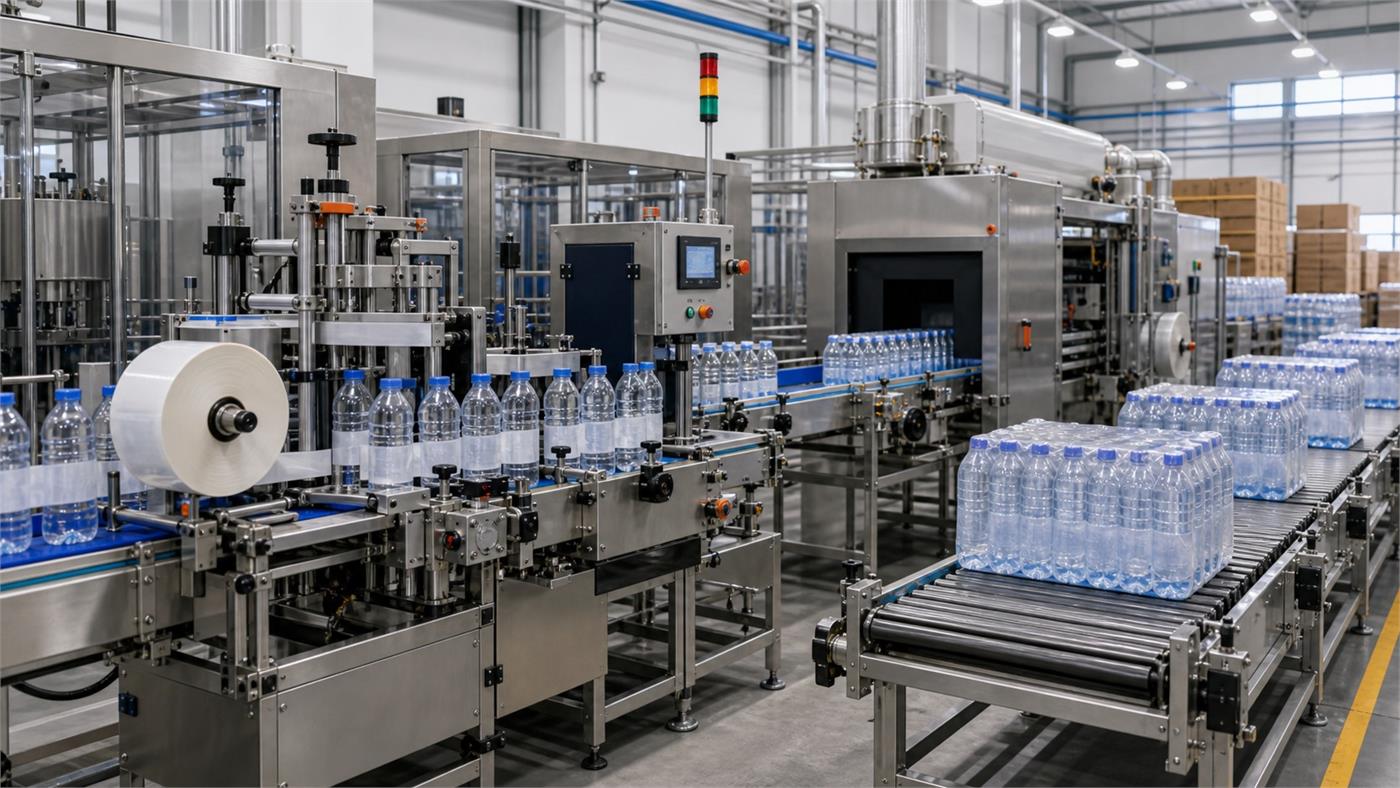
Label Type Comes Before Labeler Model
Shrink sleeves, roll-fed wraparound labels and pressure-sensitive labels use different materials, application methods, utilities, drying requirements and inspection points.
- Bottle drawings and stable samples
- Label material and artwork files
- Application position and orientation
- Speed, drying and inspection basis
Compare the Main Labeling Routes
The best route depends on package design and operating conditions, not one universal labeling technology.
Shrink sleeve
Useful for shaped bottles or larger decoration areas; define film, sleeve position and shrink process.
Roll-fed OPP
Common for wraparound bottle labels; define material, overlap, adhesive and bottle surface condition.
Pressure-sensitive
Supports many label shapes and targeted placement; define liner, unwind, sensors and orientation.
Inspection and coding
Coordinate label presence, position, artwork, date code and reject handling.
Water Bottle Labeler Comparison
Compare technologies using the same bottle, label and output basis.
| Decision | What to define | Evidence to request |
|---|---|---|
| Package samples | Approve bottle and label combinations. | Application trials and signed sample set. |
| Material route | Define sleeve, roll-fed or pressure-sensitive stock. | Material specification and supplier tolerances. |
| Bottle condition | Confirm surface moisture, temperature and stability. | Drying requirement and operating window. |
| Changeover | List bottle and label variants. | Change parts, settings and recipe plan. |
| Inspection | Define label presence, position, code and rejects. | Inspection method and acceptance samples. |
Files Needed Before Labeler Selection
Send package evidence early enough to test application and finished appearance.
Bottle drawings
Include label panel, diameter changes, ribs, grip areas and orientation features.
Label specification
Provide dimensions, material, thickness, roll direction, artwork and tolerances.
Finished sample
Share the target decorated bottle and acceptable appearance criteria.
Line conditions
State speed, bottle spacing, surface moisture, temperature and downstream packing.
FAQ
Which labeling machine is best for water bottles?
It depends on bottle shape, label material, decoration area, speed, surface condition, changeover and finished-package requirements.
What is the difference between sleeve and OPP labeling?
Sleeves are placed over the container and shrunk; roll-fed OPP labels usually wrap around the bottle and join at an overlap.
Does the bottle need drying before labeling?
Some label and adhesive routes are sensitive to surface moisture. Confirm the required bottle condition with the supplier.
Can one labeler run multiple bottle sizes?
Often yes, within an approved range, but change parts, settings, label specifications and tests must be defined.
What should be checked during FAT?
Use approved bottles and label rolls to check feeding, placement, appearance, changeover, alarms, coding or inspection interfaces and output basis.
Request a Labeling Route Review
Share what you know now. The goal is to prepare a useful plant brief before a machine quotation is built.