Carbonated water planning
Sparkling Water Bottling Line and Carbonated Water Plant
Plan the complete process from source-water treatment and product preparation to controlled carbonation, pressure filling, immediate closing, inspection, labeling, packing and acceptance testing.
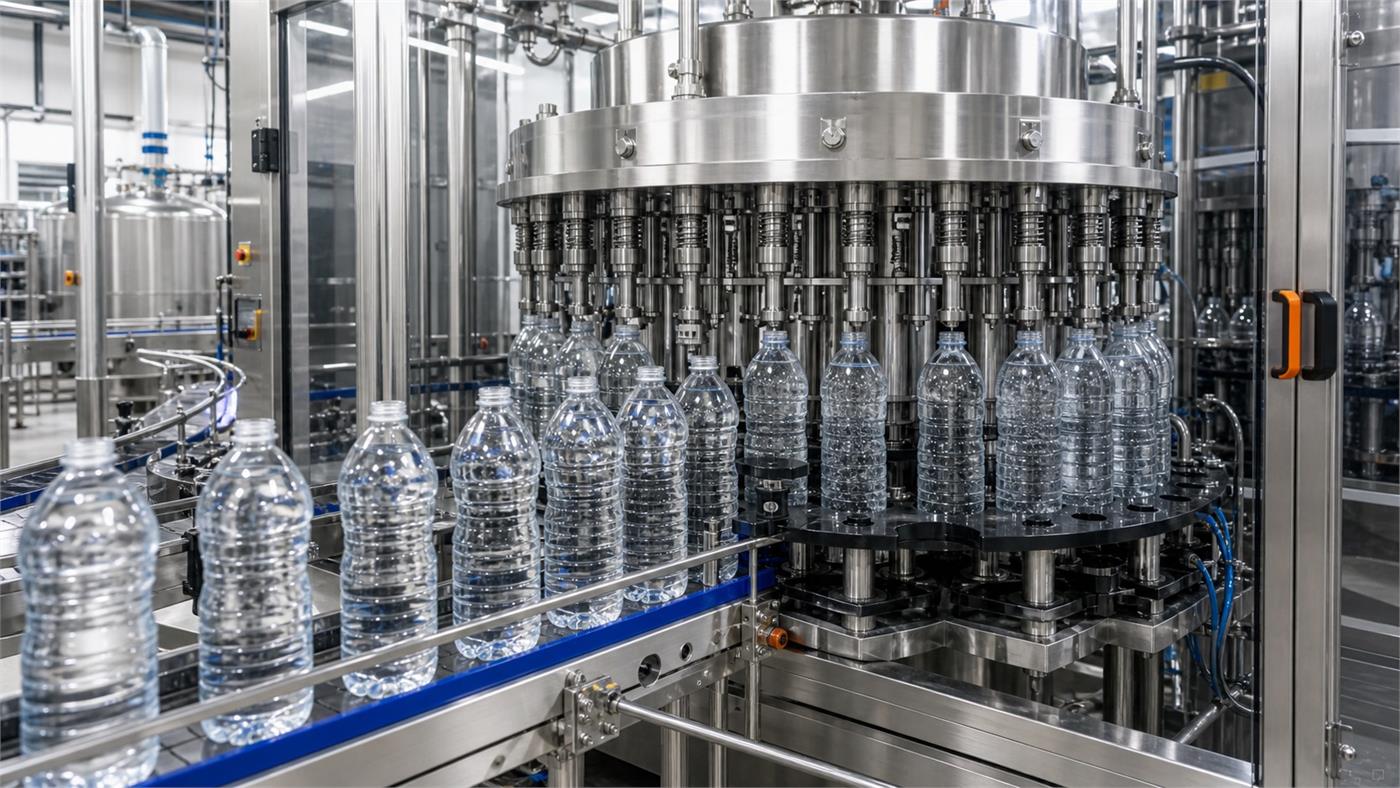
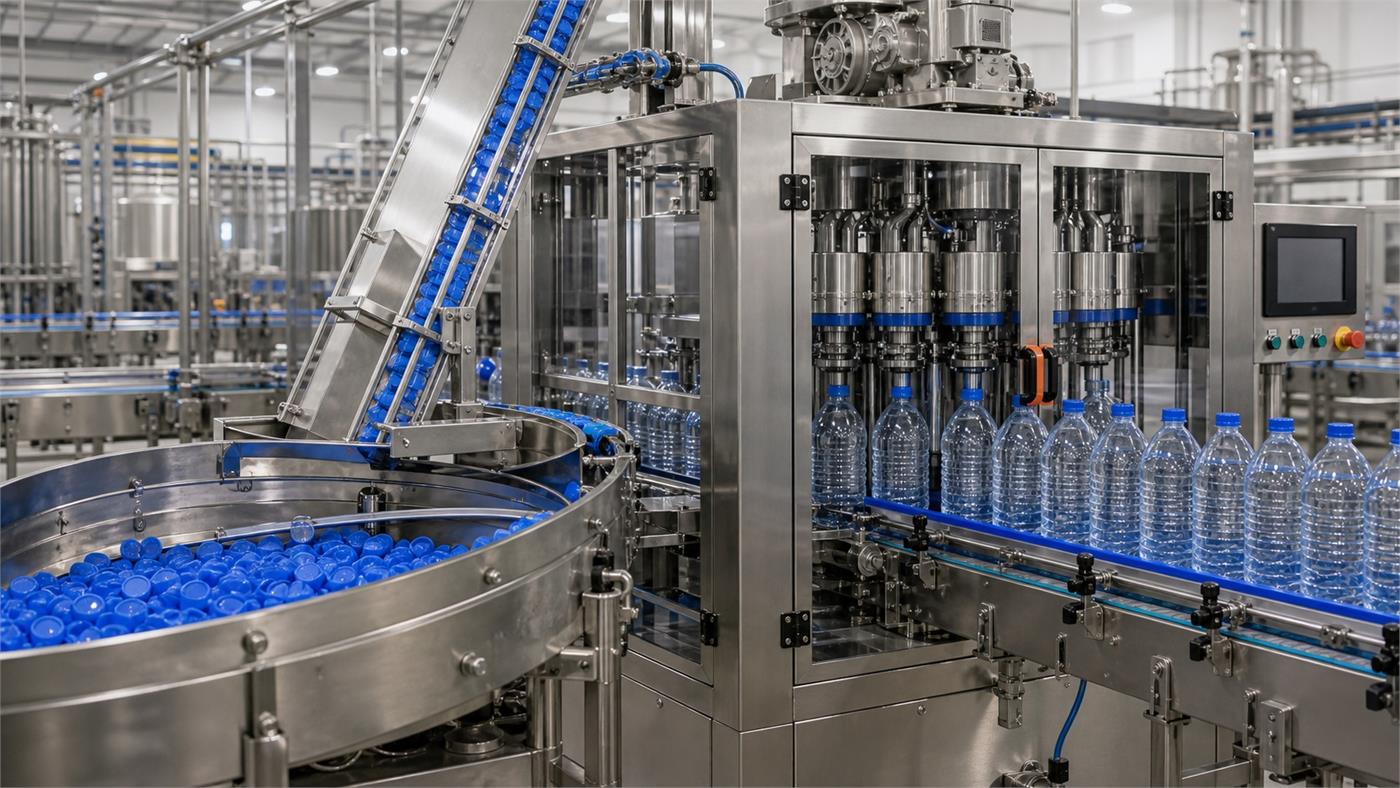
Sparkling Water Is Not a Still-Water Changeover
Carbon dioxide retention connects product temperature, deaeration where required, carbonation, transfer pressure, container strength, filling principle and closure application. Those interfaces must be engineered together before a complete-line quotation is reliable.
- Defined sparkling product category
- Container and closure approved for pressure
- Carbonation and temperature process basis
- Separate FAT conditions for each product and pack
What Changes From a Still-Water Bottling Line?
Some treatment, conveying, labeling and packing assets may be shared, but the product preparation and filling center must be selected for carbonation duty.
Product definition
Separate plain sparkling water from flavored, sweetened or mineral-water products because ingredients, treatment, cleaning and labeling scope can change.
Dissolved-gas control
Deaeration may be used where the approved process needs more controlled gas removal before carbon dioxide addition.
Carbonation system
The system must dose and dissolve carbon dioxide under a controlled product, temperature and pressure basis.
Pressure-rated transfer
Piping, buffer vessels, valves and controls must move carbonated product without uncontrolled pressure loss or foaming.
Counter-pressure filling
The filler should be selected for the specified product and package. A standard still-water gravity filler is not an equivalent application.
Immediate closing
Cap, crown or seam selection and the time from filling to closing affect product and package performance.
Container validation
PET, glass and cans have different pressure, handling, inspection, changeover and distribution decisions.
Condensation management
Cold-filled containers may need controlled drying or warming when condensation would interfere with labels, codes or secondary packs.
Sparkling Water Bottling Line Scope
A supplier proposal should connect product preparation with the package line and show every interface, instrument, utility and acceptance responsibility.
| Stage | Planning decision | Evidence to request |
|---|---|---|
| 1. Source water and product category | Define the legal and commercial product before selecting treatment. | Water analysis, intended product description and destination-market input. |
| 2. Treatment and hygienic storage | Prepare the base water without assuming one universal purified or mineral route. | Approved process flow, tanks, sanitation method and quality points. |
| 3. Product preparation | Identify conditioning, deaeration, cooling or ingredient scope that applies to the actual product. | Recipe boundary, process description, instruments and cleaning responsibility. |
| 4. Carbonation | Control carbon dioxide supply, dosing, dissolution and stable operating conditions. | Equipment basis, gas specification responsibility, alarms and verification method. |
| 5. Pressure-rated transfer | Maintain controlled product conditions between preparation and filling. | Piping and instrument diagram, vessel ratings, valves and control narrative. |
| 6. Container preparation | Approve PET, glass or can supply, cleaning or rinsing and incoming inspection. | Container drawings, samples, preparation method and reject criteria. |
| 7. Pressure filling and closing | Fill and seal the approved package under defined product conditions. | Filler application, closure system, operating basis and acceptance checks. |
| 8. Post-fill handling | Control leaks, condensation, inspection, accumulation and package stability. | Inspection plan, drying or warming requirement and conveyor basis. |
| 9. Labeling and packing | Match label, code, pack and pallet to the container and distribution route. | Finished-pack sample, material details and end-of-line test basis. |
| 10. Release and records | Define product, carbonation, fill, closure and package checks. | Sampling plan, instruments, laboratory responsibility and release records. |
PET, Glass or Can for Sparkling Water?
Do not choose the filler before the container route. The package affects product pressure, closure, bottle or can preparation, inspection, labeling, secondary packing and warehouse handling.
PET bottles
Approve preform and bottle design, base and sidewall performance, closure, blowing or bottle supply, warm-climate distribution and filled-bottle stability.
New glass bottles
Plan depalletizing, inspection, approved preparation, pressure filling, closure, heavy-container conveying and one-way packing.
Returnable glass
Add crate and bottle return, washing, residual inspection, rejection, recrating and return-pool inventory to the sparkling product system.
Aluminum cans
Use can handling, rinsing, filling and seaming equipment selected for the actual can and end specification, then define inspection and pack format.
Multiple formats
A shared system requires documented product and format changeovers, separate change parts, controls, cleaning and performance tests.
Distribution evidence
Consider transport vibration, ambient temperature, pallet pattern, storage and retail handling when approving the finished package.
Questions for a Sparkling Water Line Supplier
Convert marketing language into a testable project basis. Avoid universal carbonation, temperature or output figures that are not tied to the actual product and package.
| Decision | Ask the supplier | Why it matters |
|---|---|---|
| Product range | Which still, sparkling, mineral or flavored products are included? | Product preparation and cleaning scope can differ materially. |
| Carbonation basis | Which product conditions and measurement method define acceptance? | Gas retention cannot be judged from machine speed alone. |
| Container approval | Which PET, glass or can drawings and samples define the line? | Pressure performance and handling depend on the exact package. |
| Filling principle | How does the proposed filler control pressure, foaming and product loss? | A still-water filler description does not prove sparkling application. |
| Closure integrity | Which cap, crown or seam checks and reject methods are included? | The closure protects both product and pressure. |
| Cooling and warming | Which refrigeration, drying or warming equipment is required and why? | Temperature and condensation can affect filling, labeling and packing. |
| Utilities and safety | What carbon dioxide, refrigeration, power, air, ventilation and drainage basis applies? | The building must support the approved process and safe operation. |
| FAT and commissioning | Which product, packages, run basis, measurements and documents prove acceptance? | Testing should reflect the contracted production conditions. |
FAQ
What equipment is included in a complete sparkling water bottling line?
A complete project may include source-water treatment, product preparation, deaeration or cooling where required, carbonation, pressure-rated transfer, counter-pressure filling, immediate closing, inspection, labeling, coding, packing, conveyors, controls and utilities. Inclusions must be itemized.
Why cannot a standard still-water filler be used unchanged?
Sparkling product must be transferred, filled and closed while controlling pressure, temperature, foaming and carbon dioxide loss. The filling principle, product path, closure system and container must be approved for the stated carbonation duty.
Can one line produce both still and sparkling water?
It may be possible with an appropriately configured process and filler, but the supplier must document which equipment is shared, the product changeover and sanitation method, operating limits, recipe control and separate acceptance tests.
Should sparkling water use PET bottles, glass bottles or cans?
Choose from product positioning, distribution, returnability, closure, internal-pressure performance, pack sizes, local material supply and format-change needs. Each container route requires its own approved handling and closing scope.
How should sparkling water line capacity be specified?
State each container, product, carbonation basis, required output, operating hours, changeover frequency, label and pack. One headline BPH figure is not enough to confirm balanced-line performance.
What water treatment system is required for sparkling water?
Treatment depends on the source-water analysis, intended product identity and destination-market rules. RO should not be prescribed automatically for spring or natural mineral water, and flavored products may require a different process scope.
How is carbonation controlled and retained?
A project-specific system may manage dissolved gases, product temperature, carbon dioxide dosing and dissolution, transfer pressure, counter-pressure filling and prompt closing. The product specification should define the acceptance method.
Why might a sparkling water line need cooling and warming?
Cooling can support carbonation and stable pressure filling, while post-fill warming may be considered when condensation would disrupt labeling or packing. Requirements depend on product, package and local ambient conditions.
What utilities should be confirmed before a sparkling water layout is approved?
Confirm water, electrical power, refrigeration, carbon dioxide supply, compressed air, ventilation, drainage, cleaning connections and safe material handling. Supplier utility data must match the approved equipment and operating basis.
What should be tested during FAT and commissioning?
Use agreed product and packaging inputs to test line operation, output basis, carbonation retention, fill and closure results, alarms, changeovers, sanitation sequences, documents and operator handover. Do not rely on universal online tolerance values.
Request a Sparkling Water Line Scope Review
Share what you know now. The goal is to prepare a useful plant brief before a machine quotation is built.