Glass container planning
Glass Bottle Water Filling Line for New and Returnable Bottles
Plan a complete glass water line around the actual product, bottle, closure and distribution system: new or returnable container handling, preparation, inspection, filling, labeling, packing and factory flow.
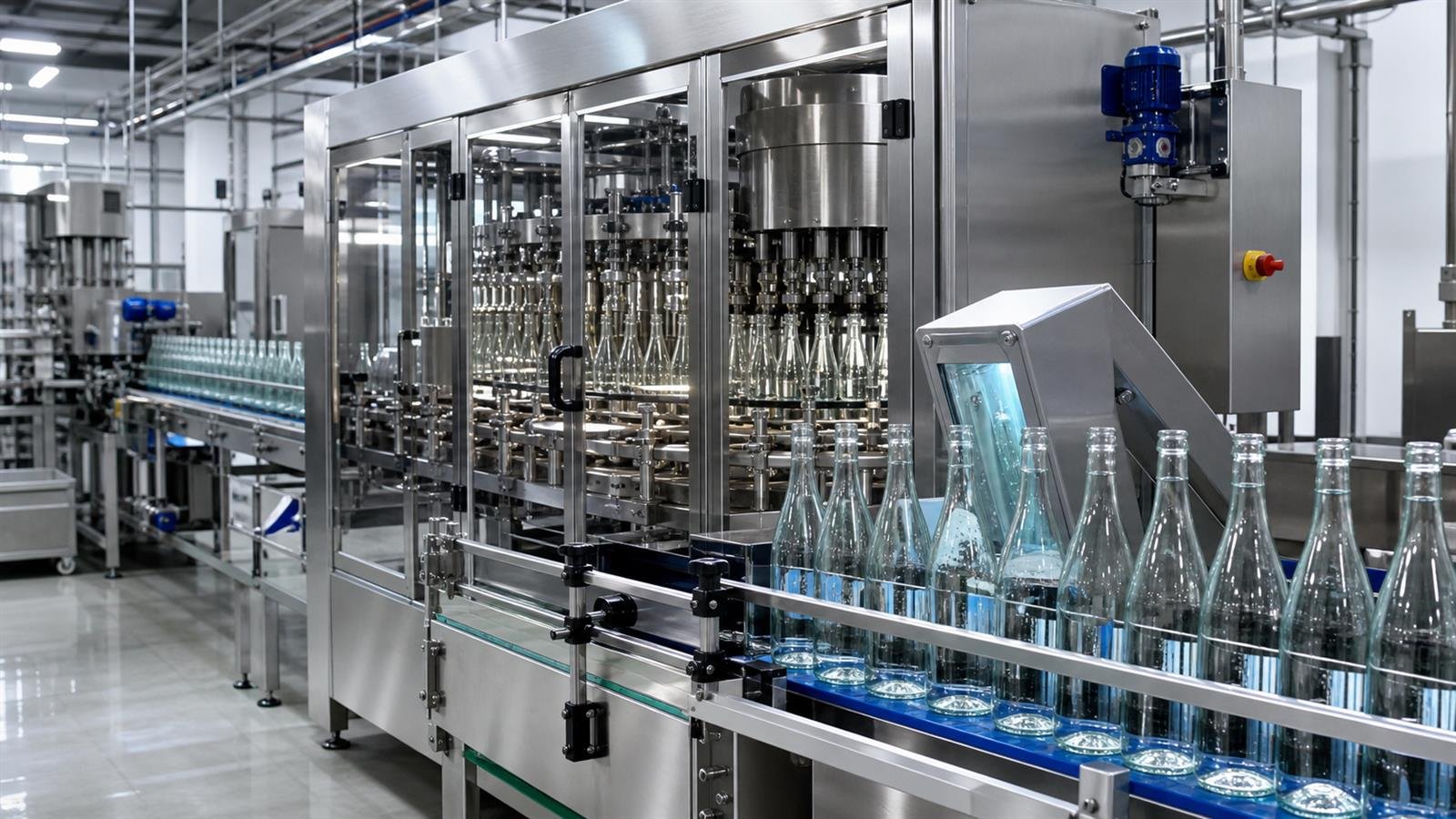
Glass Changes the Complete Line Architecture
A glass bottle water filling line is not a PET line with a different conveyor guide. Container weight, breakage, returnability, bottle finish, closure, inspection, pack format and operator protection affect almost every stage.
- New or returnable bottle route
- Still or sparkling water definition
- Closure and bottle-finish approval
- Inspection, breakage and pack strategy
Choose the Glass Water Line Route First
Four basic routes create different equipment and control requirements. Define the launch route before comparing filling machines or complete-line prices.
New glass with still water
Plan depalletizing or controlled infeed, incoming inspection, an approved preparation step, still-water filling, closure and one-way secondary packing.
New glass with sparkling water
Add approved product conditioning, pressure filling, pressure-rated container and closure validation, and condensation or post-fill handling where required.
Returnable glass with still water
Add crate handling, decrating, bottle and crate washing, residual inspection, rejected-bottle replacement, recrating and return-pool control.
Returnable glass with sparkling water
Combine the returnable container loop with carbonation, pressure filling and package validation. It is the most interface-intensive route.
Shared line possibility
A combined route may be feasible, but bypasses, changeovers, controls, inspection and test conditions must be engineered around approved bottles.
Dedicated line choice
Separate lines can simplify hygiene and changeover when formats or return loops are materially different. Compare real operating needs rather than brochure flexibility.
New Glass vs Returnable Glass Bottle Line
Use this comparison to prevent a filler-only quotation from hiding the container preparation and warehouse systems that make the line operable.
| Scope area | New one-way glass | Returnable glass |
|---|---|---|
| Incoming unit | Palletized or otherwise protected new containers. | Returned bottles and crates with variable handling history. |
| Infeed equipment | Depalletizing, layer handling and controlled bottle conveying as specified. | Return-pallet handling, decrating or unpacking, bottle and crate separation. |
| Preparation | Approved inspection and rinsing or other validated preparation for supply condition. | Multi-stage bottle washing and separate crate washing where the return system uses crates. |
| Empty-bottle inspection | Defects, contamination, dimensions, finish and suitability for the approved line. | Foreign bottles, damage, residual liquid or cleaning agent, neck, base, sidewall and finish condition. |
| Filling and closure | Selected for the defined still or sparkling product, bottle finish and closure. | Same product decisions plus proof that accepted washed bottles and closures work across the return pool. |
| Secondary pack | Carton, tray, shrink or another one-way distribution pack. | Recrating, crate inspection, crate accumulation and return-pallet handling as applicable. |
| Inventory control | New bottle, closure, label and pack-material supply. | Full and empty bottle pool, crate pool, rejects, losses and replacement containers. |
| Layout pressure | Safe depalletizing, glass handling, packing and finished-goods flow. | Additional dirty-return, wash, inspection, crate and clean-bottle routes with controlled crossings. |
Glass Bottle Water Line Stages to Confirm
The final scope depends on container and product. Ask the supplier to mark every item as included, optional, excluded or buyer-side.
Water treatment and product transfer
Match the source-water evidence and product category, then protect hygienic storage and transfer to the filler.
Bottle or crate infeed
Define unloading, depalletizing, decrating, accumulation and safe transfer for the actual incoming unit.
Washing or preparation
Returnables need a validated wash route; new containers need preparation based on their approved supply condition.
Empty-bottle inspection
Set defect, contamination and rejection controls before accepted containers enter the filling path.
Filling and closing
Select still or pressure filling, fill presentation and the cap, crown, screw or other approved closure application.
Full-container inspection
Plan fill, closure, leak, code and glass-condition checks with a controlled reject route.
Drying, labeling and coding
Keep the container suitable for the selected label and code, particularly after cold filling or washing.
Packing or recrating
Define the real sales and distribution unit, then match conveyors, case or crate handling and pallet flow.
Controls and accumulation
Connect machine signals, speeds, stops and recovery while protecting heavy, breakable containers.
Utilities and lifecycle support
Confirm power, water, air, heat or chemicals where applicable, drainage, change parts, spares, training and service.
Information for a Glass Water Line Quotation
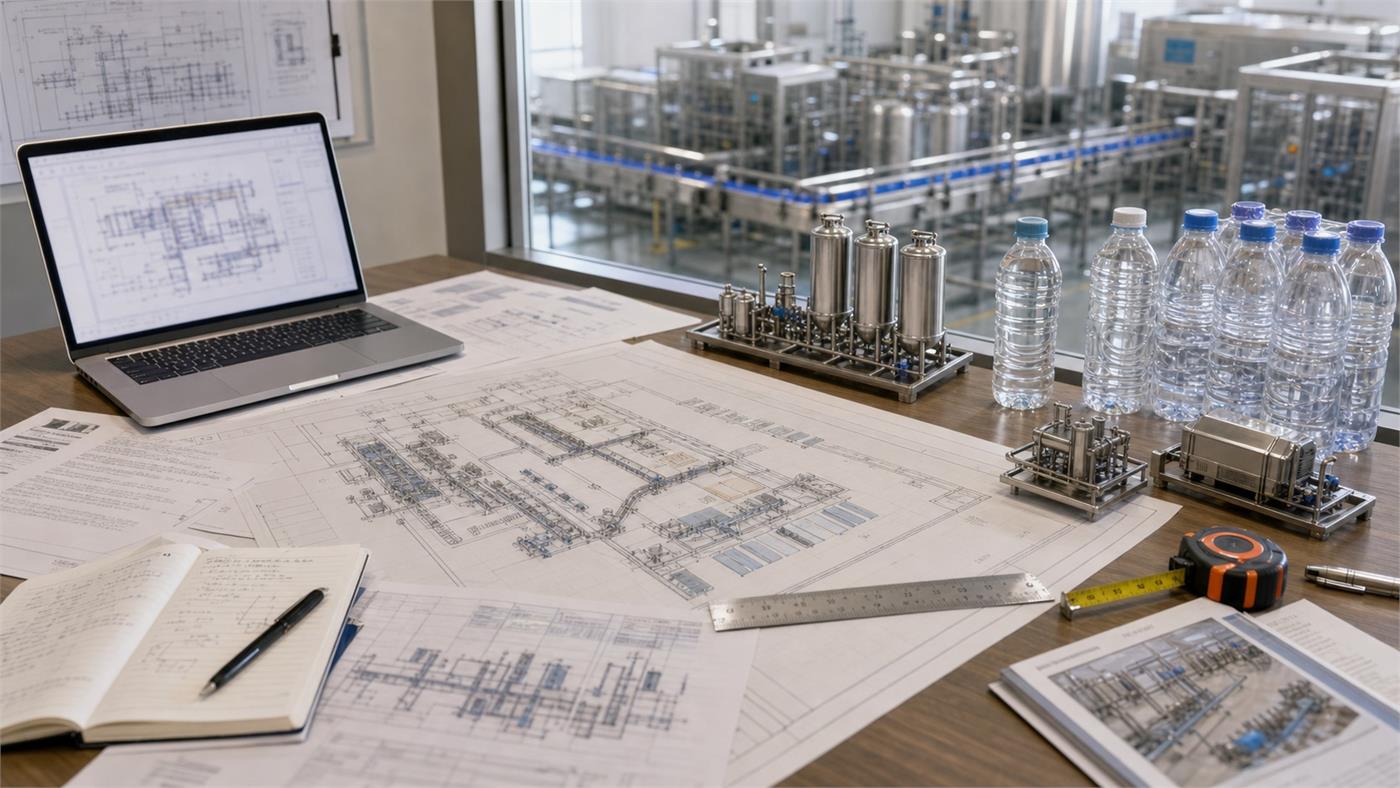
Send physical packaging evidence early. Bottle volume alone cannot confirm guides, inspection, filling, closure, labeling or pack performance.
| Input | What to provide | Decision affected |
|---|---|---|
| Water product | Still or sparkling definition, source and approved treatment basis. | Product system, filler, sanitation and quality plan. |
| Bottle range | Drawings and samples for every launch bottle, including finish and weight. | Handling, guides, filler parts, inspection and changeover. |
| Bottle condition | New supply method or representative returned-container condition. | Rinse, washer, inspection, rejection and hygiene scope. |
| Closure | Drawings, samples, supplier information and tamper-evidence requirement. | Feeding, application, torque or other control and inspection. |
| Label and code | Material, dimensions, position, artwork responsibility and code content. | Drying, labeler, coder and verification equipment. |
| Secondary pack | Carton, tray, shrink, crate, dividers, pallet and distribution method. | End-of-line machines, conveyors, storage and warehouse flow. |
| Output by format | Required balanced-line output and production mix for each approved SKU. | Machine sizing, accumulation, changeover and acceptance test. |
| Factory and utilities | Floor plan, access, drains, electrical supply, water, air and local installation boundary. | Layout, utility schedule, safety access and project responsibility. |
FAQ
What is the difference between a glass bottle filling machine and a complete glass water line?
The filling machine normally covers bottle rinsing or transfer, water filling and closure application. A complete line can also include water treatment, bottle or crate handling, washing, inspection, labeling, coding, packing, conveyors, pallet handling, utilities and project support.
How do new and returnable glass bottle lines differ?
New one-way bottles usually need controlled depalletizing, inspection and an approved preparation step. Returnable bottles add decrating, bottle and crate washing, residual inspection, rejection, return-container inventory and recrating or another return-pack route.
Can one line handle both new and returnable glass bottles?
It can be engineered with separate infeed, washer, preparation or bypass routes when the actual containers and process permit it. The supplier must document the flow, controls, changeover, inspection and acceptance basis rather than promise universal compatibility.
Can the same glass line fill still and sparkling water?
Potentially, but the product system and filler must be selected for both applications. Sparkling water changes carbonation, temperature, pressure filling, closure and package-validation requirements, so a still-water filler is not automatically suitable.
Does every glass bottle water line need a bottle washer?
No. A full washer is especially relevant to returned containers. Preparation of new bottles should follow their supply condition, contamination risk, product and approved hygiene process instead of copying a returnable-bottle washing sequence.
How is the glass bottle filling method selected?
Use the defined still or sparkling product, bottle and finish, closure, target fill presentation, hygiene plan, output and approved operating conditions. Ask the supplier to state the exact application basis for the proposed filler.
Which glass bottle inspections should be considered?
Consider incoming or empty-container defects, contamination and finish condition; residual liquid or cleaning agent for returnables; and fill level, closure, leaks, label, code and full-container condition after filling. The final inspection plan is project-specific.
Does bottled water in glass require pasteurization?
Do not assume it does. Product definition, source-water controls, treatment, hygienic design, filling method, microbiological plan and local rules determine the process. Qualified specialists should approve any thermal requirement.
What information is needed for a glass water line quotation?
Send bottle drawings and physical samples, product definition, closure and label details, secondary pack, target output by format, returnable-bottle condition where relevant, floor plan, utilities, warehouse route and acceptance requirements.
How should glass water line capacity be compared?
Compare balanced-line output under the same bottle, product, closure, label and pack conditions. Include changeover basis, inspection and rejection assumptions, accumulation, returnable handling where applicable and the agreed test method.
Request a Glass Water Line Scope Review
Share what you know now. The goal is to prepare a useful plant brief before a machine quotation is built.