capacity planning question
Water Bottling Line Changeover Time: Agree the Start and Finish
A changeover promise needs a named format pair, a start condition and a finish condition. Measure the complete transition that matters to your schedule, including first-off approval and any stabilization that the agreed boundary requires.
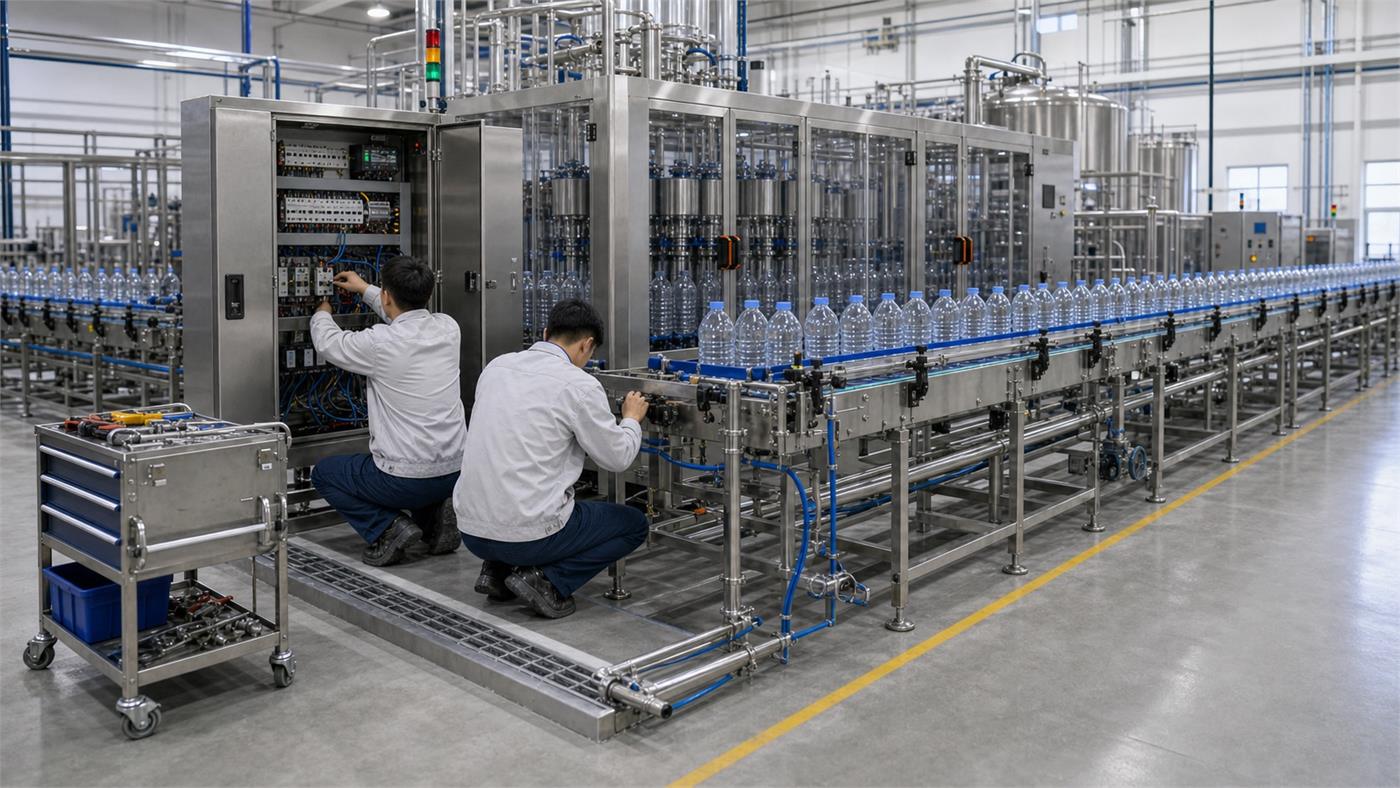
Specify the Transition, Not Only the Bottle Range
Changing a label roll while retaining the bottle is different from changing bottle volume, cap, label and pack. Identify both SKUs, their approved drawings and the machines affected. Test the actual transition you intend to schedule rather than generalizing from the easiest format pair.
Choose a Boundary That Fits the Buying Decision
For daily scheduling, a useful candidate boundary is the last accepted old-format pack to the first accepted new-format pack under an agreed output and quality condition. State whether line clearance, cleaning, adjustment and first-off release fall inside that window.
For a machine comparison, mechanical part-change time may be measured separately. Label it as that narrower activity. It should not silently replace the time required to return the complete line to accepted production.
Define the permitted crew, tools, pre-staged materials and starting machine condition. An assisted demonstration with parts already installed does not represent a routine change performed by the planned operators.
Record Parallel Work Without Double Counting
Illustrative timeline: the last accepted old-format pack is recorded at 10:00. Clearance ends at 10:08. Mechanical work then finishes at 10:28 while a recipe check performed in parallel ends at 10:22. Adjustment and first-off approval finish at 10:40. The elapsed transition is 40 minutes.
The recipe activity does not add another 14 minutes to the elapsed transition because it overlaps mechanical work. Labor effort can be tracked separately by worker and activity; it is not interchangeable with elapsed line downtime.
If the agreed finish also requires a sustained accepted run after first-off approval, extend the timing to that finish condition. Do not change the endpoint after observing the trial.
| Illustrative event | Time | Elapsed-time interpretation |
|---|---|---|
| Last accepted old-format pack | 10:00 | Start under the agreed production boundary. |
| Clearance complete | 10:08 | 8 elapsed minutes since start. |
| Recipe check complete | 10:22 | Performed in parallel with mechanical work. |
| Mechanical work complete | 10:28 | Do not add the overlapping recipe time again. |
| Adjustment and first-off approval complete | 10:40 | 40-minute transition for this stated finish condition. |
Count Material and Quality Losses Alongside Time
Record bottles, caps, labels and pack materials used during adjustment, and identify their disposition. Keep residual old-format material and partly completed packs under the site quality process.
Record which change parts, settings and recipes were used and which checks release the new format. A fast transition that later produces incorrect labels or poor packs is not demonstrated acceptable output.
Separate an initial commissioning adjustment from a repeat change using an approved format record. Both are useful observations, but they answer different questions about routine production readiness.
Use the Result in a Format Matrix
Create a row for each tested old-to-new transition, with the crew, boundary, timing, material losses, approval evidence and open actions. Do not assume the reverse transition takes the same time.
Use repeated observations where the project test plan calls for them. Keep the individual results and causes of variation rather than reporting only the best trial.
Update the production schedule with the relevant accepted transition time. Add each transition once, and avoid counting the same downtime again inside an overall utilization assumption.
Buyer Questions
Does bottle-size changeover include packaging?
Include packaging when the agreed complete-line boundary requires a finished new-format pack. If only a particular machine is timed, identify that narrower scope explicitly.
Should parallel activities be added together?
Use the start-to-finish interval for elapsed line downtime. Sum worker activity separately when calculating labor effort.
Can the best trial be used for every format?
Keep the result tied to its format pair, crew, preparation and operating conditions. Other transitions need their own approval basis.
Request a Water Bottling Line Changeover Time Acceptance Scope Review
Share what you know now. The goal is to prepare a useful plant brief before a machine quotation is built.