Water bottling line planning
Small Water Bottling Line: Choose the First-Stage Equipment Scope
A small water bottling line should match the required accepted output and the resources available to operate it. Define the launch bottle, daily demand, production window and finished pack before deciding on capacity or automation. Small does not describe one fixed equipment package.
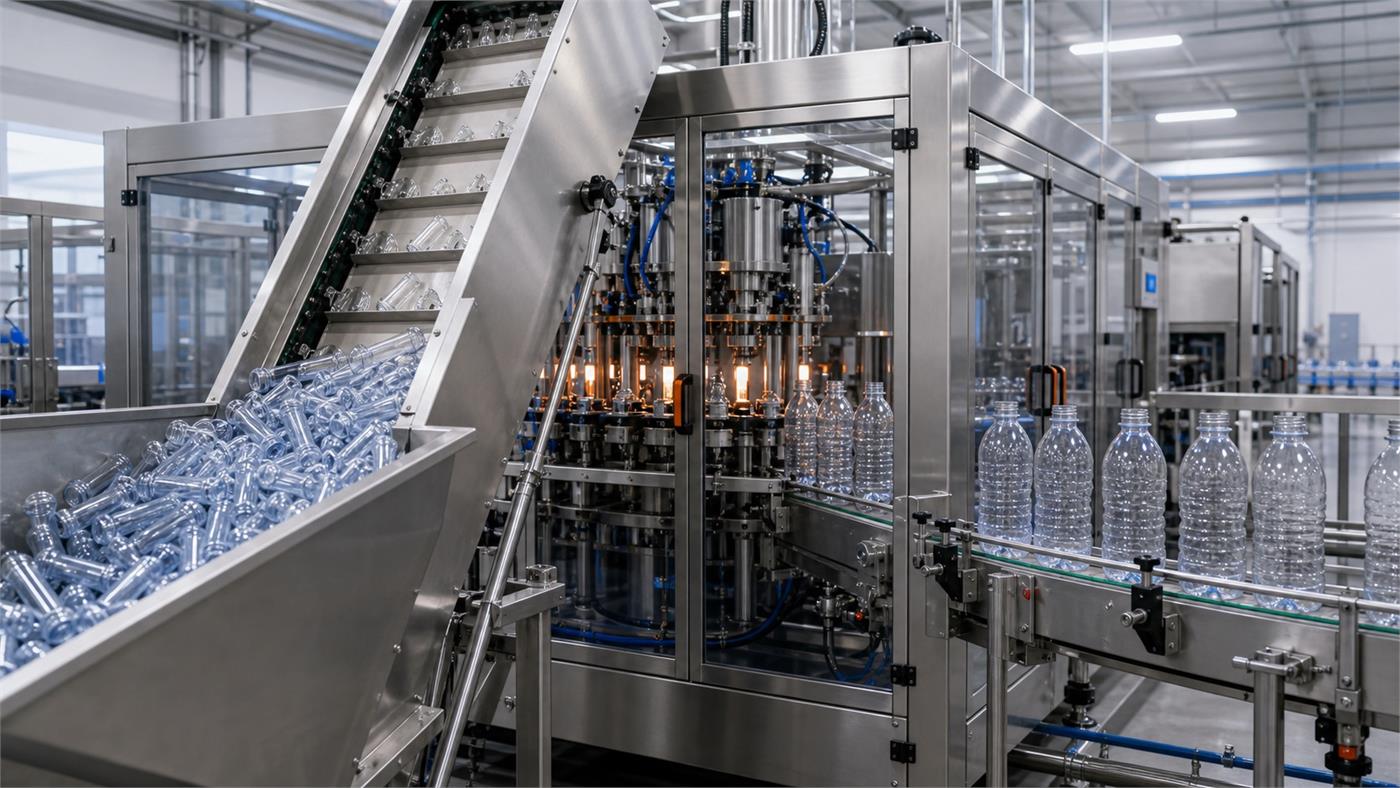
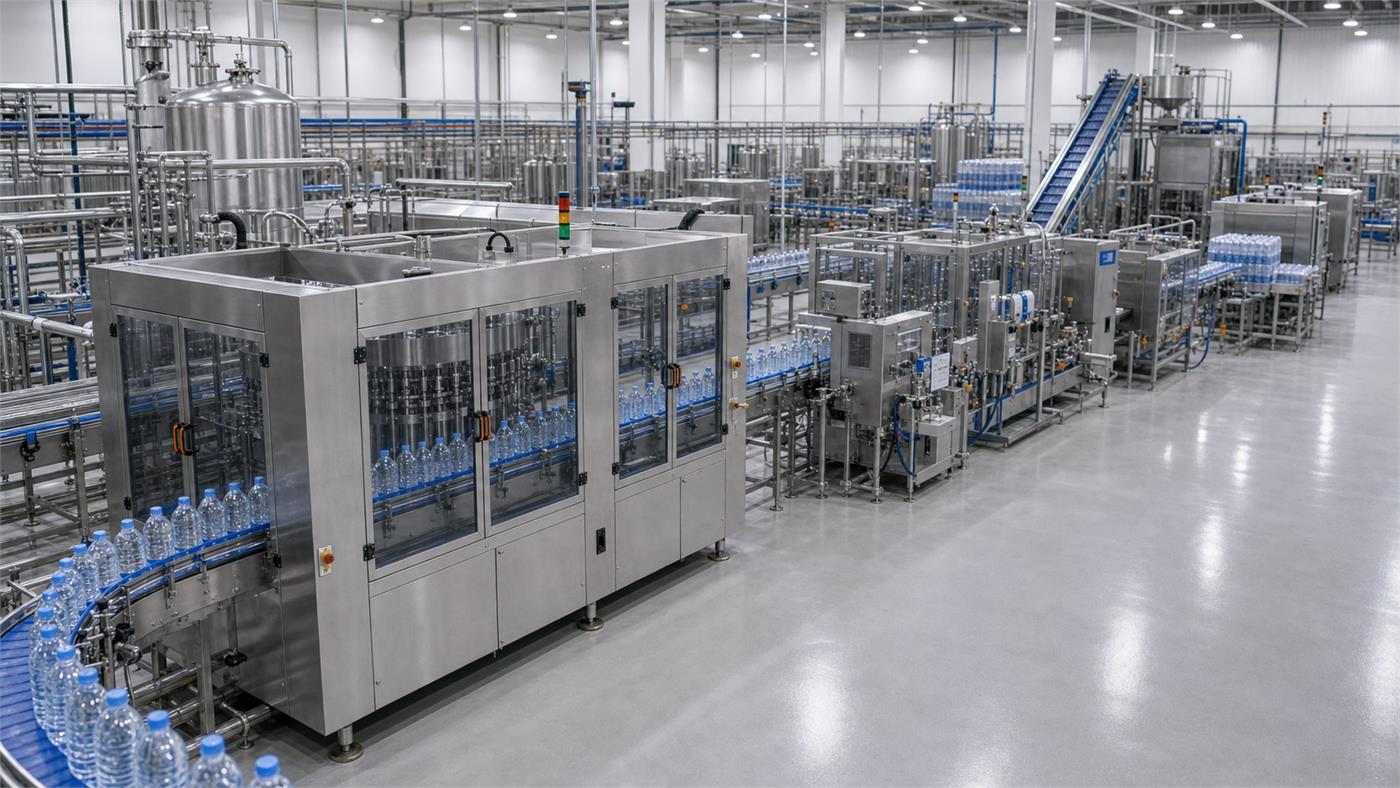
Build a Complete First Stage
The first stage must connect product preparation, bottle supply, filling and capping, the required labeling and coding, packing and finished-product handling. Cost control comes from a clear scope and suitable operating tasks, with future additions defined separately.
Size the Line From Demand and Available Time
Work backward from accepted bottles or complete packs required over a stated period. Record launch SKUs separately, then reserve time for cleaning, setup and format changes. Check whether the remaining production window can support the demand.
Illustrative single-format case: 18,000 accepted bottles are needed in a six-hour production window after separately planned activities. With a hypothetical 75% combined factor for operating stops, speed loss and rejects, the required reference rate is 18,000 ÷ 6 ÷ 0.75 = 4000 BPH. Under these assumptions, 3000 BPH is insufficient; 5000 BPH is a candidate to investigate, not an automatic recommendation.
Do not apply this one-rate calculation unchanged to a mixed-format schedule. Use the proposed rate for each format, and avoid applying losses twice when a measured good-output rate already includes them.
Compare Purchased Bottles With In-House Blowing
Purchased bottles can remove the initial blowing cell from the machine scope, but require dependable supply, protected storage, receiving checks and feeding. Compare transport frequency, inventory space and packaging damage risk with the alternative route.
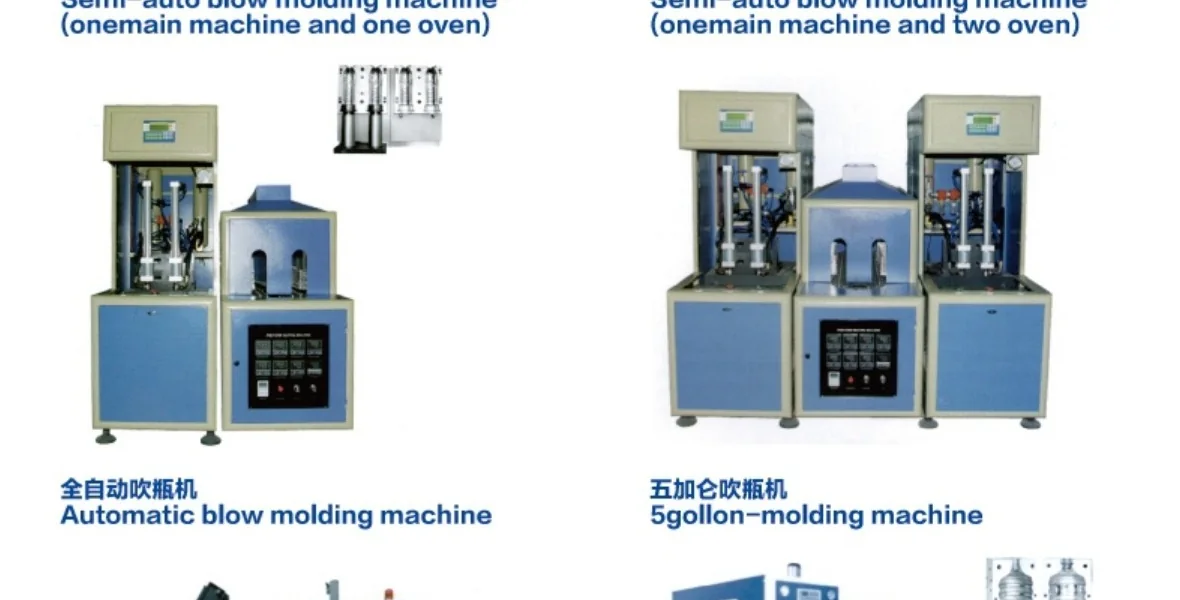
In-house blowing adds control over bottle manufacture and also adds preforms, molds, equipment operation and supplier-defined air and cooling requirements. Evaluate the entire route using approved bottle samples and the launch volume.
If blowing is a future option, record the proposed location, material flow, utility route and connection into the retained line. Empty space alone does not establish that the conversion will work.
Choose Automation by Repeated Operating Tasks
List who supplies bottles and caps, replenishes labels and film, checks product, handles rejects, changes formats and moves packs. An automatic filling center does not perform every task around it.
Assisted secondary packing can be considered where the required output, pack quality and safe work method can be demonstrated. Evaluate task duration, repetitive handling, breaks and simultaneous duties. Do not publish a fixed operator count without a defined configuration and task study.
Compare automation where it resolves a demonstrated constraint. A packer, reliable bottle feeder or better material replenishment may address the actual limitation more directly than increasing filler speed.
Make the Quotation Comparable Before Comparing the Total
Identify the project-specific water preparation and storage scope, bottle supply, rinsing-filling-capping, cap feed, conveyors, labeling, coding, quality checks, packing, utility equipment and startup items. Each line item needs an inclusion decision and responsible party.
Treatment selection follows the source-water evidence and product requirement. Equipment power, air demand and floor area follow the chosen machines and layout. Keep these open until there is a supplier basis instead of copying a generic small-plant package.
Request separate launch and optional/future items. Include format parts, documentation, training, installation responsibilities, consumables and acceptance records in the comparison so that a lower machine total does not conceal missing work.
| Scope item | Launch decision | Information that resolves it |
|---|---|---|
| Bottle route | Purchase bottles or produce from preforms | Approved format, supply reliability, storage and utilities |
| Packing work | Assisted tasks or specified automatic process | Required complete packs, task trial and material references |
| Format range | One launch family or several SKUs | Demand split, compatibility and changeover schedule |
| Retained equipment | Integrate or replace each existing module | Condition, per-format output and documented interfaces |
| Future additions | Reserve, defer or include at launch | Defined trigger, revised layout and integration scope |
Define a Measurable Expansion Trigger
Record the observation that would justify a change: recurring orders that no longer fit the feasible schedule, a measured packing bottleneck, bottle-supply disruption or an approved new format. Assign a review date or evidence threshold appropriate to the business.
Compare additional production time, improvement of the limiting task, replacement of one module and a parallel line. Confirm retained-machine compatibility and the planned installation interruption before choosing the expansion route.
Prepare the first inquiry with your demand basis, launch packaging, operating schedule, site drawing and unresolved decisions. The RFQ brief builder can organize those facts without requiring unknown engineering values.
Buyer Questions
What capacity counts as a small water bottling line?
There is no single capacity that defines every small project. Calculate the required rate from accepted demand, bottle formats, available production time and clearly stated losses.
What equipment does a small water bottling line need?
Define water preparation/storage, bottle supply, filling and capping, labeling/coding as required, quality checks, packing, conveyors, utilities and startup support. The agreed project scope determines the exact machines.
Can a small line use manual packing?
Possibly, if the required pack output, quality and safe operating tasks can be demonstrated. Include replenishment, breaks and simultaneous duties in the review.
Should a startup buy its own bottle blower?
Compare the complete in-house blowing route with reliable purchased-bottle supply, including storage, logistics, molds, utilities and maintenance. Startup status alone does not decide the answer.
How Do You Choose a Small Water Bottling Line Without Buying Twice?
A small line should reduce unnecessary first-stage complexity without omitting the systems needed for safe, repeatable production. The best startup scope is the smallest complete route that supports the launch bottle, realistic demand and a defined upgrade path.
Equipment references for this planning stage
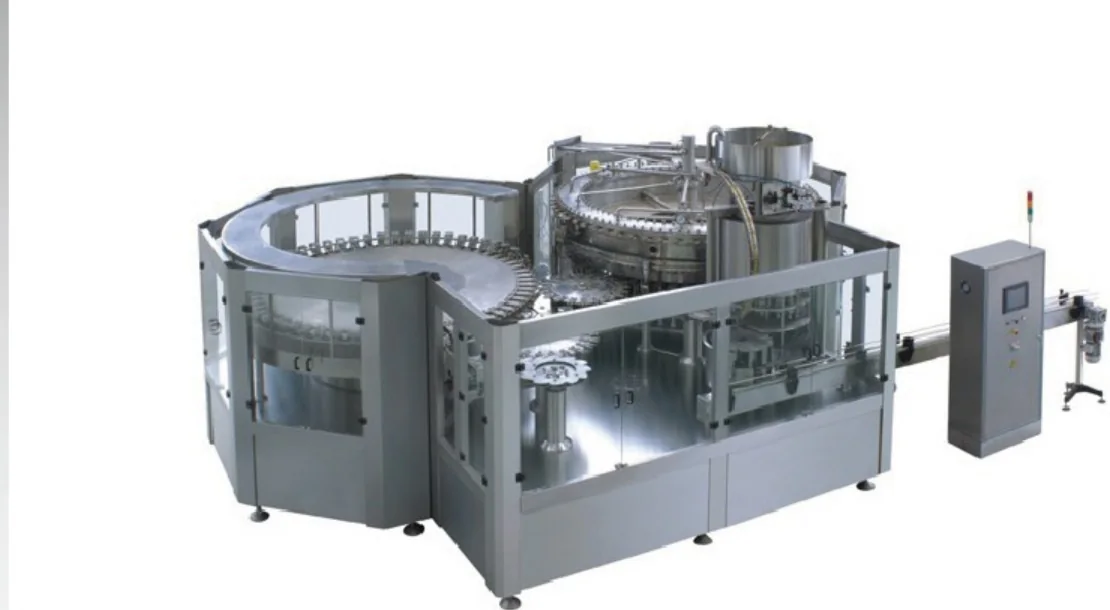
These authentic brochure images help buyers identify the machine categories that may sit inside a complete water bottling line. They are not customer-case evidence and do not fix the final model, output, process, utility load or supplier boundary.
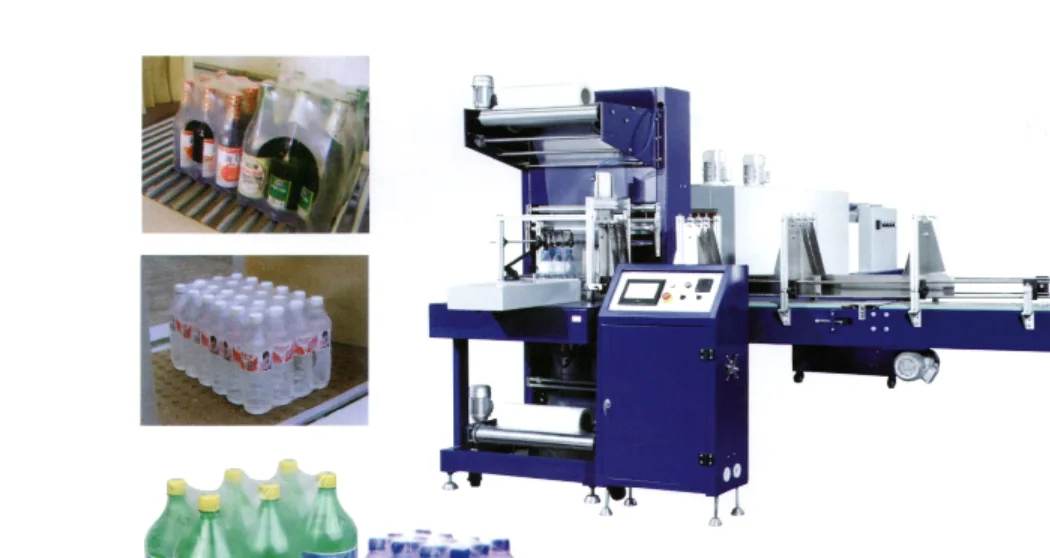
Quotation check: ask the supplier to mark each proposed item as included, optional, buyer supplied or excluded, then connect every item to the preliminary layout and utility schedule.
Questions to answer before requesting price
- Is the first priority low investment, low labor or easier future expansion?
- Which launch bottle and retail pack will be produced most often?
- What work will operators perform manually during each shift?
- Which part of the line should accept a future speed increase?
Buyer-decision content prepared for project clarification. Updated: .
Plan a Startup Plant
Share what you know now. The goal is to prepare a useful plant brief before a machine quotation is built.