integration planning
Preform-to-Pallet Water Bottling Line: Define Both Endpoints
A preform-to-pallet water bottling line starts with PET preforms and ends at an agreed pallet condition. Specify whether the endpoint is stacked packs, a wrapped pallet, a labeled load or transfer to warehouse handling. These are different supply boundaries.
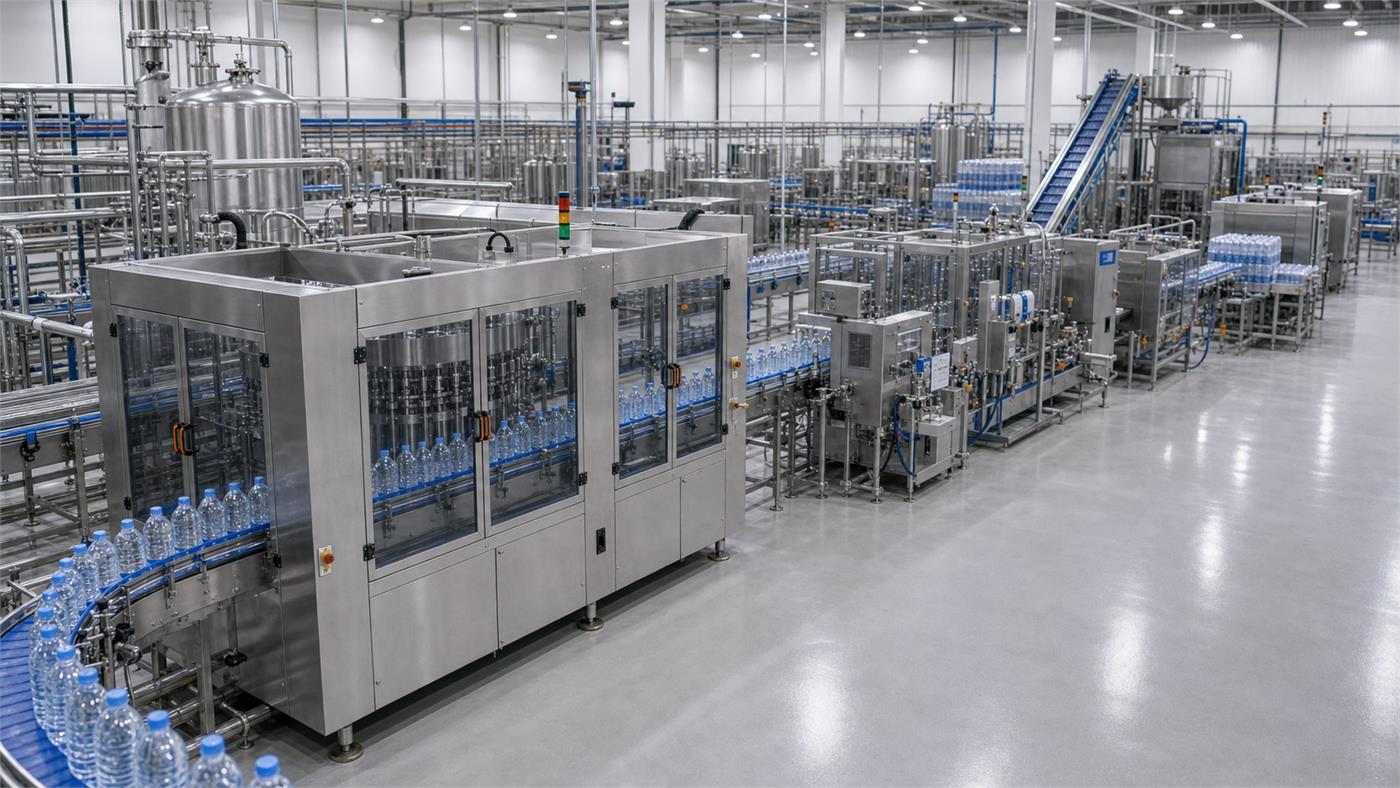
Map Three Connected Flows
The bottle route runs from preform feeding through blowing and filling. The product-water route supplies the filling stage. The packaging route turns closed bottles into labeled, coded packs and pallet loads. Map the connections among these flows and the utilities that each supplier requires.
Bottle Production Is a Package-and-Utility Decision
Provide the intended bottle and neck drawing, cap, preform and mold references. Confirm the blowing platform and the output basis for that approved package.
Ask the supplier to list air, air treatment, cooling and electrical connection requirements for the offered equipment. State who supplies the auxiliaries, pipework, controls and final connections.
Plan preform receiving, line-side replenishment and mold handling. Include service access and the route used to transfer empty bottles to filling, whether within an integrated block or between separate machines.
Follow Good Bottles Into Good Pallet Loads
Define inspection, reject handling, label application, code content and the chosen pack material. Record the pack arrangement used for the packer’s output claim.
Specify pallet dimensions, packs per layer, number of layers and the approved load condition. Identify responsibility for empty-pallet supply, layer pads where required, load securing and finished-pallet transfer.
A palletizer that can stack the required packs does not by itself establish warehouse capacity. Check how loads leave the line and what happens when the discharge route is temporarily occupied.
Worked Pack-and-Pallet Calculation
Illustrative steady running case: 12,000 accepted bottles/hour in 12-bottle packs produce 1,000 full packs/hour. At an assumed approved pattern of 80 packs per pallet, the flow is 12.5 pallet loads per hour.
For a one-hour receiving window, plan handling for 13 pallet positions if a partial load uses its own position. There are still only 12 complete 80-pack pallets plus a 40-pack partial load in that hour. Separate full saleable units from storage positions.
Use the actual approved pack and pallet pattern, and check the running and peak conditions. Neither an assumed layer count nor a rounded warehouse figure is a verified pallet design.
Write the Missing-Interface List Before Approval
Check preform and cap feeding, bottle transfer, accumulation, code verification, rejection, pack transfer, pallet supply and utility connections. For every item absent from the offer, identify the party that supplies and tests it.
Ask for a line acceptance run from the agreed preform infeed through the final load endpoint. Record quality, material replenishment, normal stops and recovery as well as machine speed.
Frequently Asked Questions
Does preform-to-pallet automatically include water treatment?
No. The product-water source and treatment boundary must be stated separately. Define the supply conditions and who provides treatment, storage and transfer to filling.
Does the line include pallet wrapping?
Only if it is named in the scope. State whether the endpoint is stacked packs, a secured load, a labeled pallet or warehouse transfer.
What is the most useful output unit?
Use bottle-specific good output and convert it to the approved complete packs and pallet pattern. Keep partial loads and warehouse positions separate from full saleable units.
Discuss Your Water Bottling Line Requirements
Share what you know now. The goal is to prepare a useful plant brief before a machine quotation is built.