Startup guide
How to Start a Bottled Water Business
Learn how to start a bottled water business with market planning, water source checks, equipment scope, plant layout, cost factors and supplier briefing.
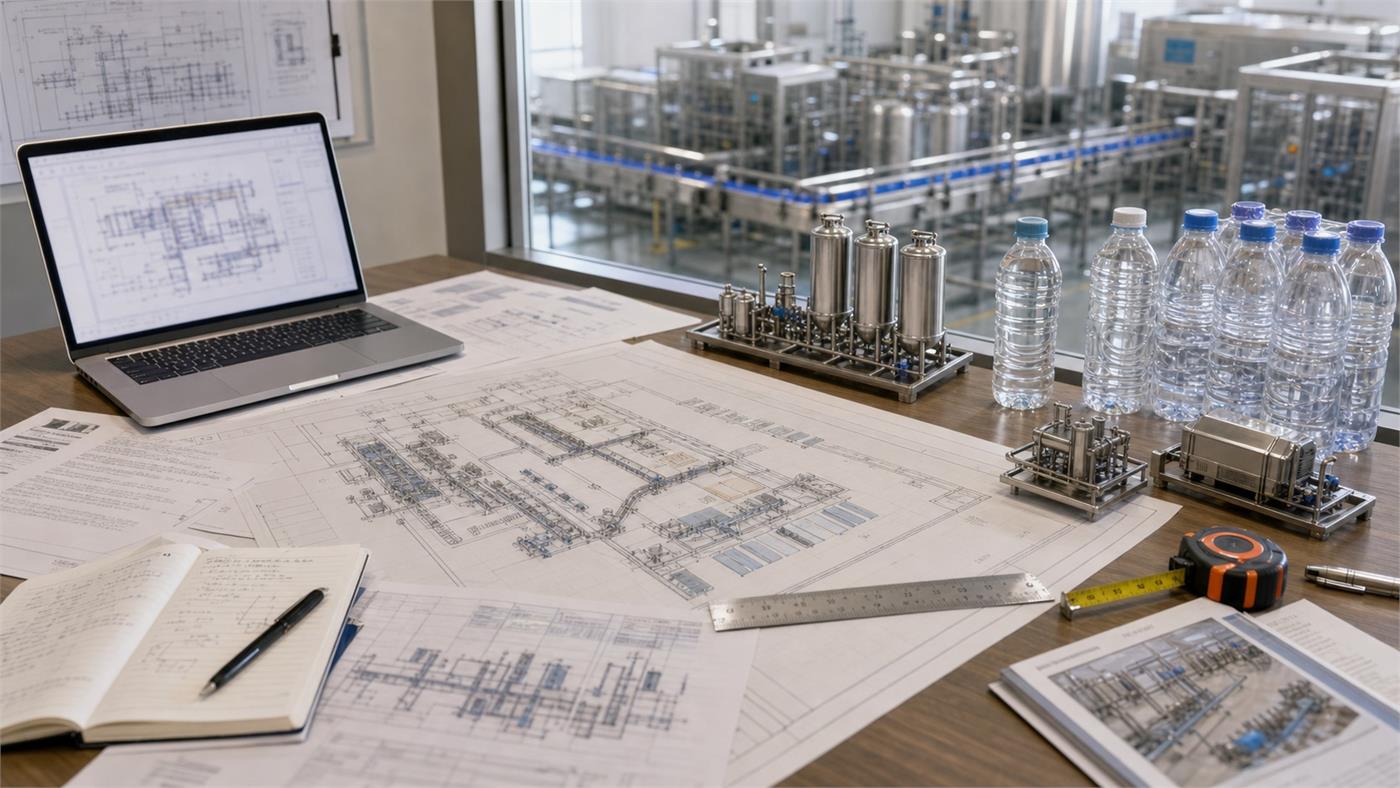
How to Start a Bottled Water Business: Decision Sequence
Treat the project as a sequence of evidence-based decisions. Do not move to the next purchase stage until the current stage has enough information for a responsible decision.
| Stage | Decision to make | Evidence to prepare | Do not lock yet |
|---|---|---|---|
| 1. Market and route to market | Who will buy, which bottle and pack they expect, and how product reaches them. | Channel interviews, competitor pack review, distributor input and realistic launch volume. | Final line speed or expensive automation. |
| 2. Product and water source | What product will be sold and whether the proposed source can support it. | Source description, qualified water test and local product-category advice. | Treatment process or product claims. |
| 3. Compliance path | Which business, water, food, factory, environmental and label approvals apply. | Written guidance from relevant local authorities or qualified professionals. | Factory commitment or equipment approval. |
| 4. Bottle and pack basis | Which launch bottle, cap, label, code and finished pack will be used. | Drawings or samples, material specifications and intended future formats. | Molds, change parts and packing equipment. |
| 5. Capacity and factory | What first-stage output the market can absorb and whether the building supports the complete flow. | Shift plan, storage plan, measured building data and utility availability. | Final machine configuration. |
| 6. Cost and finance | Whether total project cost, working capital and operating assumptions are supportable. | Normalized supplier scope plus local construction, utility, material and operating quotations. | Deposit or procurement schedule. |
| 7. Supplier and acceptance | Which proposal has the clearest scope, interfaces, testing, installation and support. | Technical comparison, layout, utility schedule, FAT and SAT basis, responsibility matrix and open-item list. | Contract approval until material differences are resolved. |
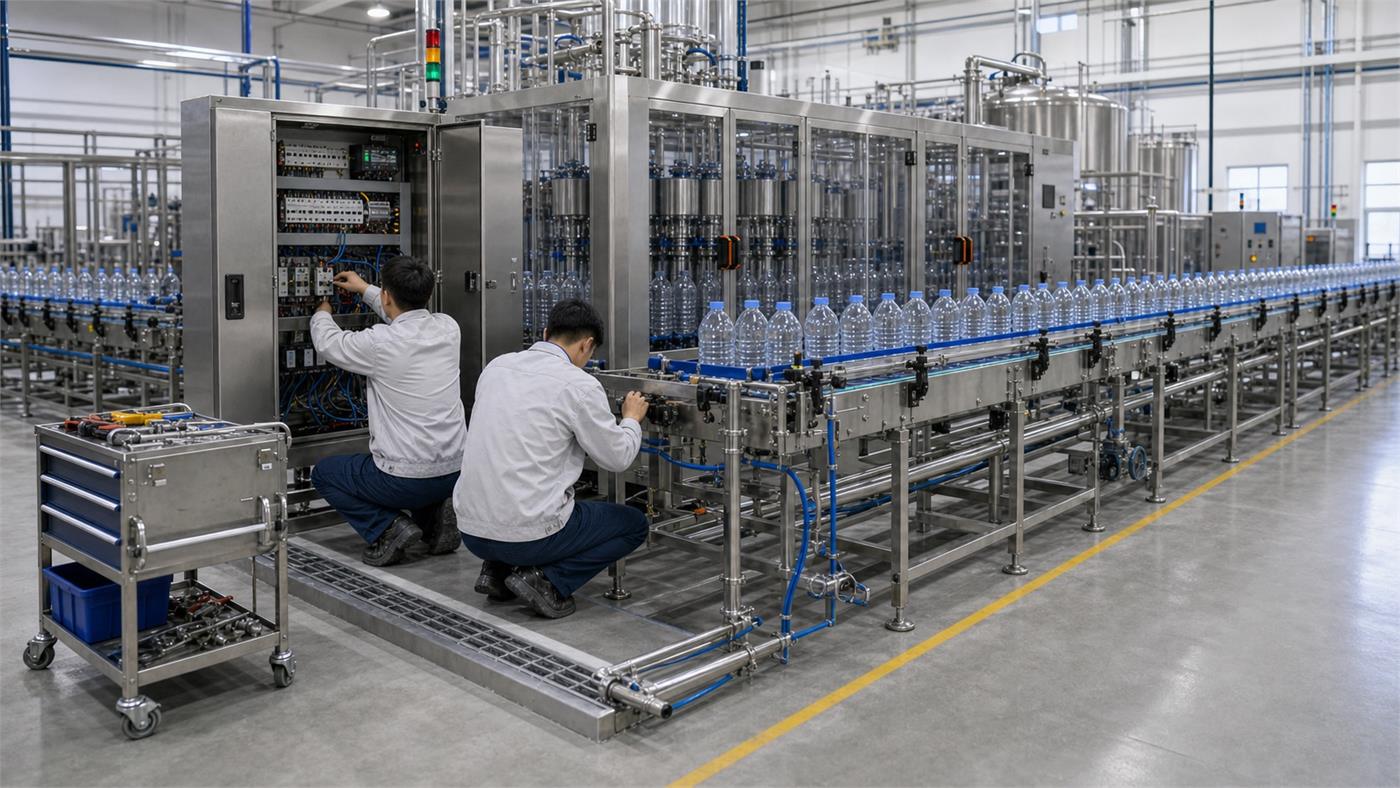
Start With a Plant Brief, Not a Machine List
A bottled water business needs market logic, source water information, bottle and pack choices, factory layout and budget discipline before machine quotations become useful.
- Bottle size and packaging route
- Water source and treatment direction
- Factory size and utilities
- Launch capacity and upgrade plan
Business and Plant Setup Steps
A bottled water business is not only a machine purchase. The project must connect sales, compliance, water quality and plant operation.
Business model
Choose retail bottles, distributor packs, private label or institutional channels before choosing capacity.
Market and bottle size
Confirm bottle sizes, price points, competitors, distribution route and packaging expectations.
Water source and testing
Test source water early so treatment decisions are based on data.
Permits and local compliance
Check local permits, water quality rules, label requirements and factory obligations with local professionals.
Equipment scope
Plan treatment, bottle supply, filling, label, pack, utilities and spares as one workflow.
Plant layout
Separate treatment, clean filling, packaging, warehouse movement and utilities.
Cost planning
Use capacity, water source, bottle format, automation, layout and installation as budget drivers.
Supplier checklist
Compare complete scope, utility list, layout support, spares, training and installation responsibilities.
Launch checklist
Prepare operators, materials, water tests, packaging, cleaning, spares and production schedule before startup.
What to Prepare Before Asking for Machines
A better inquiry helps suppliers respond with plant planning questions instead of a random machine price.
Bottle and market plan
Prepare target bottle sizes, expected pack style, selling channels and first-stage daily volume.
Water source information
Share whether the project uses well water, municipal water, spring water or another source, and prepare a water test if possible.
Factory status
Tell suppliers whether the building exists, its approximate size, ceiling height, doors, drains and power condition.
Capacity target
Decide whether 3000BPH, 5000BPH or 10000BPH fits the first market stage and future growth.
Packaging route
Clarify film pack, tray pack, carton pack or mixed route before comparing equipment.
Budget reality
Separate machine purchase budget from civil work, utilities, installation, materials and working capital.
Cost Factors to Confirm Before Requesting a Quotation
There is no responsible fixed price without project details. Use these factors to prepare a better inquiry.
| Cost factor | Why it matters | Questions to confirm |
|---|---|---|
| Capacity | Sets filling size, packing speed, utility load and labor model | What bottles per hour and shifts are realistic? |
| Water source | Changes filtration, RO, UV, ozone and storage requirements | Do you have raw water test results? |
| Bottle format | Controls bottle handling, molds, caps, labels and packing | Which bottle sizes and caps will launch first? |
| Automation level | Affects investment, labor, stability and upgrade path | Which steps should be manual at launch? |
| Packaging style | Changes labeler, coder, shrink wrapper, carton packer and conveyors | Film pack, tray pack, carton or mixed route? |
| Factory layout | Influences installation, hygiene flow, drainage and warehouse movement | Is a floor plan or room size available? |
| Installation | Travel, commissioning, utilities and civil work may sit outside machine price | Who handles local utilities and installation support? |
| Spare parts | Early production depends on critical wear parts and training | Which startup spares and training are included? |
| Freight and insurance | Machine price may not include delivery risk and destination charges | Which Incoterm, port and cargo insurance basis apply? |
| Import duty and taxes | Local duty, VAT and customs fees vary by destination | Which local charges must the buyer verify? |
| Factory and utilities | Civil work, power, drainage, ventilation, air and laboratory equipment are often buyer-side | Which local works must be ready before installation? |
| Raw materials and working capital | Preforms or bottles, caps, labels, film, cartons and launch stock sit outside machine price | How much launch inventory and operating cash is required? |
Water Bottling Line Equipment Scope Table
A complete proposal should make the included systems clear before price comparison begins.
| System | Typical equipment | Essential or optional | Planning notes |
|---|---|---|---|
| Water treatment | Raw water tank, filtration, RO if required, UV, ozone, treated water tank | Essential | Depends on raw water test and local water quality target |
| Bottle blowing | Preform loader, blow molder, molds, chiller and high pressure air support | Optional | Useful when bottle supply cost or bottle design control matters |
| Filling and capping | Rinsing filling capping monoblock, cap feeder and bottle transfer | Essential | Must match bottle, cap and target capacity |
| Labeling and coding | Sleeve labeler or sticker labeler, date coder and inspection point | Essential | Confirm label material, code position and market rules |
| Shrink wrapping/carton packing | Film wrapper, tray packer, carton packer or mixed packing route | Essential for most projects | Packing speed must support the filling speed |
| Conveyors | Air conveyor, bottle conveyors, pack conveyors and accumulation areas | Essential | Often missing or under-specified in low-price quotations |
| Utilities | Air compressor assumptions, power, water, drainage and cooling support | Essential | Utility mismatch creates installation delay |
| Spare parts | Wear parts, seals, sensors, basic tools and consumables | Essential | Plan startup spares before commissioning |
Common Mistakes When Buying a Water Bottling Line
Many bad purchases happen before the supplier is selected. The risk starts when buyers compare incomplete quotations or ignore plant conditions.
- Buying only by lowest machine price
- Forgetting water treatment scope
- Ignoring air compressor and utilities
- Not confirming bottle, cap and label samples
- Underestimating factory layout
- Choosing capacity only by machine speed
- Comparing quotations with missing equipment
- Ignoring spare parts and after-sales support
FAQ
What should I do first when starting a bottled water business?
Start with market demand, water source, local compliance, bottle format, packaging route, distribution plan and realistic capacity.
When should I request a machine quotation?
Request a quotation after you can describe bottle size, target capacity, water source, packaging style, factory condition and budget direction.
What should I avoid overbuying at startup?
Avoid unnecessary automation, oversized capacity, unsupported bottle blowing and complex packing before market demand and plant utilities are proven.
How do I start a water bottle manufacturing plant?
Validate demand and distribution, confirm the water source and local requirements, choose bottle and pack formats, secure a suitable factory, define capacity and utilities, then request comparable complete-line proposals.
Do I need permits before buying bottling equipment?
Requirements vary by country and product. Check business, water-source, food or beverage, factory, environmental, labeling and product-registration obligations with qualified local authorities or professionals before final equipment approval.
Should a startup make its own PET bottles?
Not always. Compare local empty-bottle supply, transport and storage against the cost and complexity of molds, preforms, high-pressure air, cooling, operators and maintenance.
Is a bottled water business profitable?
Profitability cannot be judged from machine speed alone. Validate local selling price, route-to-market, packaging and distribution costs, production yield, working capital, compliance costs and realistic sales volume before committing to a plant.
Can I start by outsourcing production before building a plant?
For some markets, contract packing or private-label supply can test demand before factory investment. Confirm product control, labeling, minimum orders, logistics, quality responsibilities and local rules with qualified partners.
Sequence the business decisions before committing to machinery
A bottled-water startup needs a validated market, legal route, reliable source, site plan and funding boundary. Machine selection should follow those decisions, not replace them.
Allot Tech Project Desk · Mr KcalBuyer-education content prepared for project clarification. Final equipment scope, engineering values, prices and guarantees must be confirmed in a supplier's written proposal.Updated:
Get a Startup Plant Planning Brief
Share what you know now. The goal is to prepare a useful plant brief before a machine quotation is built.